

Diesel Engines Need Oxygen, So How Do Submarines Use Them Underwater?
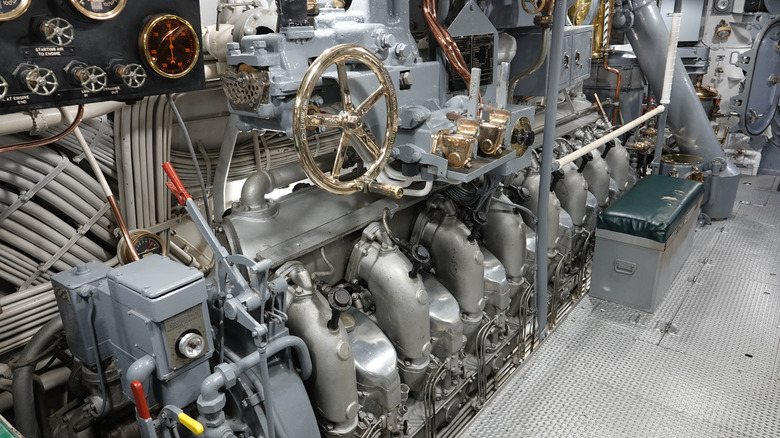
Inside a diesel engine's cylinder, compressed air raises the temperature to ignite injected fuel, and the resulting force drives pistons to power the vehicle's main gears. Chief to this combustion mechanism is oxygen, which is in abundant supply in the air around us. The process works well for trucks, machines, and other land-based vehicles that can tap into the natural oxygen in the air. However, how does the process work under water? More specifically, how do diesel submarines get enough oxygen to combust fuel under the surface?
The short answer is that a sub's diesel engines don't run at all when the vessel is under water. Traditional submarines are hybrid vehicles using a combination of diesel and electric power. On the surface, they use diesel engines to power the propellers and generators that charge batteries. But once the submarine goes under, those diesel engines are no longer used. Instead, their batteries power electric motors, which are more efficient and quieter; their noise-free operation enables the submarines to remain stealthy under water. On the downside, diesel submarines can only stay under water for a short period — they must surface again to run the diesel engine and recharge the batteries. Compared to diesel-electric subs, nuclear-powered submarines are more valuable precisely because their nuclear generators don't need oxygen, so the vessels can stay beneath the surface for long periods of time.
How often do diesel-electric submarines have to surface?
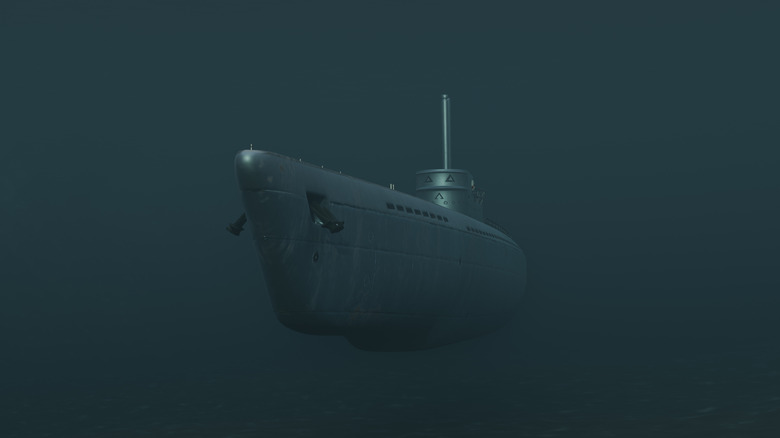
The average diesel-electric submarine must come to the surface (or "snorkel") every two to three days to operate the diesel engines and replenish its power reserves. While on the surface, submarines are more vulnerable because they are more visible and cannot move as fast. Sweden's fifth-generation submarine has an advantage in this regard. Although they're diesel-electric, these subs use a unique "air-independent" propulsion system and can stay underwater for several weeks at a time.
But even these advanced diesel submarines don't hold a candle to their nuclear-powered counterparts. Those can remain under water for months at a time — typically up to 120 days because of the need to resupply food stores. It's no wonder the United States Navy is currently adding more next-generation nuclear-powered submarines, like the USS Massachusetts (SSN-798), to its fleet. Meanwhile, competing world powers are also working on autonomous submarines, which would be uncrewed and could technically remain submerged for longer.