

Here's What Your Car Key Fob's Panic Button Is Actually For

When it comes to the panic button on your key fob, you probably fall into one of two camps. You either know it's there but have never used it beyond the occasional accidental press, or you've used it one too many times to locate your car in a full parking lot when you forgot where you parked. While that use case is a clever hack to find your vehicle by following the sound of the car horn, it's not really the intended function for the button. It's called a panic button for a reason — though we totally get the argument that not being able to find your car is a solid reason to panic, at least a little.
The panic button is designed to be used in the event of an emergency, intended to attract attention so passers-by might hear it, pay attention to where it's coming from, and either offer help or send for it. Some car owners might write it off as an annoyance that they accidentally hit more often than they'd like. Many panic buttons have a press and hold activation that makes this less likely. But if you have it in a purse or pocket and something presses down on it, it's not impossible to trigger by accident and wake up the neighbors or unnecessarily startle others around you. That's a small price to pay, however, since it's a valuable safety feature.
The panic button as a distress signal
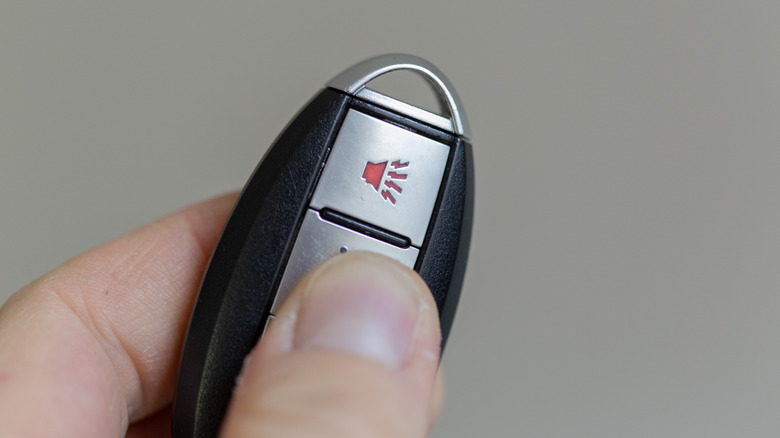
What does a panic button do and how does it work? Press and hold the panic button on the key fob and it will trigger the car's horn, which will, with most vehicles, repeatedly blare for at least a few minutes or until you press it again to make it stop. Since you typically have your car keys in hand when you're heading to your vehicle, it's predominantly designed as a convenient, easy-access way to call for help if needed.
For example, if you feel like someone might be following you to your vehicle, if you are being attacked, or if you're having a medical emergency when you're already in the vehicle and you can't get to your phone, you can tap this button to attract attention. It won't dial emergency services, but the car horn will be loud and blaring enough that someone nearby should eventually look over or out of their window to see what's going on, especially if it doesn't stop. If they see that you're in distress, they can provide assistance as needed from there. We might not have the need for physical car keys anymore, but the key fob still adds value.
Find your car, deter theft
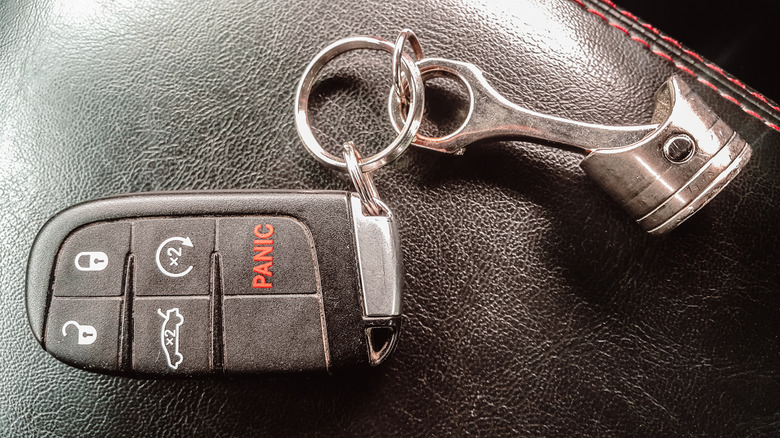
Many car owners have found a secondary use for the panic button. If you're in a crowded lot and can't remember where you parked, you can press this button to sound the horn — just know that you might suddenly find yourself at the center of attention if you go this route. The better and less disruptive option to find your parked car with your iPhone or to keep tabs on a parked car in Google Maps is to drop a pin in your favorite mapping app and follow that to your car. But this is a useful backup if you're completely lost.
The panic button can also be a theft deterrent. If it looks like someone is trying to break into your car, the sound might scare them away. One practical example: A car owner in a condo building spots someone trying to enter their vehicle parked in an outdoor lot below. If the key fob is within range, pressing the panic button can trigger the alarm and potentially scare the would-be thief away.
So, while the panic button is technically meant for when you're in a serious panic, it has useful secondary features, like deterring theft and helping you find your parked car. Many car makers are switching to digital keys, but a physical key fob, at least, has many uses as a backup, including important ones like this handy button.