

Those Little Cameras On Top Of Traffic Lights Aren't All For Catching Red-Light Runners
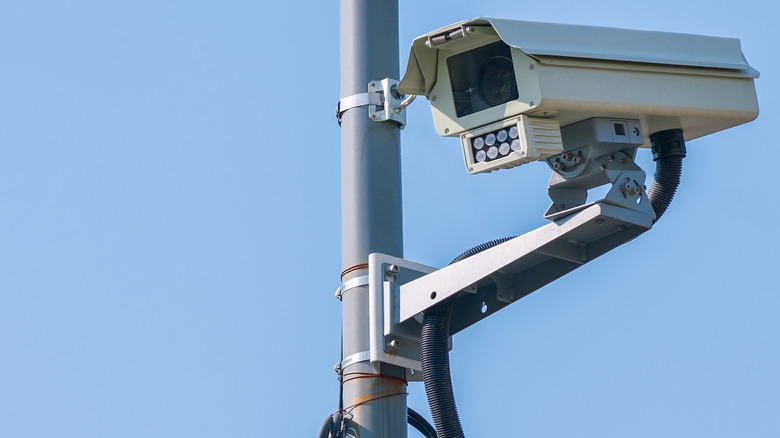
While we may be used to seeing cameras on top of traffic lights at major intersections, they're used for more than simply watching out for red-light runners. In fact, there are two main types of traffic light cameras, both with their own purpose in managing city operations.
One type of traffic light camera is the traffic sensor. These systems can go beyond just a simple camera, often integrating technology like infrared sensors and inductive loops that are within the pavement itself. The purpose of these is for traffic control and monitoring. They observe how congested the roads are and optimize the traffic lights accordingly. They are also useful for collecting traffic data to aid in city planning, such as finding areas where a new lane is needed. Keeping the flow of traffic smooth at busy intersections is an important part of city planning, especially amid calls to add a fourth traffic light for robotaxis. Traffic sensors can also be helpful for investigating vehicle accidents and other criminal activity if used as a surveillance system.
Some of the cameras you see on top of traffic lights are indeed used for traffic enforcement. These get activated when someone runs a red light, capturing the car's actions and license plate information by video or photograph. They aren't necessarily installed at all intersections, however, as these cameras usually focus on busy areas or around schools and hospitals.
The history of traffic light cameras
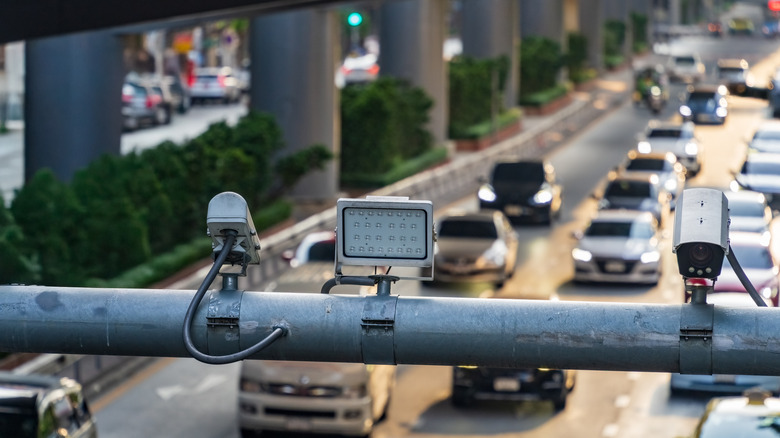
Long before modern intersections were packed with cameras and sensors, traffic engineers were already searching for ways to help stoplights see approaching cars. In the 1920s, as cities replaced manually operated signals with automated systems, officials realized they needed a way to gather traffic data that had previously been gleaned by police officers standing at intersections. One early breakthrough came in 1928, when Baltimore engineer Charles Adler Jr. installed a microphone-based detector that responded when drivers honked their horns. It was primitive by today's standards, but it marked one of the first attempts to give traffic signals real-time awareness of vehicles.
Over time, those early experiments evolved into what we now call Intelligent Transportation Systems. Modern traffic cameras can monitor multiple lanes at once, create customizable detection zones, and even link data between intersections to improve signal timing. That kind of wide-area visibility helps reduce congestion and improve safety. Now, one of the biggest cities in the United States is installing automatic speed cameras.
Still, the technology isn't perfect. Cameras can struggle in heavy rain, fog, or snow, and they require careful placement and maintenance. When deployed optimally, however, they've become a cost-effective way for cities to better understand and control the flow of traffic.
The good and the bad of traffic light cameras
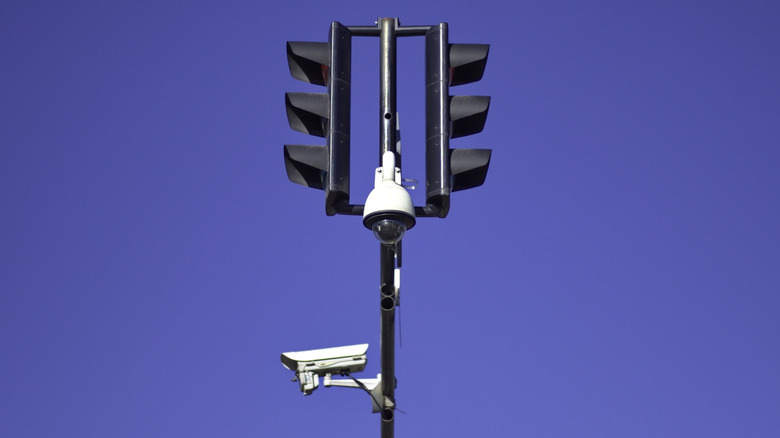
Traffic light cameras certainly have done a lot of good. Speed cameras themselves have been linked to slower speeds of driving, people being less likely to run red lights, and a reduction in vehicle crashes and fatalities. However, as with any camera system meant for safety, traffic light cameras have also come under fire, bringing to mind the uncomfortable truths about Ring cameras.
For example, as of January 2026, the town of Fair Oaks Ranch near San Antonio, Texas is continuing to expand its camera-based license plate recognition technology. The reason given for this increase is to help with finding missing people, stolen cars, and tracking potential criminals. However, the program has been met with backlash from those who consider it a tool for mass surveillance that infringes on individual rights.
Discussions about traffic camera usage have sparked debate on Reddit forums recently. Supporters cite the good that these cameras do in stopping red-light runners, while others mention that there are cameras everywhere anyway, so more shouldn't matter when it comes to speeding. Oppositional viewpoints are brought up regarding how these types of cameras can be used as tools against the public, equating the technology to Big Brother from the George Orwell novel "1984."