

8 Gaming Consoles That Defined The '80s
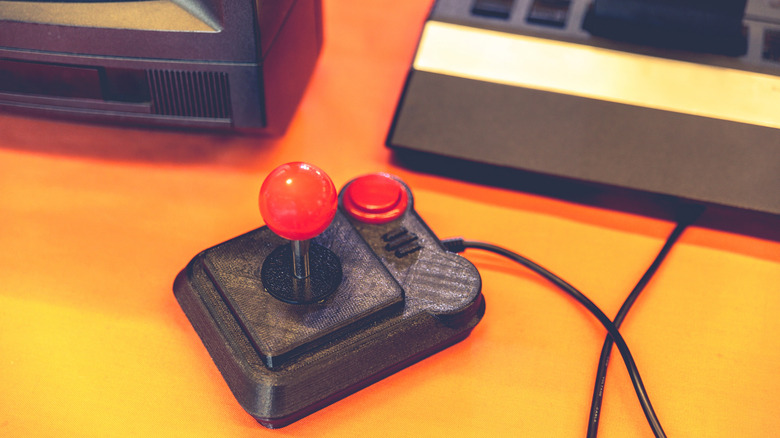
Gaming consoles have a fascinating history, with the 1972 release of the Magnavox Odyssey marking a major shift in the entertainment landscape. Arcades were still thriving in their golden age at that point, but home consoles would soon become commonplace as systems flooded the market. By the time the roaring '80s arrived, it seemed that this industry could do no wrong. However, the infamous video game crash of '83 put a major dent in the market that turned video games into the commercial equivalent of persona non grata. Thankfully, this aversion didn't last long, and the video gaming industry took two years to bounce back and resume the journey to becoming the highest-earning entertainment sector by quite some margin.
The 1980s were a tumultuous period for gaming, full of worrying lows and dizzying highs that have etched their legacies in the annals of video game history. From industry-decimating failures to rejuvenating successes — along with the embers that would spark a console war for the ages — various gaming consoles did their part to make a name for themselves in the industry.
Nintendo Entertainment System
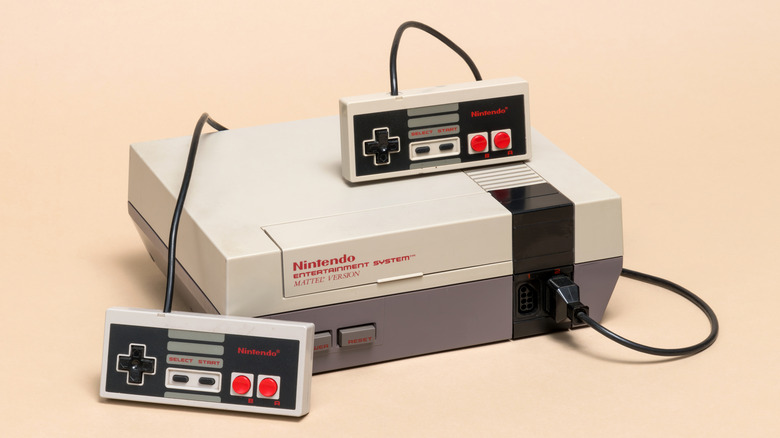
The video game crash of 1983 was so disastrous that the very idea of selling a gaming console seemed like a financial death sentence for companies. The quality of video games released around that time was abysmal, and consumers were increasingly wary of overpriced hardware. It would've taken a masterstroke for a company to attain any modicum of success while trying to market a system that plays games in the West, which is why Nintendo decided not to do that in 1985. Instead of selling the Famicom as a gaming console outside Japan, it decided to attach the Entertainment System label. This strategy was supplemented with high-quality first-party releases and exclusivity agreements to ensure that the NES would curate a library of quality games that deserved the golden Official Nintendo Seal, guaranteeing a level of polish absent in previous consoles.
The end result is an 8-bit system with classic games like "Super Mario Bros", "The Legend of Zelda", "Metroid", and "Final Fantasy", considered by many to be one of the greatest gaming consoles of all time. The specs may seem laughably weak now, but its 1.79MHz CPU, 2KB RAM, 2KB VRAM, and 256x240 resolution made its games feel more advanced and feature-rich than ever before. It sold more than 60 million units before being discontinued in 1995, establishing itself as a massive success that would cement Nintendo's position at the very top of the video game industry, until Sony entered the market to cater to an older audience.
Sega Master System
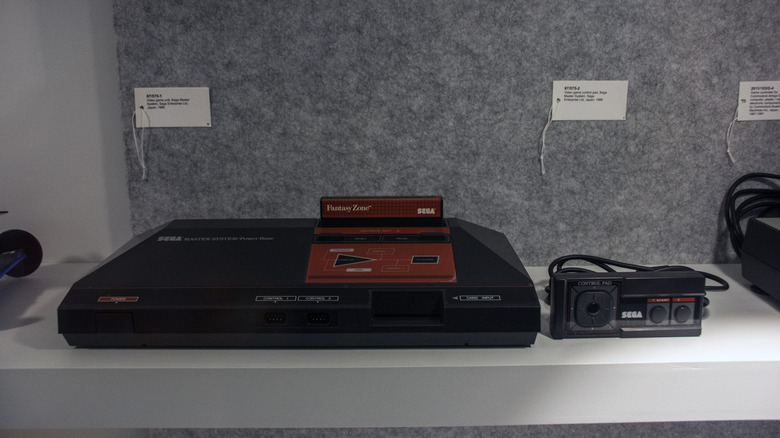
The SG-1000 was an admirable first attempt at a gaming console by Sega, but it was clear that the company needed to get serious to compete with the likes of Nintendo. This console itself served as a foundation that Sega would improve, with the third iteration of the SG-1000 introducing so many improvements that the company was comfortable repackaging it as the Sega Master System in the West. On paper, this system was notably more powerful than the NES, with its 3.58 MHz Zilog Z80 CPU, 8 KB of RAM, and 16KB of VRAM helping its hardware stand out as superior to the competition. However, consoles live and die by their game library, and the Sega Master System lagged behind Nintendo in this department.
That's not to say the Master System didn't have any quality games. "Sonic the Hedgehog", "Phantasy Star", "Space Harrier 3-D", "OutRun", "Ghouls 'n Ghosts", and "Double Dragon" were all quality titles that helped the Master System accrue a sizeable fanbase. It sold an estimated 20 million units until it was discontinued in 1996, although its distribution in the U.S. stopped four years earlier. It was followed by the Sega Genesis, which is when the console war truly flared up as it ran against the Super Nintendo Entertainment System, more commonly known as the SNES.
Atari 2600
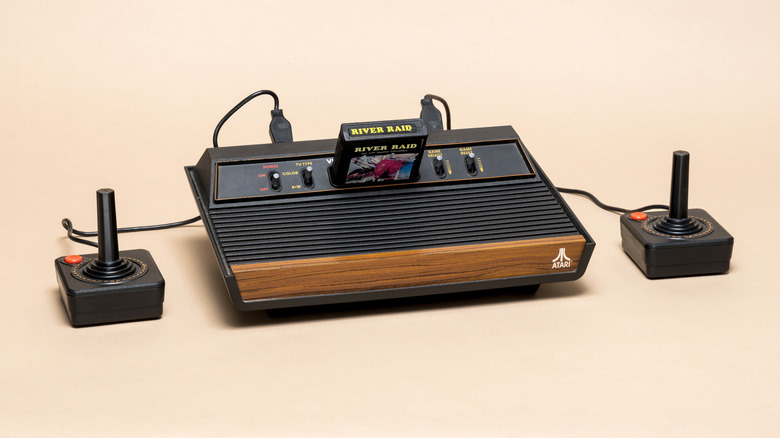
In September 1977, the Atari 2600, known as the Atari VCS when it launched, was released to great success and became the face of the home console revolution. Sure, the Magnavox Odyssey launched almost five years before this console, but it came at a time when gaming was still finding its footing in homes. With an 8-bit, 1.19 MHz MOS Technology 6507 CPU and 128 bytes of memory, Atari's old gaming console bolstered the second generation of gaming, with the VCS boasting a strong library of games to boot. "Asteroids" and "Space Invaders" were great games that helped this console enter the 1980s on a strong note, with titles like "Pitfall!" and "Ms. Pac-Man" keeping the momentum going. However, a lack of quality assurance led to a flood of low-effort games that saturated the market and eroded buyer confidence in home consoles and their offerings.
Infamous games like "Custer's Revenge" and "E.T. the Extra-Terrestrial" were the last straw, with the video game crash of 1983 occurring not long after. The Atari 2600 was far from the only console that had crowded the market, but it didn't help matters with the 1982 release of the Atari 5200, a system destined to fail. There's a reason why the '83 crash is called the Atari Shock in Japan, after all. When the market recovered, Atari tried to mount a comeback with the 7800, the first backward-compatible console that could play 2600 games. Unfortunately, Nintendo had already gained a foothold in the industry and signed many third-party developers to its exclusivity program, preventing the 7800 from building the game library it needed to become as successful as the 2600.
Intellivision
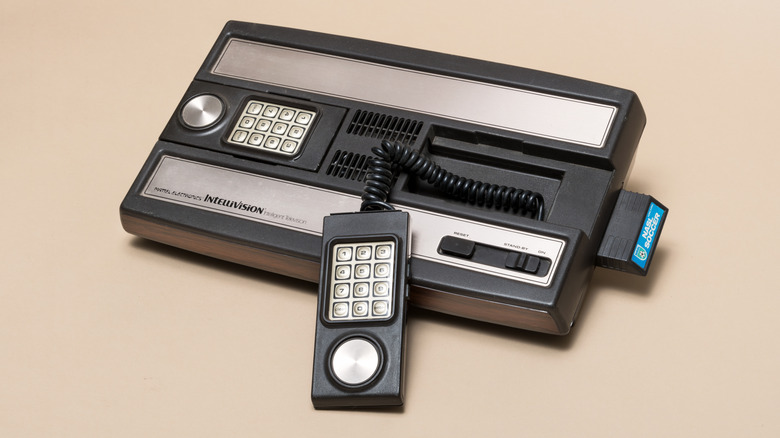
Despite its limited sales, Mattel's Intellivision was a pioneer in many ways. For starters, it was an early video game console with a 16-bit microprocessor, which wouldn't become commonplace until the fourth generation of consoles arrived almost two decades after its release. The controller was also pretty unique for its time, if somewhat bulky. It had a numeric keypad, side-mounted buttons, and a directional disc for precise movement, rather than the four-directional D-pad that was the norm at the time. This was a game-changer back in 1979, even if the console failed to overtake the dominant Atari 2600 in sales.
"Tower of Doom", "River Raid", "Defender", and "Thunder Castle" were some great games that made the Intellivision worth checking out. However, they weren't enough to help this console survive the video game crash of 1983. It was a period of recession that caused many companies to shut down their gaming console divisions, including Mattel.
Magnavox Odyssey 2
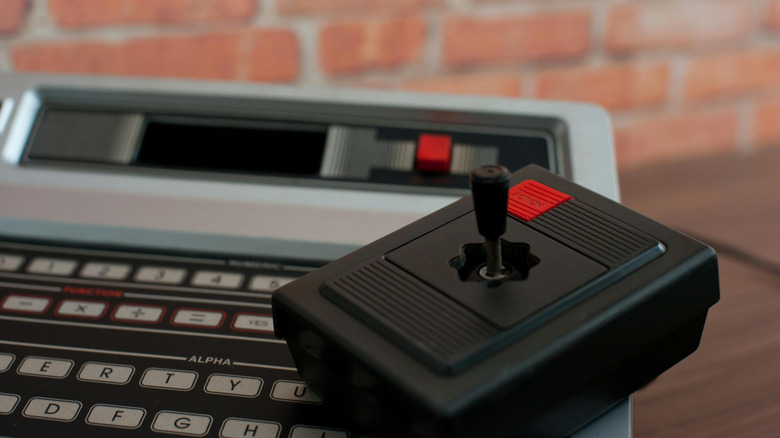
The Magnavox Odyssey is very important as the first home console, but it was only a matter of time before it became outdated. Other companies, like Atari and Mattel, eventually released advanced consoles that weren't restricted to onboard games and had better controllers. Atari was taking bold risks, with the Cosmos being an impressive initiative even if it never saw the light of day. So, Magnavox officially entered the second generation of video gaming in 1978 with the Odyssey 2. With its 1.79 MHz Intel 8048 CPU, 64 bytes of RAM, and a color palette supporting 16 shades, it was clear that Magnavox was serious about giving the Atari 2600 a run for its money.
The "Pac-Man" clone, "KC Munchkin", was a huge success on this console, with other titles like the classic "Frogger" and "Smithereens!" also being fun in their own right. Some innovative games like "The Quest for the Rings", "Wall Street Fortune Hunt", and "Conquest of the World" were hybrid board games that used both physical and digital media to let players enjoy a wholly unique experience. Despite an at-the-time decent collection of 46 games, the Odyssey 2 only sold about 2 million units and failed to make a dent in the Atari 2600's sales. That doesn't mean the Magnavox Odyssey 2 had no cultural impact, especially since the video game industry might never have existed without its predecessor.
Game & Watch
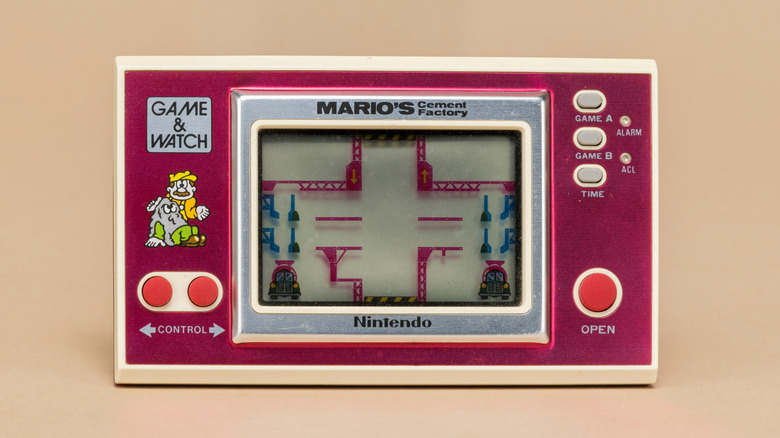
Before it became the video game juggernaut everyone knows and loves, Nintendo was a toy company that hadn't really ventured into the gaming industry. Aside from developing light guns for the Magnavox Odyssey, it had little experience in this sector. This changed when the company decided to create a novel, practical toy that told the time while letting users play a game installed on the contraption. This idea spawned the Game & Watch, a legendary handheld gaming console that marked Nintendo's first foray into the realm of video games.
Nintendo started with "Ball" in 1980, before releasing numerous Game & Watch units that shipped with different games. All of these devices combined led to impressive sales numbers, with the Game & Watch selling 43 million units. It wouldn't be a stretch to say that this runaway success gave Nintendo the confidence it needed to invest more in its gaming division, and the rest is history. While the Game & Watch was discontinued in 1991, it became a coveted collector's item, to the point where Nintendo issued two re-releases of this accessory. Game & Watch: Super Mario Bros. was released in November 2020, while Game & Watch: The Legend of Zelda came a yearlater.
ColecoVision
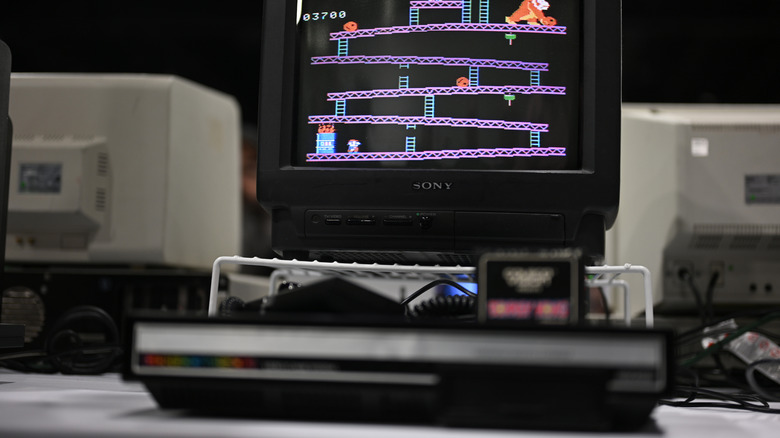
In a different world, the ColecoVision could've been a beloved video game console that finally unseated the Atari 2600 from its throne and later gave Nintendo stiff competition. So, why did this not come to pass? Well, its release year will make it perfectly clear what went wrong for what should've been the console that kick-started the third generation of video gaming. The ColecoVision was released in 1982, just a year before the '83 video game crash. It didn't help that Coleco also gambled with the release of its home computer, Adam, in the same year. The ColecoVision still tried to chug on for three more years before eventually being discontinued in 1985.
It's a shame, since the console was ahead of its time and could've been the solution to the mediocrity plaguing the video game industry in the early '80s. It used the 3.58MHz Zilog Z80 CPU four years before the Master System and boasted 16KB of VRAM, which was impressive at the time. It shipped around 2 million units during its brief run, outselling both the Atari 2600 and the Intellivision in this time frame. With games like "Donkey Kong", "B.C.'s Quest for Tires", "BurgerTime", and "Zaxxon, the ColecoVision was an appealing package. It's too bad that the industry's 1983 recession forced Coleco's hand, shutting down operations and turning the ColecoVision into one of the biggest gaming what-ifs of all time.
TurboGrafx-16
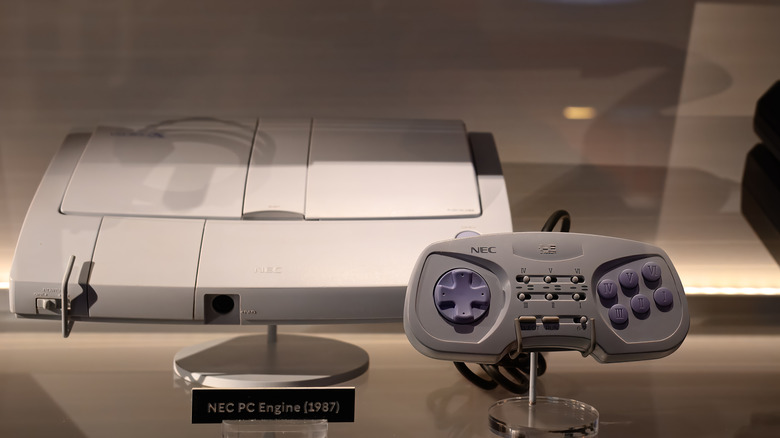
The TurboGrafx-16 was full of new-age bells and whistles that should've turned the console war into a three-horse race. After all, in Japan — where this system was known as the PC Engine — the TurboGrafx-16 was a market leader for some time and gave stiff competition to the Super Famicom, also known as the SNES. However, by the time it came over to the States, it was already too late to the party. It launched at the same time as the Sega Genesis, a far more advanced console that left the TurboGrafx-16 in the dust. In 1987, an 8-bit HuC6280 CPU with 7.16MHz of processing power, 8KB of RAM, and a 16-bit graphics processor with 64KB VRAM was pretty good for a gaming console. However, these same specs were woefully outdated in 1989, when this console was released in the United States.
Still, for the impact it had in Japan during the late 80s, the TurboGrafx-16 deserves more than just becoming yet another footnote in the history of video gaming. It's also the first-ever console to use a CD-ROM, courtesy of an optional drive. The bulky, unappealing redesign for its Western release didn't help, and the lack of a marketing push was yet another factor that tanked the sales of this console. Nintendo's exclusivity agreements limited the TurboGrafx-16's library, which also contributed to its fate. However, gamers could still enjoy quality titles like the controversial "Splatterhouse", "Street Fighter II: Champion Edition", "Bomberman", and "Gradius".