

Think Twice Before Plugging These 5 Devices Into A Generator
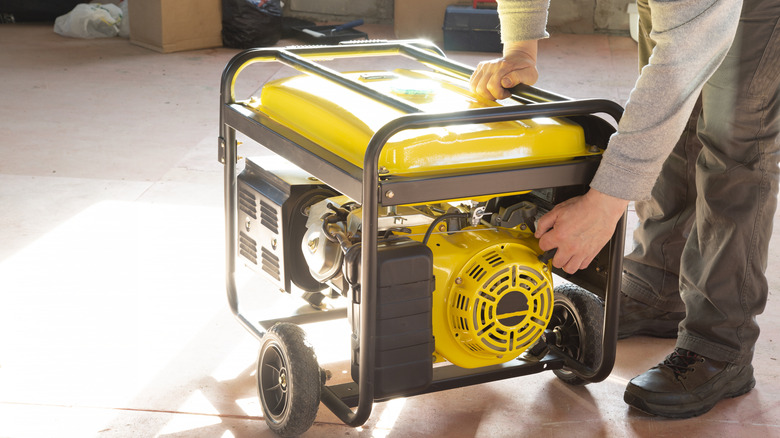
A generator is a very helpful piece of equipment for any homeowner or travel enthusiast, with backup generators keeping the lights on during an outage and portable generators providing energy on the go. While generators can suit most basic power needs, using them isn't quite as simple as plugging in a device and getting power, as you may put yourself or the generator at risk.
Plugging certain kinds of devices and appliances into a generator, such as air conditioners or space heaters, may draw more power than the generator can produce, while sensitive devices could be burned out. If you're planning on setting up a generator in your home, you should endeavor to only plug in the devices and appliances you really need and be considerate of the generator's capabilities. If you're not careful, you could end up with a faulty generator and broken devices.
Air conditioning systems
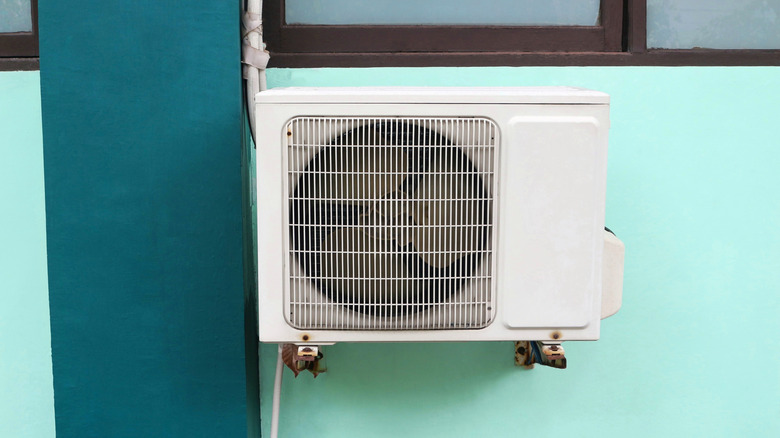
If it's particularly hot out when you lose power, your first inclination after hooking up the generator will probably be to power up your home's air conditioning system, either the central air or individual units. Unfortunately, you may need to endure the heat for a while, because plugging either into a generator isn't a great idea.
Central air systems have an extremely high starting power requirement. They're cooling your entire home, after all, and need an appropriately large amount of juice to get the air flowing through the vents and pushing out hot air. That's far more energy than a small generator can realistically provide. If you try to power the central air through a portable generator without enough wattage, you will almost certainly damage both. Even if you're using a larger generator with more overload protections, it still may not be able to handle both the starting and additional power requirement to keep the air conditioner running. It will likely end up tripping.
Sensitive electronics

Transferring power isn't necessarily as simple as flipping a switch and plugging something in. Different types of generators provide power in different ways, with the two major archetypes being dirty power and clean power. Dirty power generators, also known as alternating current generators, deliver electricity inconsistently and with a jagged waveform; the power is flowing, and you can plug stuff into it, but because the current is constantly reversing and fluctuating, you may get inconsistent performance and voltage spikes.
This is particularly hazardous for sensitive electronics like PCs and laptops. In the same way that constant power surges or hard shutdowns can damage your PC's internal components, so too can dirty power generators stress and break them.
If you're using a surge protector or a clean generator, also known as a pure sine wave generator, it should be safer to plug your PC in, though you may still want to be conscious of power draws. If you have a particularly beefy rig and entertainment system, ensure you use a surge protector that's not going bad.
Space heaters
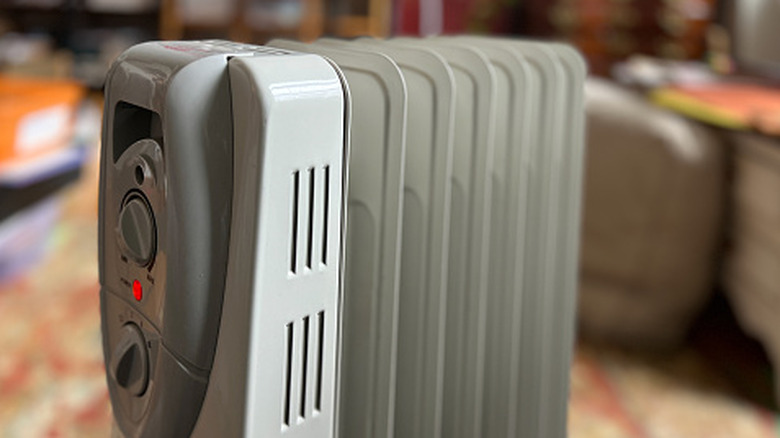
In the same vein as air conditioners, turning on space heaters is probably one of your first considerations when the power goes out. If your central heating isn't working in the middle of winter, after all, that's a very real hazard. It is technically okay to plug a space heater into a generator. However, doing so does carry some risks, which may not be ideal for you to undertake depending on your circumstances.
Space heaters, alongside most devices that incorporate a heating element, have fairly heavy power needs, both for starting up and maintaining the heat. The power also needs to be consistent and clean, so the heating element doesn't run out of control. This all means that, if you have a smaller, dirty power generator, it may not have enough output to safely maintain a space heater long-term, especially if you want to run it alongside other appliances. If your generator doesn't have sufficient wattage to run a space heater with power to spare, it's very likely to trip or fail, especially if the current is fluctuating.
Washers and dryers
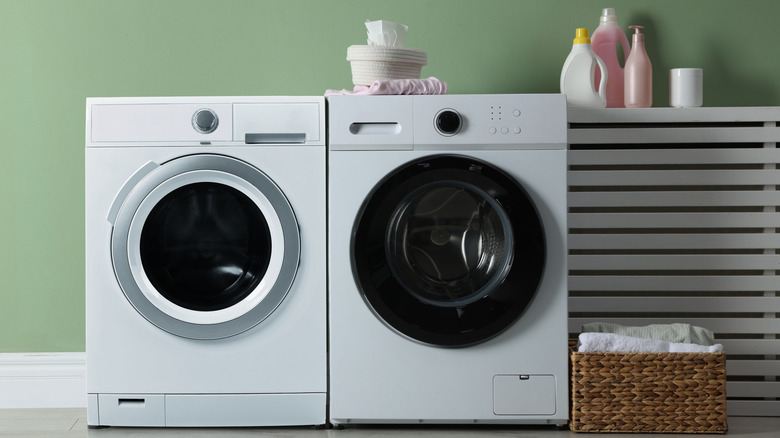
In the pantheon of large home appliances, arguably two of the largest and most power-hungry are the washing machine and dryer. Both washers and dryers have exceptionally high wattage requirements both to start up and run through their entire cycles. The dryer in particular, as it incorporates a heating element, will be a severe draw on even the burliest generator. If you try to run a dryer alongside the rest of your home's appliances and utilities, you're looking at a high chance of tripping.
Washing machines have a slightly different problem. In addition to having high base power needs, they also need water to function. Hypothetically, if you wanted to run the washing machine off a generator, you would also need to power your home's water pump systems, which is demanding for a generator. Like a central air system, a water pump has high starting and continuous power needs; combine that with what the washing machine needs, and your generator has a low chance of supporting it all at once. A sufficiently large generator may be able to run the water pump or the washing machine, but not both, which is not exactly an efficient approach to portable power.
Cheap extension cords
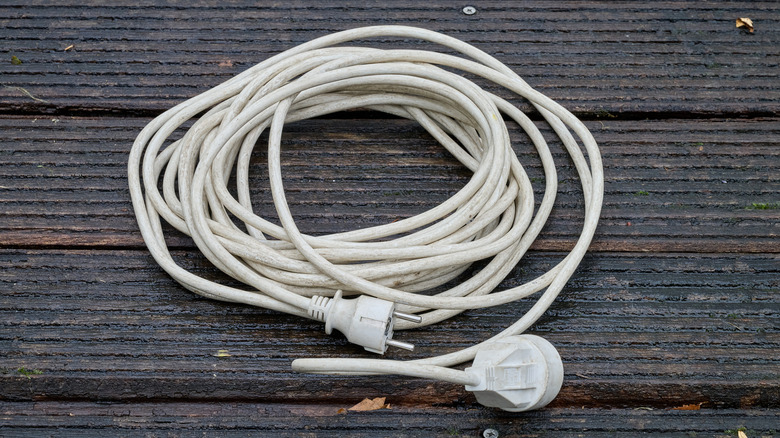
While most generators have enough external plugs to power a few vital devices, if it's not plugged directly into your home's grid, whether the devices you want to power are close to these plugs is another matter. In this case, you may consider getting out the extension cords. That's not a bad idea, but using a cheap extension cord from the dollar store could be.
If you've got a high-quality, high-power, pure sine wave generator, as well as thick, equally high-quality extension cords from places like Harbor Freight, they may be okay to use together to power your devices. Inversely, if you've got a dirty power generator and a cheap, no-name extension cord from the local dollar store, those absolutely should not be used together. Generator-safe extension cords are made with heavy-duty, weatherproof materials and high-load wire gauges to sustain and deliver intense currents. If you use a simple office extension cord, like you would to plug in a lamp, there's a very real risk it could overload and damage both the generator and any devices plugged into it.