

5 Legendary Gadgets That Were Born In The '90s

The '90s were a wild time. Sure, you could say that about every decade that comes along, but regarding technology, things got pretty zany. Does anyone remember the Talkboy from the "Home Alone" series that was eventually popularized and made into a real, working device? What about PDAs and Palm Pilots, which were basically the original smartphones? It was certainly a time of great innovation. The greater internet or the World Wide Web, as it was called, was invented and came online in the early 90s by a scientist working at CERN. Moreover, SMS, or the short message service –what we know today as "text messaging" — was initially invented and came online in the early 90s.
It's easy to take for granted all of the advanced technologies we have today, mobile supercomputers in our pockets, affordable handheld game consoles that can play thousands of titles, wireless streaming devices that seemingly pull content from the air, and much more. But the foundations for a lot of this technology came from the '90s up until the early aughts. There were also just some really cool gadgets born back then, and at the risk of sounding like an old, decrepit man, they don't make 'em like that anymore. Here are some of those legendary gadgets, memorialized today.
1. The Sony PlayStation
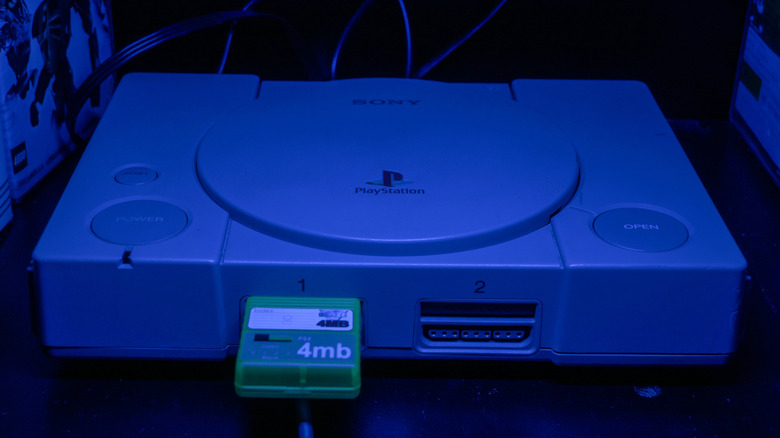
Yes, the original Nintendo Gameboy was iconic, and still is. Yes, we had the Nintendo Entertainment System, which first came out in the '80s, the Sega Genesis, and even the Sega Game Gear. But, and this might make a few people irate, the one that really changed the game and leveled up the experience was the Sony PlayStation when it launched in 1994-1995. The PlayStation revolutionized modern home gaming by being one of the first to shift the entire industry of game development into 3D, polygon-based virtual content. In addition, it used low-cost and high-capacity CD-ROMs or compact discs, allowing for more unique game titles, at least compared to the low-capacity and expensive cartridges, which were commonplace at the time.
Another interesting point is that, at the time Sony launched the PlayStation, previously only two major companies had existed in the space, including Nintendo and Sega. The console was actually supposed to be produced as a collaboration between Nintendo and Sony. That didn't pan out and the PlayStation we all know eventually came to be and was a smash hit. Sony sold well over 100 million PS1 consoles. It paved the way for modern video games, especially many of the home consoles that came after.
2. Sony Discman and portable MiniDisc players
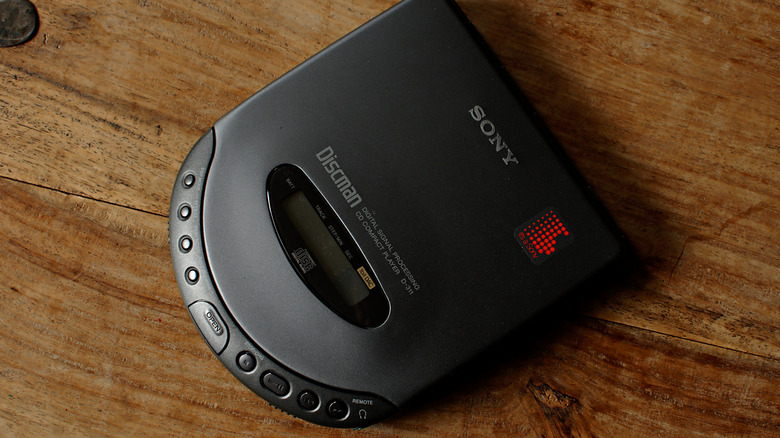
The original Sony Walkman, the one that played physical cassettes, came out in the late 1970s and was popularized throughout the '80s. It was the first true portable music player, and although it certainly opened up the concept of taking your music with you everywhere, the next iteration of the technology is what truly set the groundwork for modern MP3 players and digital devices. Called the Sony Discman, later changed to the CD Walkman, it played audio files stored on compact discs, and later models could even play MP3s burned directly to a disc.
But the growing popularity of the format and the technology itself is what led to digital players and MP3s, and possibly even the boom of digital music technologies. Today, things have progressed into wireless streaming and cloud-based music playback on phones and portable players, or internet-connected devices. However, the digital experiences, in general, all came from those early portable media players, the Discman and the MiniDisc players of yore. In 1998, a small device called the MP Man became one of the first digital MP3 players available to consumers.
3. Apple iMac G3
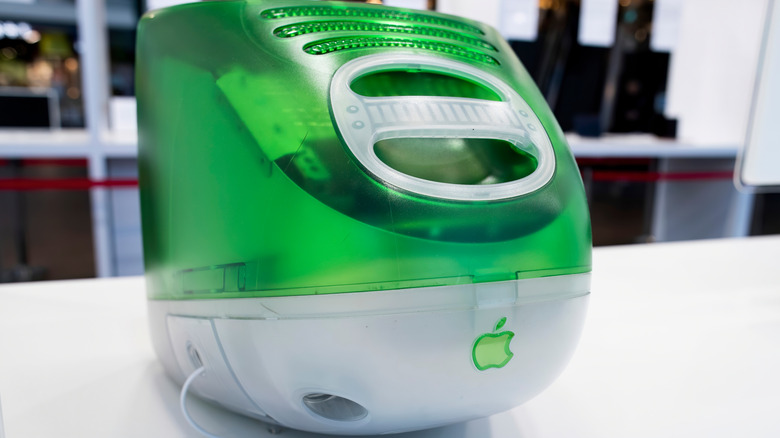
General home computing had been around for over a decade when the Apple iMac G3 released in 1998. But up until then, the devices were quite boxy, bulky, and downright geeky-looking — okay, most were hideous. They were also usually beige or off-white in color, very bland in terms of style, and the software experiences were somewhat overcomplicated for the average person. But with the launch of the iMac G3, Steve Jobs changed that indefinitely. The neon and bright jewel-colored home PC was a stunner right from the start.
More importantly, the software and user experience were pitched to and designed for everyone. Not analysts, professionals, or Wall Street business types, but families and teens who wanted to use the computer in their den or a communal room. The iMac G3 also quickly became a pop culture icon, showing up in all kinds of media at the time. You can find them in movies like "Men in Black II," "Mean Girls," "Freaky Friday," and many, many others. Heck, the pop culture reference is so iconic, it still shows up in movies and shows made today.
Ultimately, the Apple iMac G3 was one of the first pieces of home tech to signal that not everything had to be drenched in matte, drab blacks and whites. A pop of color and personality was okay and, actually, people were open to the idea.
4. DVDs and high-resolution video players
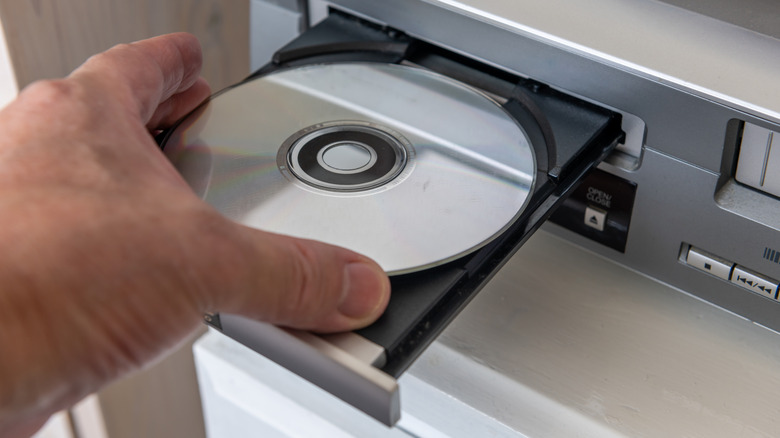
Compact discs and DVDs have nearly disappeared these days, with most everything traded for digital media, but they were extremely popular back in the 90s and early 2000s. In fact, DVDs originally replaced VHS tapes, the physical videocassettes, in the mid '90s and that's when high-resolution DVD players also became quite popular. DVD stands for Digital Video Disc, and like compact discs, they actually contained media files, or digital files, burned to the disc.
Particularly, DVDs allowed for larger file sizes and high-resolution formats, similar to how compact discs changed both the audio industry and video games. DVD players often decoded the popular MPEG-2 format with a higher video stream bitrate than previously possible. Interestingly enough, the original DVDs were not in a high-definition (HD) format. HD DVDs and Blu-Rays were released much later. Still, DVDs were the first adoption of these technologies and vastly improved home theater and visual entertainment experiences compared to the old-school VHS tapes. Who am I kidding? It's all old-school these days, even DVDs and players.
5. Search engines and Google
While not exactly a "gadget" per se, search engines did change a host of gadgets we use, ranging from computers and laptops to smartphones. Widely considered to be one of the first search engines ever, Archie came online in 1990. It searched FTP files rather than websites or web content but established a core structure and application design for what would later become the popular search engines we all know and use today. Before 1993, the World Wide Web and all content hosted was indexed by hand. Like chapters in a book, the websites would be listed in a central directory, but websites were coming online so fast, those maintaining the lists couldn't keep up. Some of those early websites are actually still live today if you want to check them out — they look way different than modern portals.
Hence the modern search engine, with the first versions taking names like Gopher, Veronica, Jughead, and, the previously mentioned, Archie. WebCrawler came out in the mid '90s, in 1994 specifically, and introduced queries for every word on a website versus just the index pages. Eventually, Google was registered as a domain name and came online in 1998. And now, we "Google" everything. It's crazy to think about all these years later, but the reason why the internet, websites, and online content are structured the way they are is all owed to those first search engines and indexing tools.
6. Honorable Mentions
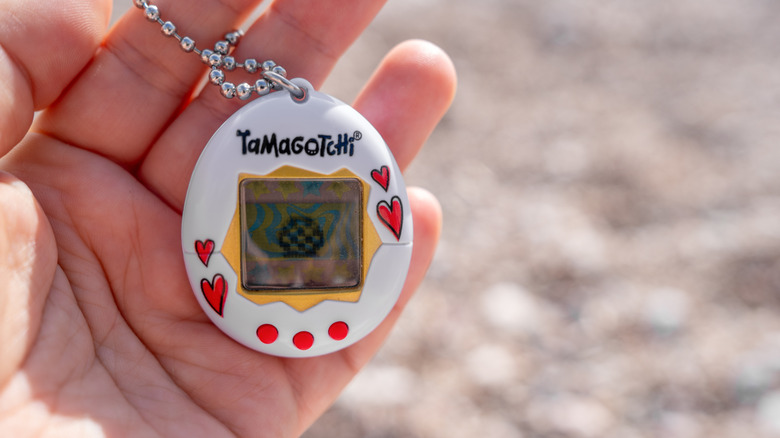
I've said it before and I'll say it again, the '90s were a wild time for gadgets and technology. While some of the more iconic gadgets have already been named, there's a lot more that was left out for brevity. The Tamagotchi, for example, was first introduced in 1996 by Bandai, one of the first and probably most popular digital pets of all time. It makes one wonder how many teachers from the '90s still have nightmares about those little keychain gadgets going off in class because it was feeding time. Of course, you can't forget Furbies, Bop It, Tiger handheld games, K'Nex, Super Soakers, and all those amazing gadgets and wildly fun toys from the '90s.
The first mass-produced GSM cell phone, the Nokia 1011, launched in 1992, completely changing the way that portable phones looked and operated at the time. They went from being blocky, oversized, and quite unruly to something truly portable that you could actually fit in your pocket. It really doesn't stop there. Some unquestionably strange devices sold big back then, too, like HitClips, the Sony Glasstron, Nintendo Satellaview, the View-Master Interactive Vision, and much more.