

NASA's Artemis III Moon Landing Was Just Cancelled - Here's What Changed

NASA's upcoming Artemis III mission was supposed to be the first manned trip to the lunar surface in more than half a century. Leading up to it, two prior Artemis missions were to be carried out to prepare and plan for the upcoming lunar landing. Artemis I was successful. Artemis II was the first crewed mission to fly around the moon since Apollo 17. But it was also held back by delays, and is now scheduled to launch as early as April, which, obviously, would delay the final Artemis III mission, as well. Understandably, NASA has now announced that Artemis III is cancelled, largely due to those setbacks and delays in prior missions, and the U.S. return to the moon will come later, after incremental and "evolutionary" steps are made.
NASA's administrator, Jared Isaacman, shared the news during a press conference at Kennedy Space Center on Friday, February 27. As reported by NPR, Isaacman says the current lineup "is just not the right pathway forward." Artemis II will still be going forward, likely in April as planned. NASA will take incremental steps to improve the mission's success, purportedly building out more risk-free craft improvements to cut down on the delays and glitches experienced so far. Technically, Artemis III is still classified as a mission and will still happen; only when it does, that future mission will take place in low-Earth orbit, and no one will be landing on the moon. As of now, it's scheduled for mid-2027. Eventually, an Artemis IV mission would see a landing crew step on the lunar surface, sometime in 2028 — if all things go according to plan.
We're still going to the moon, just not on the next Artemis mission
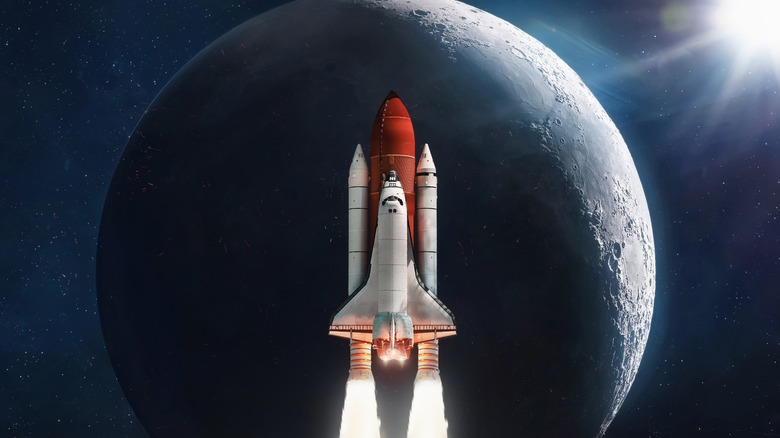
The moon landing or return to the lunar surface isn't cancelled entirely. As of now, NASA still plans to put astronauts back on the moon for scientific research and development. But that eventual mission will come later, one or more "steps" beyond when it was meant to. Artemis III, as disclosed, will be in low-Earth orbit, and Artemis IV will be the scheduled moon landing. As Isaacman explains, "we've got to get back to basics." The additional missions will allow NASA team members to earn more flight experience and get more familiar with the complex systems controlling the craft, both on the ground and in space.
Hopefully, the improved lead times should help cut back on delays, software issues, and other concerns that have long plagued the Artemis mission series. It's also likely that everything we've come to learn about Artemis III, before its launch, will still apply to the upcoming Artemis IV mission. NASA will still be using the next-generation of moon rovers, and may still use the same mission map. The biggest change is that what would have happened during Artemis III has now been pushed back, and instead, it is a low-Earth orbit research flight to help the teams train and prep more.