

Washington Proposes Ban On A Potential Sci-Fi Nightmare - Microchipping
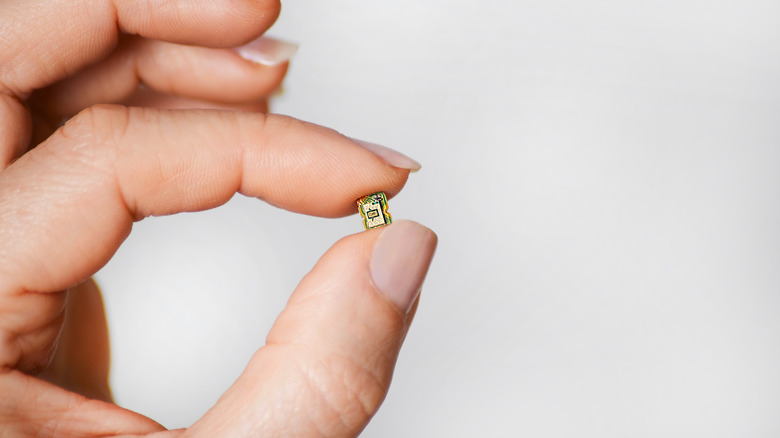
The Washington State House passed a bill that bans microchipping if it's required by employers. HB 2303 (downloads a PDF to your device) says businesses and employers shall not "request, require, or coerce," employees to have microchips implanted in their bodies "for any reason." If that sounds a tad dystopian to you, this legislation appears to be more of a precautionary move than a reactionary one — there are no instances of businesses requiring employees to do this, yet.
Subdermal human microchips indeed exist and can be used, or deployed, for various reasons. They can help verify identities or medical information, similar to how pet microchips work. They can be used to monitor vital signs, access prosthesis mechanisms like artificial retinas, unlock smart devices, streamline contactless payments, secure access to confidential or locked rooms, and much more. One Tesla owner famously had a key implanted in his hand (an NFC-enabled chip) to unlock his car. In addition, there are companies that sell DIY microchip implant kits, though they aren't officially approved by any agencies or health programs.
Of course, voluntarily microchipping yourself and your own body is a far cry from employers forcing you to do it in some way. This bill would prohibit businesses from doing so and impose a minimum fine of $10,000 for a first offense and $20,000 for every infraction after. You could argue that's a small price to pay for a multi-billion-dollar business to have its own army of microchipped sales professionals. The bill has already passed the state's House and Senate, so it's off to the governor.
Washington is not the first and may not be the last
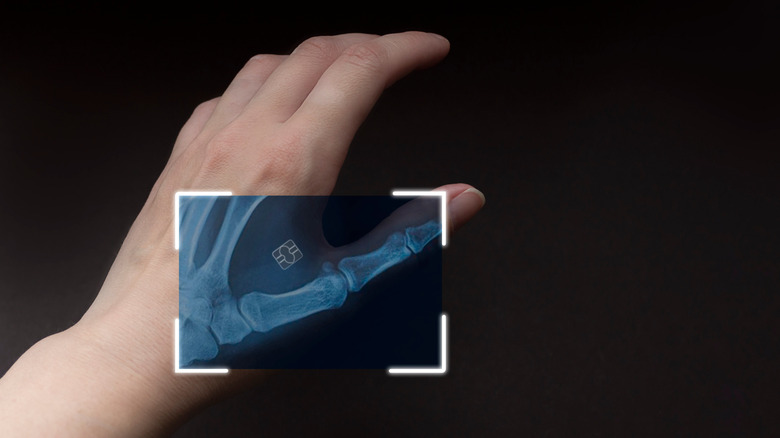
While not exactly highly publicized, Washington is not the first state to pass legislation banning mandatory human microchipping. As of this writing, 13 U.S. states, not including Washington, have banned the practice through legislation. More states besides Washington are also working to address the practice in some way. Wyoming, for example, was working on a bill in 2023 that was defeated, unfortunately, for not addressing animal microchipping appropriately. Nevada's bill, now law AB266, actually prohibits people from "voluntarily" electing to undergo the process. That shouldn't stop people from getting revolutionary implants on their own, like an electronic eye implant to restore vision, but merely stops companies from establishing programs that "voluntarily" allow for it — nudging you to get it done.
It is good to see legislators get ahead of this innovative technology before it can be leveraged in such a way. These laws don't appear to address brain-computer interfaces (BCIs), however, like Neuralink, which is a kind of microchip or implant directly inserted into the user's brain. Undoubtedly, they have strong ethical and data-related concerns surrounding them. Even standard microchips implanted in a hand or other part of the body come with similar concerns.
That's before looking at the potential health issues, like severe infections or adverse tissue reactions. Representative Thomas from Washington (one of the authors of the state's microchip bill) has taken a rather refreshing stance on the concept, saying, "We don't want to have to try to clean up an impossible mess after it's too late. So we are getting ahead of the problem."