

This Company Is Launching A Hypersonic Rocket That Could Actually Compete With SpaceX
For years, SpaceX has been considered one of the biggest contenders in the space industry, even helping launch many of NASA's missions. There are even plans for SpaceX to be heavily involved in future NASA space exploration missions to Mars and the Moon, with Starship set to act as the landing system for NASA's Artemis missions. However, a new contender in the industry could finally give SpaceX a run for its money, at least when it comes to sheer speed.
That contender is Rocket Lab, which has new plans to launch a hypersonic test mission using its HASTE rocket, which the company first debuted in June 2023. This next test will be the fourth hypersonic test that Rocket Lab has put the HASTE rocket through. The Hypersonic Accelerator Suborbital Test Electron (HASTE) is a specially modified version of Rocket Lab's small-lift Electron rocket. What makes this particular rocket different compared to Rocket Lab's previous is the fact that it has been modified to work directly as part of suborbital missions, as the company wants to test hypersonic capabilities in suborbital situations.
The rocket has a modified design, which allows for a much stronger structure, which should help make it more durable during hypersonic testing. However, it's the speed that helps make this rocket a good possible competitor alongside SpaceX, as it can travel up to Mach 20 (over 15,000 miles per hour), making it fast enough to break into Earth orbit. And that's where the kicker comes in. While impressive, HASTE can't really compete with SpaceX's Falcon rockets when it comes to payload capacity. However, it isn't designed to. Instead, HASTE is carving out its own path by looking to support smaller launches.
Competing from a different angle
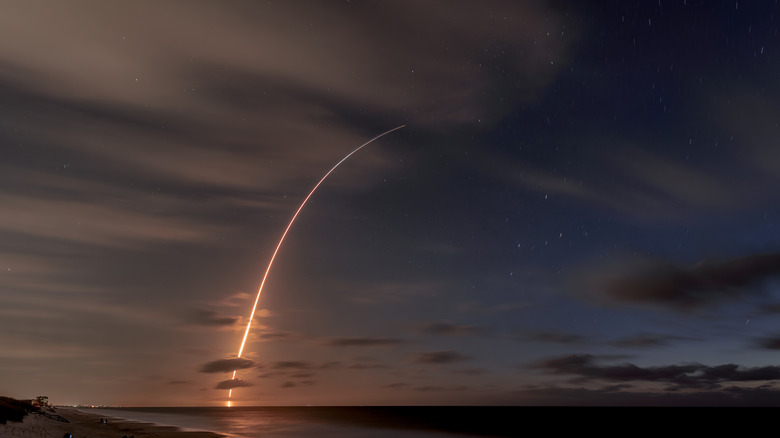
While it's easiest to think of competition as two companies going head-to-head with each other in the exact same methods, that isn't always the case. Space is a big venture, and while SpaceX does a great job of delivering on its big missions — the Falcon system (Falcon 9, Falcon Heavy) is capable of carrying up to 22 tons depending on the vehicle used — there are plenty of smaller launches that need help, too. Which is where Rocket Lab and HASTE come into play.
Because even though HASTE is only designed to carry much smaller payloads than the Falcon, it is designed to do so quickly and efficiently. And, as Rocket Lab continues to improve upon its platforms, these advantages are likely only going to show themselves even more, especially as the company appears to have some deals in place with the defense industry — HASTE's next test will launch a defense system into suborbit for testing.
There's also the cost to look at when you start comparing the two. SpaceX has gotten where it is because it offers a very affordable approach to launching large payloads into orbit, with SpaceX reportedly charging under $70 million for launches capable of carrying up to 22 tons. In comparison, Rocket Lab reportedly charges around $8.4 million per launch for a rocket that maxes out at less than a ton (roughly 320 kilograms on its Electron rocket). Now, HASTE has improved carry capacity, but it's still far less than Falcon. Which is why Rocket Lab really needs to focus on those smaller missions if it intends to compete with SpaceX.
Smaller doesn't mean less important
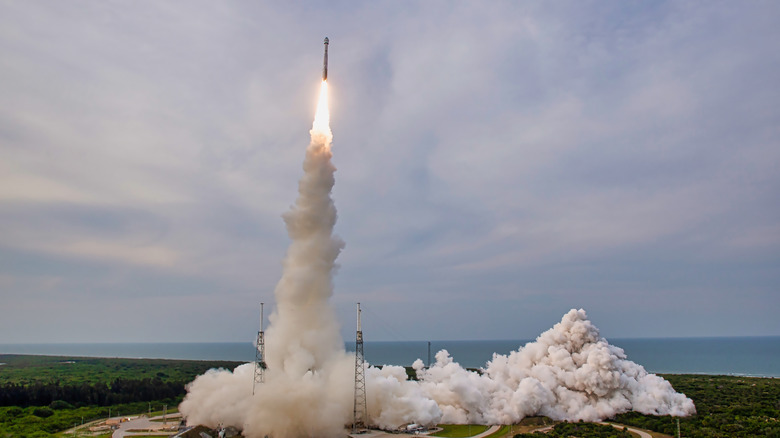
While SpaceX gets to focus on the big missions — like sending humans to Mars — Rocket Lab has been a part of some important missions, too. Though they were big for different reasons. Perhaps one of the most well-known is NASA's Capstone mission, which was meant to pave the way for the space agency to eventually build a space station around the moon. Rocket Lab was one of the partners behind that launch, and Capstone completed its mission back in 2023, gathering vital information for NASA's Lunar Gateway plan.
But that is where Rocket Lab really has a chance to shine, especially as it continues to improve HASTE and its other rocket offerings. The company is also working on reusable rockets, which would help it close the gap with SpaceX even further. Rocket Lab attempted to catch its returning rocket with a helicopter a few years back, and though the process ultimately failed, it still provided some good information for the company.