

Apple A18 Pro Vs. M1: How Do The MacBook CPUs Compare?

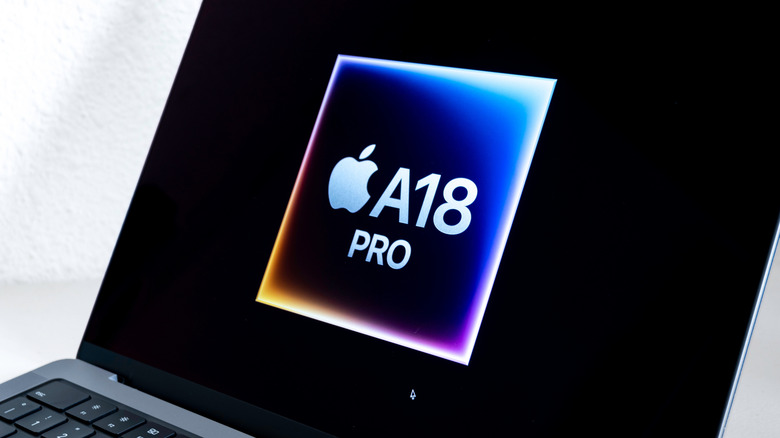
Apple has finally unveiled the low-cost MacBook version – the new MacBook Neo – powered by the Apple A18 Pro chip launched in September 2024 that initially featured in the iPhone 16 Pro and 16 Pro Max. This marks the first time an A-series chip, which Apple traditionally uses for iPhones and the entry-level iPad, powers a MacBook. While that's an impressive technological accomplishment, it may give some buyers reasons to pause. They may wonder whether the $599 MacBook Neo can offer decent laptop performance, or whether they should go for a used version of the older M1 MacBook Air model that Apple launched in 2020. But the 3nm Apple A18 Pro is a great alternative to the 5nm Apple M1, as benchmark tests show. While the performance figures are quite neck and neck, there are some aspects like the number of supported external displays and available memory options that might be dealbreakers for many buyers.
The M1 MacBook Air saw strong reviews at launch, excelling in both performance and battery life. Later, Apple brought the M1 chip to the iPad, starting with the M1 iPad Pro (11-inch and 12.9-inch versions) and the fifth-generation iPad Air. The M1 chip supported 8GB and 16GB of RAM and several storage tiers, ranging from 256GB to 2TB.
Comparatively, the A18 Pro doesn't have as rich a history, considering that Apple has only launched two products featuring the mobile processor before the MacBook Neo. The 2025 iPhone 16 Pro and 16 Pro Max both feature 8GB of RAM, with storage starting at 128GB for the Pro and 256GB for the Pro Max and going up to 1TB for each model. The MacBook Neo is available only in an 8GB variant when it comes to memory, and two storage options: 256GB and 512GB.
Apple A18 Pro vs. M1: The benchmarks

The Apple A18 Pro's performance is already known. In Geekbench 6 tests, the chip scored 3,445 (single-core) and 8,626 (multi-core). The first MacBook Neo benchmark tests have shown similar figures. The laptop reached 3,461 in single-core tests and 8,668 in multi-core tests. Metal performance was similar between these two types of products: 32,575 (iPhone 16 Pro) and 31,286 (MacBook Neo). The discrepancy here concerns the GPU. The MacBook Neo features a 6-core CPU and a 5-core GPU compared to a 6-core CPU and 6-core GPU for the iPhone 16 Pro models.
The M1 MacBook Air scores 2,347 in single-core and 8,342 in multi-core tests in the same Geekbench 6 benchmark. Metal performance tops 33,152 in tests. The A18 Pro is superior to the 2020 laptop in single-core tests and slightly faster in multi-core tests. The MacBook Neo should offer improved performance over the M1 MacBook Air. The A18 Pro's single-core test is only slightly behind the M4 chip that powered last year's MacBook Air and Pro models. The M4 chip reaches 3,763 in single-core tests and 14,694 in multi-core tests.
The Apple A18 Pro has a few other advantages over the M1. The chip features a faster Neural Engine (the NPU), which is involved in AI processing. That's 38 TOPS of performance for the A18 Pro chip compared to 11 TOPS for the M1 chip. The M1 does have a slightly larger memory bandwidth compared to the A18 Pro (68GB/s vs. 60GB/s), but the latter offers 20 MB of L2 cache and 24 MB of L3 cache compared to 16 MB of L2 cache for the M1.
Is the MacBook Neo the better package?
While the Apple A18 Pro chip should offer slightly better performance than the M1, battery life is also notable. Apple quotes 11 hours of wireless browsing and 16 hours of video streaming for the MacBook Neo. The estimates are slightly lower than the M1 MacBook Air, which can last for 15 hours of web browsing and 18 hours of Apple TV movie playback. However, the M1 MacBook has a slightly larger overall size, featuring a 13.3-inch display instead of 13-inch for the Neo. This indicates that the M1 laptop has room for a larger battery.
The M1 chip has another advantage some laptop buyers may want, in addition to support for more RAM than the A18 Pro. That's support for connecting two displays to the laptop instead of just one for the MacBook Neo. Then again, buyers who need more display real estate from their laptop setup may consider slightly more expensive MacBooks, which may also better serve their work-related needs.