

Nebraska Wants To Build Batteries For Storing Renewable Energy
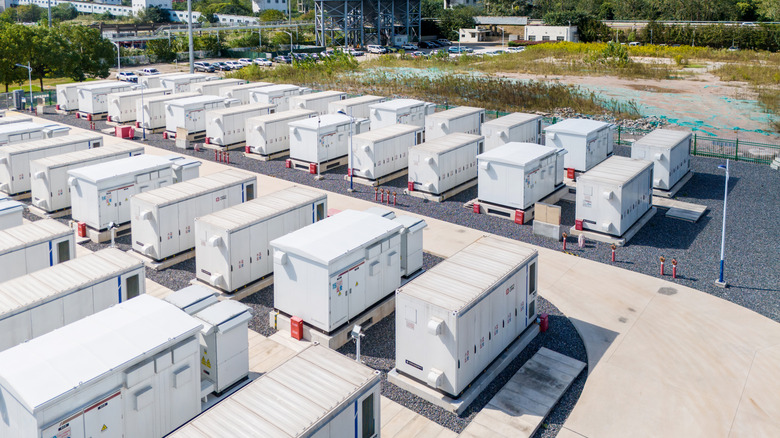
When you generate energy, like through a generator, it has to be used or stored somewhere lest it go to waste. That's why a lot of solar energy setups introduce a backup battery or a whole-home backup battery system. The battery is charged, where the energy is stored, and then it uses that energy at times when there's little or no energy being generated, such as at night. That relates to perhaps one of the biggest drawbacks of renewable energy. If the sun isn't shining, the system isn't producing energy, and more broadly, if the wind isn't blowing, wind generators aren't making energy either. You need to store it for those rainy days.
That's precisely why Nebraska has introduced a bill to significantly bolster the state's backup battery systems. They want to build a large-scale battery storage facility to complement and support the state's publicly owned electric utilities; only those facilities will be constructed and maintained by private companies. Those facilities would offer a range of storage capacities from 50 megawatts up to 500 megawatts. The goal is to generate energy from traditional fossil fuels and renewable sources like wind and solar, store it appropriately, and leverage it when energy demand rises. Of course, backup energy storage is meant to help when power generation isn't possible, not necessarily to offset the rising demands of modern technologies, at a time when data centers are requiring exponentially more power to stay operational. AI data centers are also doing more harm than just raising utility prices; they're causing noise pollution and wasting water, so if this energy backup is meant to help there, it likely won't have a formative impact.
What's in the Nebraska energy storage bill?
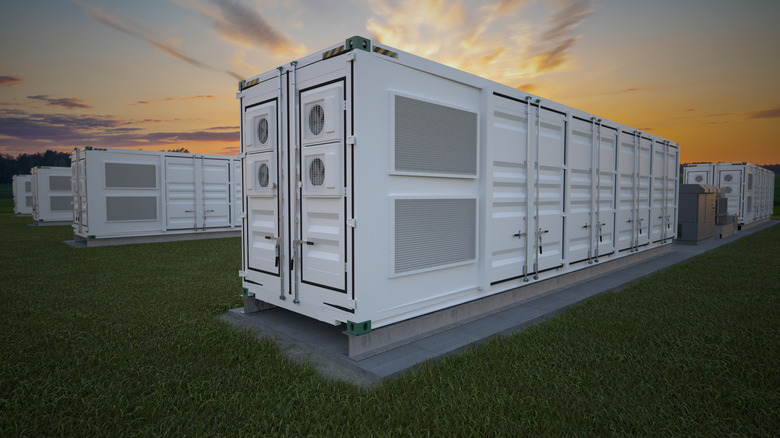
Titled LB1010 or Legislative Bill 1010, and currently proposed, the bill is said to "provide for eminent domain of electrical energy storage property" under the Electric Cooperative Corporation Act. It also defines energy storage resources and changes the "application, notice, filing, exemption, and violation provisions relating to electrical suppliers." The goal is to empower "private electric suppliers" to build and maintain the energy storage systems that will hopefully enrich the local power facilities.
As reported by KETV 7 Omaha, Nebraska Senator Tom Brandt is behind the bill's push and the support for the new storage technologies. He says that public power companies "want to encourage private enterprise to build these batteries." But another aspect of the bill that's interesting is that it would require data centers to disclose their electricity usage. Section AM 2386 to LB1111 of the bill expressly calls for data centers to submit annual reports to the Department of Water, Energy, and Environment detailing administrative names, physical size, electricity usage, annual water usage, and sales and tax exemptions they receive. Presumably, this might be a way to quantify parties consuming too much power and enact limitations if necessary, especially regarding the backup power sources.
While unrelated, there is some hope in the future of energy storage technologies. Researchers have been working on innovative ways to store energy for longer periods. One liquid-based system could revolutionize solar energy by storing it for up to 18 hours without losing its effectiveness. Another, though theoretical, could use a type of gravity battery to store and produce unlimited energy. Energy storage could be a viable way forward to deal with many power complications, especially if these experimental technologies come to fruition. Senator Brandt's bill might be on the right path in that case.