

NASA's Unique Experiment To Create Oxygen On The Moon: Lunar Soil
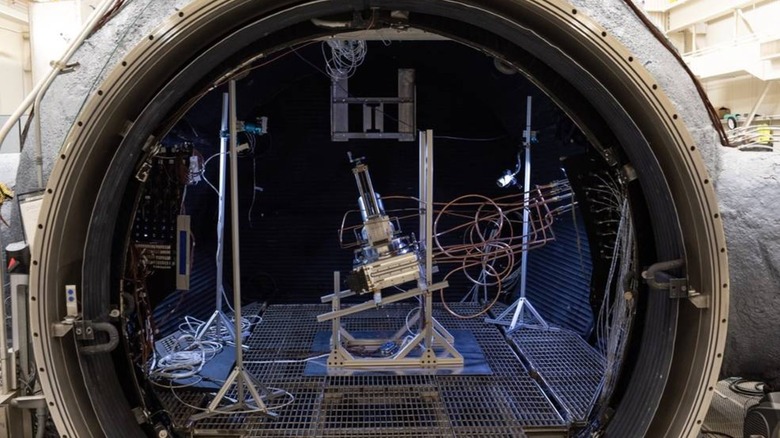
Outer space is an inhospitable frontier. Astronauts are not only cut off from gravity but also from all the resources ancient explorers took for granted, especially oxygen. Sure, you can grow fruit in space with a ton of effort, but when you're on the Moon, oxygen doesn't grow on trees — because there are no trees on the Moon. But you can use the Moon's soil to generate oxygen with a bit of science.
In February, NASA announced that the Carbothermal Reduction Demonstration (CaRD) program successfully tested a prototype that used "concentrated solar energy" (aka sunlight) to extract oxygen from the Moon's soil, also known as lunar regolith. Well, the environment was simulated, but proof of concepts are an important part of the scientific process.
The conversion relied on a "carbothermal oxygen production reactor" that heated up and melted lunar regolith and then combined carbon with the silicate minerals within, producing carbon monoxide. The gas was extracted and converted into oxygen using a "downstream system." While NASA has at least 20 hypothetical methods to mine lunar soil for oxygen, all of which were performed in laboratories, CaRD was the first to demonstrate its potential in a relatively accurate simulated lunar environment.
What Carbothermal Reduction Means for the Future of Space Exploration
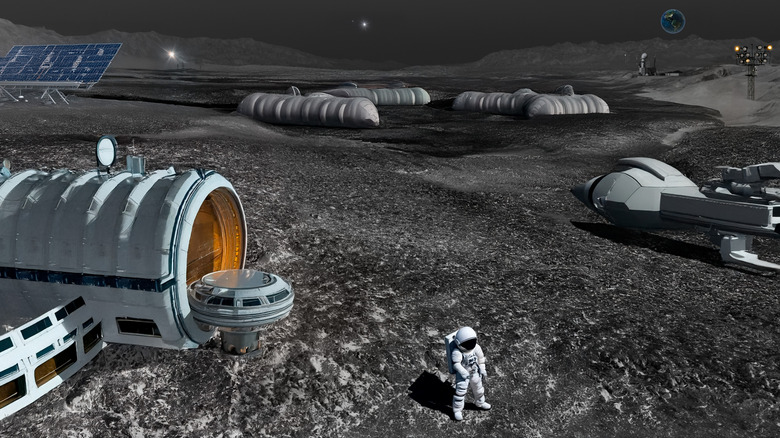
According to NASA, the Carbothermal oxygen production reactor process can help shore up the organization's knowledge regarding carbothermal reactions. Researchers believe that, when scaled up, the technology can "produce several times its own weight in oxygen per year." This will obviously make it easier to sustain a lunar colony for an extended period of time, but NASA isn't just thinking in terms of breathable oxygen; scientists believe oxygen derived from lunar regolith could be used as a propellant, specifically the kind used to land modules. Imagine: With enough soil and sunlight, a lunar outpost could be used as a refueling station for spaceships.
While the CaRD program demonstrated that engineers could squeeze oxygen out of moon rocks, the technology's applications don't end there. The term "regolith" can apply to soils on any planet, including Mars, which means a carbothermal oxygen production reactor can theoretically transform Mars rocks into oxygen. More importantly, scientists can tweak the process to also create water as well as methane — another potential propellant. And yes, NASA is also confident that it can use electrolysis to turn lunar regolith into water, which in turn can be converted into methane.
Depending on the CaRD program's efficacy, NASA might not need to find water on Mars to one day colonize it. While the conversion process also produced carbon monoxide, engineers already have systems that transform that gas into even more oxygen. Plus, NASA is confident that the