

QR Codes Are Everywhere – So Why Haven't We Run Out Yet?
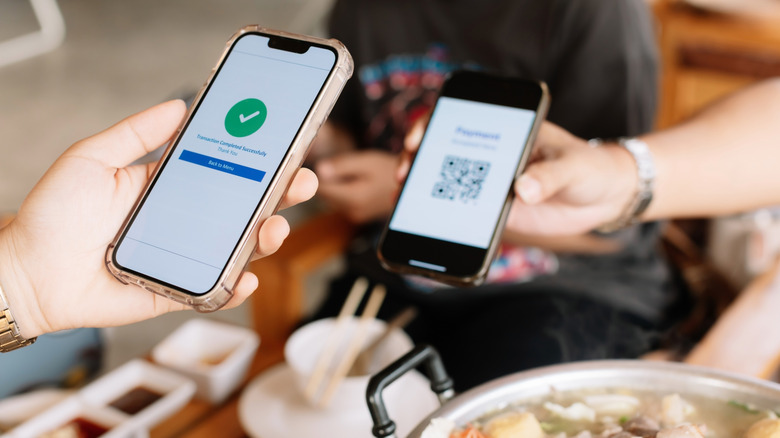
QR codes, short for quick-response codes, are designed to store information for easy sharing. For example, instead of making someone open a browser on their phone and manually type out a specific URL to access your restaurant's menu, you can simply present them with a scannable QR code. Scanning it will bring the person to the online menu right away. QR codes can include text, links, multimedia files and bits of data that you might want others to see, and they're incredibly efficient. 1Password even has a brilliant way to share Wi-Fi passwords via QR codes. Everyone seems to be using them, too, and they're all over the place in the real world. QR code creation skyrocketed by as much as 301.51% between 2020 and 2024.
But if there are so many, and you can find them everywhere, and virtually everyone is using them to share information, won't we run out eventually? In fact, why haven't we run out of possible codes already? The complex answer includes a few notable reasons why we probably never will, but the simplest answer is that there are a huge number of possibilities, near-endless permutations actually, so it's not likely we'll run out anytime soon, and that's just with static codes. There are dynamic QR codes that can be changed, too. So, you can use a dynamic QR code multiple times and continue updating it to send to people with new information.
Why we probably won't run out of QR codes ever
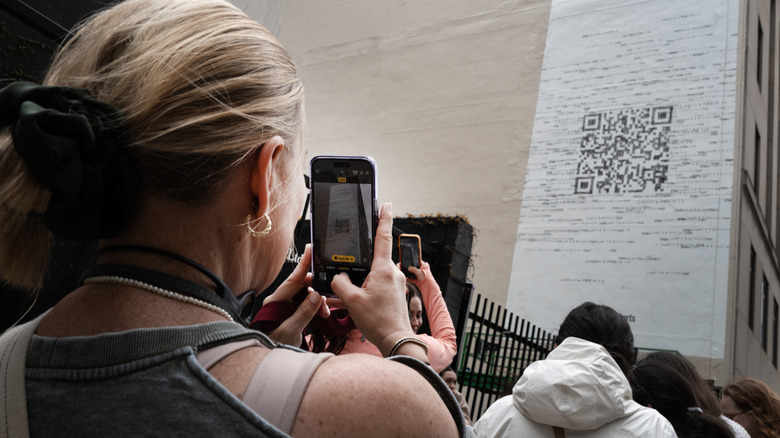
In addition to the near-endless amount of possibilities with static codes, alone, most codes that are being created don't even use the full design to share information. A standard QR code can hold up to three kilobytes (KB) of data, which is 7,089 numeric characters, 4,296 alphanumeric characters like letters and numbers, and 1,817 Kanji characters. But it also depends on the QR code version, or standard, of which there are up to 40 different versions. What this means in terms of storage, however, is that certain messages, URLs, and even media files don't utilize the entire capacity of a QR code, which results in the data pattern being less complex. That leaves open a lot of potential combinations, even with so many QR codes being created and shared.
Couple that with the fact that dynamic codes exist, which can be reused, and there are already a limitless number of permutations, the number of possibilities is so high, the chances of running out of codes are unequivocally low, if it will ever happen.
That is neat, and it's somewhat promising to know QR codes may be around and continue to be created for a long time. However, there's a dark side to the technology. It's worth noting that QR codes can also be used for nefarious deeds, as well. The FBI has issued warnings about scanning select QR codes showing up on mysterious packages, as has USPS. They're called Quishing scams, and they're tricking millions. So, while there are a nearly infinite number of possibilities, and they are very helpful, that doesn't mean you should go around scanning every QR code you see.