

This New Hybrid Engine Concept Is A Huge Leap Forward In Fuel Efficiency
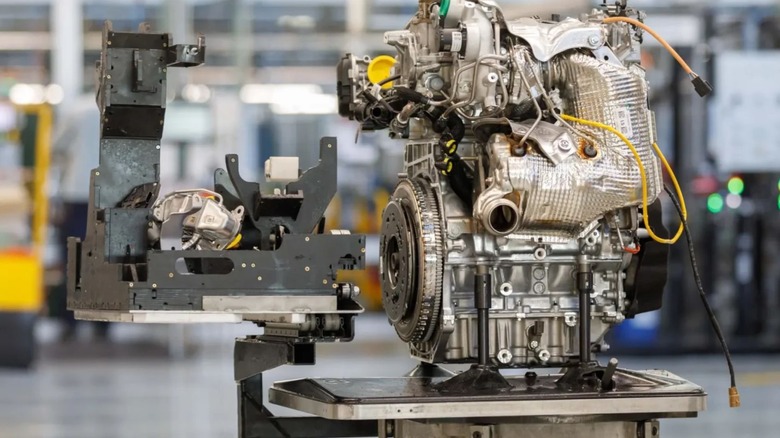
The average passenger vehicle emits 4.6 metric tons of carbon dioxide per year, and while emissions for hybrids are harder to calculate, they and EVs are the answer to cutting down on overall emissions and, hopefully, general reliance on fossil fuels. However, EVs aren't quite as reliable as their ICE counterparts, plus there's genuine concern about their range and the ability to find a viable charging station, as EV infrastructure is still sparse in some locations. That may be about to change, thanks to a Horse Powertrain's H12 Concept hybrid engine.
The U.K. firm has purportedly created an innovative hybrid engine concept that uses 100% renewable fuel while still boosting mileage by as much as 40%. With a compression ratio of 17:1 and a 44.2% peak brake thermal efficiency, the H12 Concept Engine achieves about 71 miles per gallon (3.3 kilometers per liter). The team believes that if this engine were to be used commonly, it could cut emissions waste by up to 1.77 tons per car per year. Of course, that's not exclusively because of an improved engine design but also the type of fuel used, which was a renewable gasoline made from organic waste and cooking oils.
The organic fuel, called Nexa-95, is produced by Repsol and is already being sold in two different regions in Spain as a high-quality and usable 95-octane product. The joint venture between Horse Powertrain and Repsol is still technically a work in progress, though. They have plans to reveal a working demonstration vehicle in the near future.
Repsol's Nexa 95 fuel is also compatible with conventional gas vehicles
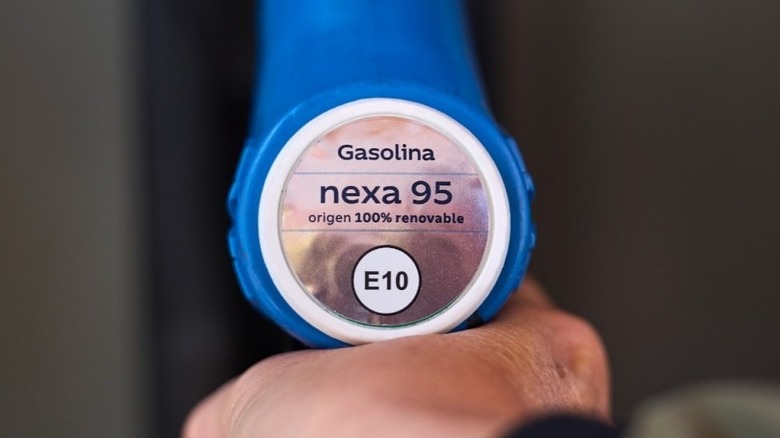
Arguably more interesting is that the 100% organic fuel is compatible with traditional ICE vehicles without any modifications and could help achieve a reduction in net CO2 emissions by more than 70% if used over traditional gasoline. Nexa Diesel, like the 95 octane product, is another form that's already available at select locations around Spain and Portugal. Together with the Horse Powertrain H12 Engine Concept, the two companies could revolutionize modern vehicles and, by proxy, fuel efficiency.
This would be a significantly easier rollout for most infrastructure projects since there's no need to install new chargers, stations, or adapters. It's likely that the same gas stations and fuel fill-up locations could be swapped over to this renewable fuel. In fact, Repsol maintains that renewable fuels are already in use all over the world, including in heavy transportation, aviation, and maritime. It names the Royal Caribbean and Norwegian cruise lines as current purveyors of renewable marine fuels.
Considering this solution is already in use and has real-world applications, this is also a massive benefit that shouldn't be overlooked. Some renewables, like wind turbines, can take almost a decade to pay off, maybe even longer. Although in terms of energy, scientists do believe there's a cheap, easy way to supercharge the power grid in a similar way without massive infrastructure changes. The Horse Powertrain H12 Engine, and Repsol's miraculous renewable fuel could make that happen in the world of consumer and commercial-grade vehicles, real soon.