

5 Species We Thought Were Extinct But Were Rediscovered
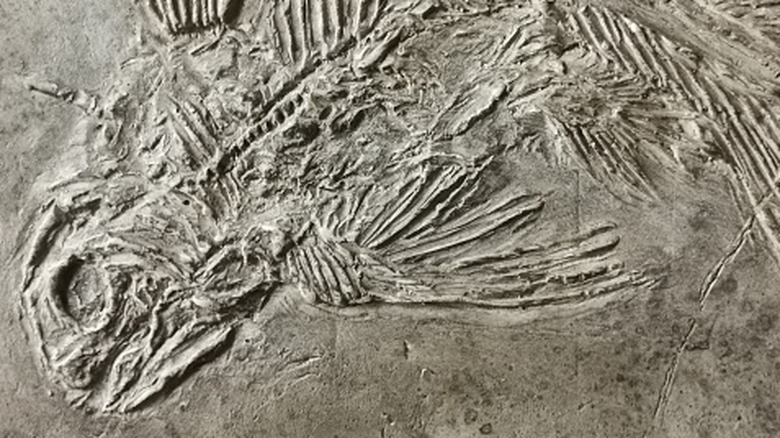
On one of the final days of 1938, a fishing trawler off the coast of South Africa reeled in a massive creature unlike anything the crew had seen before. It was nearly five feet in length, and its fins stuck out on a series of bizarre, leg-like appendages. Local biologists Marjorie Courtenay-Latimer and J.L.B. Smith subsequently identified the fish as a coelacanth, which was shocking to say the least, because coelacanths were supposed to have gone extinct 70 million years before.
Up until that fateful fishing trip, the only evidence of coelacanths had been in fossil records, but it turns out they had survived all along, and human scientists just hadn't found one. The coelacanth is perhaps the most famous example of Lazarus taxa – animals and other organisms that were at one point declared extinct, but were later rediscovered alive. The term comes from the biblical character of Lazarus, who was said to have been raised from the dead by Jesus.
Many organisms appear to have vanished from the face of the Earth before later reappearing. In just the past year, scientists rediscovered the night parrot and the Behningia baei mayfly amongst other supposedly extinct species. The reason for this phenomenon is simple: human beings have only observed a fraction of the planet, leaving huge gaps in our fossil records and our knowledge of extant organisms. Each time a Lazarus taxon is discovered, it helps to close those gaps, and the following five finds are among the most exciting.
Peruvian yellow-tailed woolly monkey
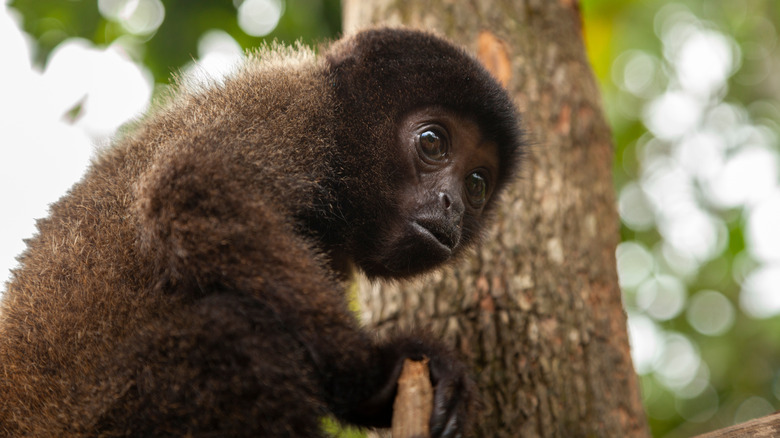
The Peruvian yellow-tailed woolly monkey (Lagothrix flavicauda) is the largest primate native to Peru, yet it managed to vanish from the taxonomic record for a century and a half. The species was first described by naturalist Alexander von Humboldt in 1812. He didn't actually see the animals in person, but rather went off of a series of pelts possessed by locals in the Andes. No sign of the living monkeys could be found, and as the search stretched beyond a century, scientists assumed that they must have gone extinct.
The monkey would ultimately evade discovery for 162 years. Then, in 1974, a group of researchers travelling through Peru picked up a hitchhiking hunter, who had a bag with him. He revealed the contents to be a pelt unmistakably belonging to a yellow-tailed woolly monkey. The hunter claimed to have caught the creature in the last week, signaling to the researchers that the monkeys were still out in the wild.
Populations of yellow-tailed woolly monkeys have since been found in multiple locations, primarily in northern Peru, but with at least one group in the central part of the country. They live in communities of five to 30 individuals, and one reason they escaped detection for so long is that they favor very high elevations. They are now considered a critically endangered species, and activists in Peru are working hard for the monkeys' cause, including holding a yellow-tailed monkey festival in Lima to raise funds for their conservation.
Mountain pygmy possum
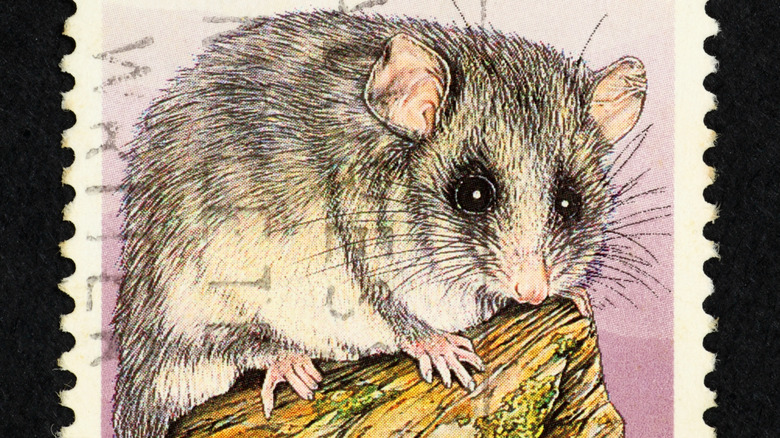
When most people think of Australia, they picture the sparkling beaches of the Gold Coast or the arid expanse of the Outback. Little attention is given to the Australian Alps, a southeastern mountain range where you can find snow for half the year. Australia is renowned for its biodiversity, but there is only one animal that lives exclusively in this alpine zone. It's the mountain pygmy possum (Burramys parvus), a four-inch-long member of the possum family that holds the distinction of being the only known hibernating marsupial in existence.
However, this existence was in question for more than 70 years. The first evidence of the mountain pygmy possum was a fossilized jawbone found in the Wombeyan cave system in 1895. More fossils were later discovered in other caves, all dating back to the last ice age during the Pleistocene epoch, but paleontologists could find no direct link between the fossils they found and any of Earth's major mass extinction events. In 1966, the mountain pygmy possum was discovered alive under unexpected circumstances.
Guests at a ski lodge complained of an unusual rat stealing their food. The creature was captured, and, realizing it was no normal rat, local wildlife experts were called in. They were able to link the pygmy possum to the fossil record, but it took four more years to find another one alive. The species is now known in three regional populations, but with only 2,000 to 3,000 individuals known, the species is critically endangered.
Dawn redwood

Lazarus taxa include all forms of life, not just animals, and the most famous example in the plant world is probably the dawn redwood (Metasequoia glyptostroboides). The story of its remarkable discovery begins in 1941, when Japanese biologist Shigeru Miki came across fossilized foliage that didn't resemble that of any other tree known to science. It was assumed that the fossils came from a species that had gone extinct, perhaps millions of years earlier, but this assumption would be proven wrong within the decade.
In 1944, a forester in China's Szechwan Province found a grove of dawn redwoods, but they weren't linked to Miki's discovery because WWII was going on, and to say that China and Japan weren't communicating well would be the understatement of the 20th century. It was only after the war ended that scientists put two and two together. A series of expeditions were made to Szechwan Province, including by arborists from Harvard University, who brought seed samples back to the United States. By the end of the 1940s, the dawn redwood was being planted in botanic gardens around the world.
The dawn redwood is one of just three redwood tree species, along with the coast redwood and giant sequoia, both of which are found in California. In addition to hailing from a different continent, the dawn redwood stands apart from its family members due to its smaller stature and colorful leaves. It is the only deciduous redwood, meaning it sheds its leaves once a year.
Appalachian Grasshopper
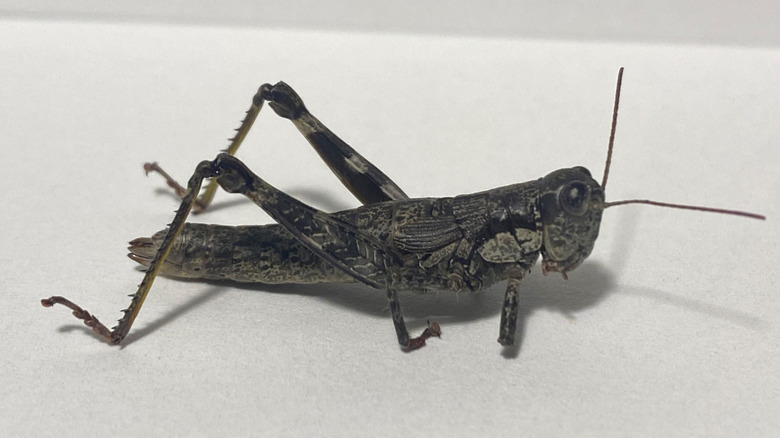
The Appalachian grasshopper (Appalachia hebardi) is one of the most recent lazarus taxa to be rediscovered, surfacing in 2024 after almost eight decades of obscurity. This flightless species was never a common sight, and was only ever seen in three American states: Virginia, West Virginia, and Pennsylvania. Even within those states, it was rare, having only been recorded in five of Virginia's 95 counties. After 1946, sightings of the Appalachian grasshopper went from rare to nonexistent. Decades passed without any confirmed sightings, and the scientific community concluded that the species had likely gone extinct.
The rise of the internet and public science forums brought numerous unverified sightings to light, and biologists began to wonder if the insects were still out there. One such researcher was Andrew Rapp, a field zoologist at the Virginia Department of Conservation and Recreation. Rapp surveyed several sites where he suspected Appalachian grasshoppers might live, and on September 3, 2024, he caught one on the side of a road near the border of Virginia and West Virginia.
How did the Appalachian grasshopper escape the eyes of scientists for 78 years? For starters, the insect's darkly mottled body provides excellent camouflage that apparently works as well on humans as it does on natural predators. The other reason is troublesome though, for while the grasshoppers have not gone extinct, their numbers are dwindling. Invasive caterpillars in Virginia are feared to prey on the native insects, and urban development has restricted the young forests and open grasslands where they live.
Monoplacophora
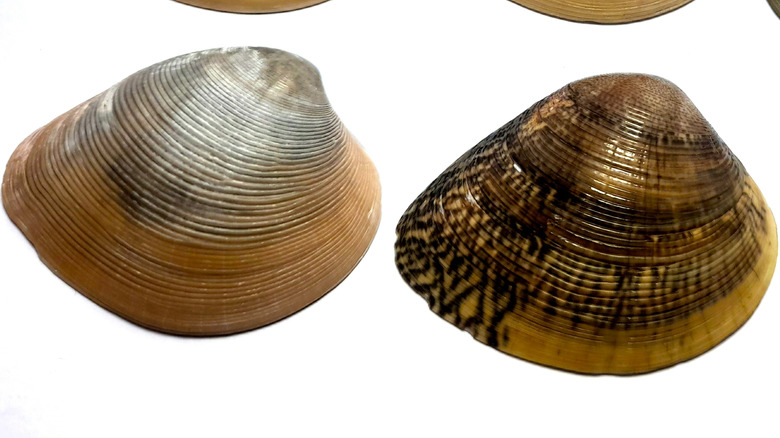
The period of time in which a lazarus taxa is thought to be extinct is commonly referred to as its ghost lineage, and the organisms with the longest ghost lineage of all are monoplacophora, a group of mollusks that were thought to be extinct for not hundreds, not thousands, but roughly 375 million years. Monoplacophora belong to the class Tryblidia. They are characterized by their singular, pointed shells and their unique anatomy, which is bilaterally symmetrical and features paired organs.
They are believed to be among the earliest members of the phylum Mollusca, and some scientists have even argued that monoplacophora are the common ancestor of all mollusks in existence. Monoplacophora were first introduced to scientists through fossils from the Paleozoic era, hundreds of millions of years before the rise of dinosaurs. They were thought to be so ancient that their extinction was closer to the origin of multicellular life than it was to the start of human civilization.
However, in 1952, live monoplacophora were discovered deep underwater off the coast of Costa Rica. It turns out that they live so far underwater, at depths often exceeding 10,000 feet, that they had simply escaped human eyes until they were dredged up that fateful day. Since then, around 20 monoplacophora species have been discovered alive, making them some of the longest-lasting organisms on the face of our planet.