

iPhone 17e Review: Fixing Everything Wrong With Last Year's Model
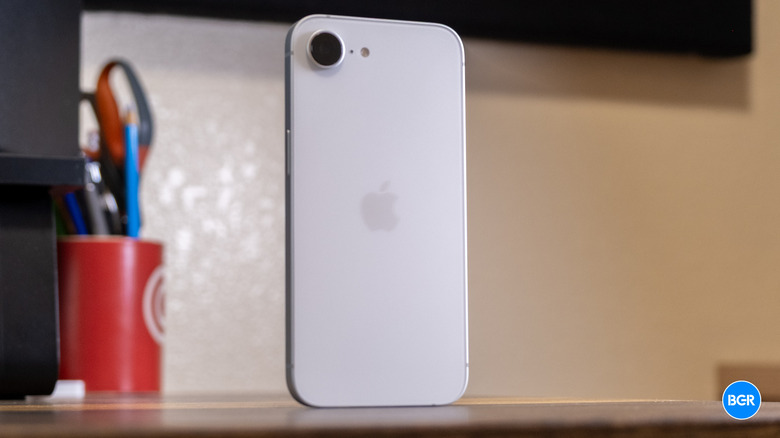
When Apple launched the iPhone 16e last year, I was happy to see it, but somewhat skeptical that we'd see consistent revisions to the model. After all, the iPhone SE models that we'd seen until then really only got updates every three or four years. Thankfully, one year on from the iPhone 16e, we indeed have a follow-up in the form of the new iPhone 17e.
The iPhone 17e gets a lot right that the iPhone 16e missed. There's MagSafe, for one, plus the new device has a base storage of 256GB, which is double the iPhone 16e, while keeping the same starting price. So, how much better is the iPhone 17e in the real world? With very similar hardware in other areas, and the same design, it can feel a little like it's the same phone — but it actually makes a serious case for itself.
Design
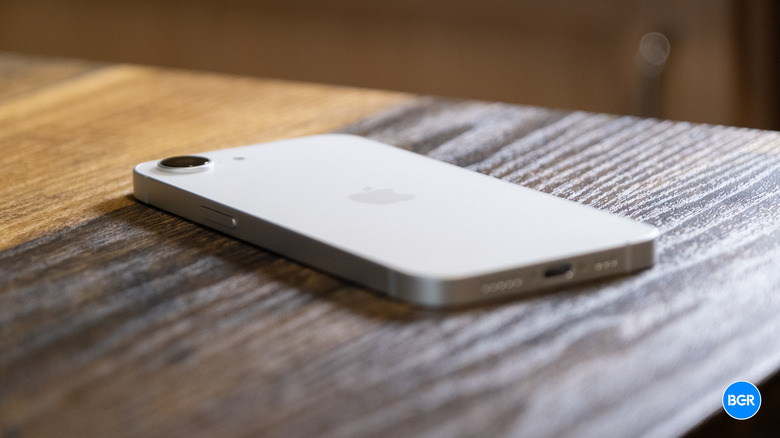
Physically, the iPhone 17e is nearly impossible to tell apart from the 16e. That's not necessarily a bad thing, but it does mean that the device keeps the same last-generation look, complete with a notched display. This isn't something I really care about — the screen still looks perfectly modern and you'll forget about the notch soon enough.
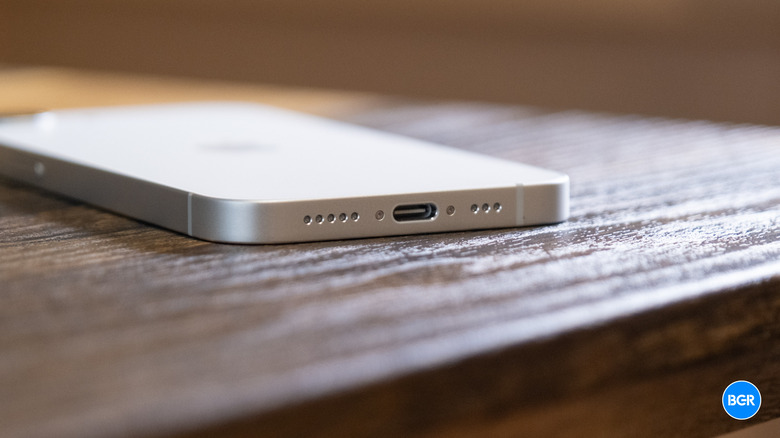
The dimensions are identical to those of the iPhone 16e, which again, isn't a bad thing. The phone feels decently lightweight, and with its flat edges, it has a modern look to it too. On the bottom is a USB-C port, while on the left edge is where you'll find the volume buttons and Action Button. On the right edge is the power button.
Thankfully, there are still some tweaks to the design. There's a new color in the Soft Pink option, so you won't be stuck with the arguably boring white or black colors. There's also what I consider to be a much more important design tweak — one that fixes my biggest issue with the iPhone 16e. The iPhone 17e has MagSafe. I consider this to be a fix to what was a huge misstep last year — the iPhone 16e felt like it didn't quite fit in the ecosystem, and Apple is all about ecosystem. With the iPhone 17e, you'll be able to use your favorite MagSafe accessories and magnetic wireless chargers.
The iPhone 17e may not be all that unique in terms of design, but it is still a refined, sleek device with features that matter — like MagSafe.
Display
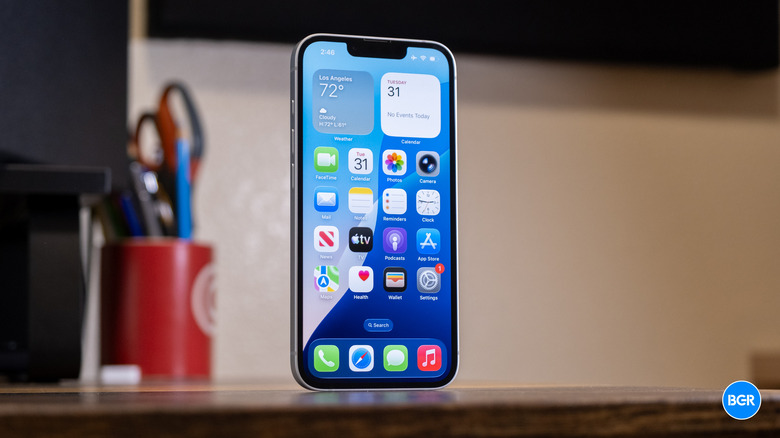
On top of offering the same design as the iPhone 16e, the iPhone 17e also has the same display. You'll get a 6.1-inch OLED panel with a 1,200 nits peak brightness. I tested its brightness and found that it lived up to Apple's claims and that it was able to sustain that brightness both across a variety of window sizes and over extended periods of time. So, while it's not that bright to begin with, at least you won't find that it easily throttles brightness.
That said, the screen being the same as last year means that the iPhone 17e still has a 60Hz panel, and not a 120Hz refresh rate like on the higher-end iPhones. High refresh rates have become pretty common at this price point, and I would have liked to see Apple include it on the iPhone 17e, especially given the fact that it finally added ProMotion to the base iPhone this year. I would have even been fine with Apple keeping the higher-end LTPO OLED tech for other models if it meant that the iPhone 17e could hit that higher 120Hz refresh rate. Alas, you're stuck with 60Hz here.
Performance
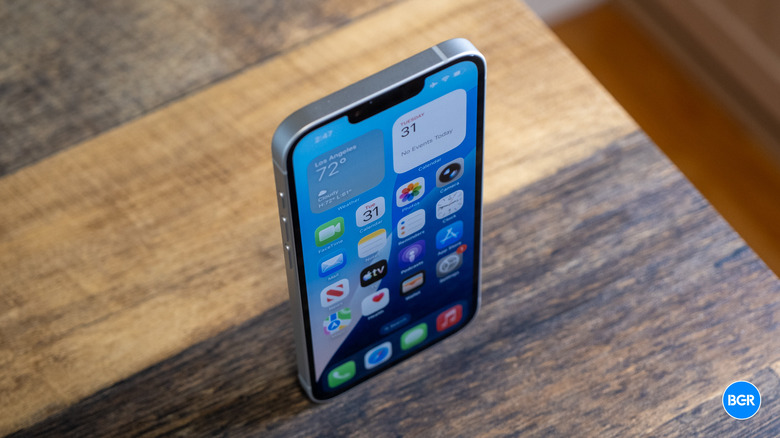
Apart from MagSafe, perhaps the biggest change to the cheapest iPhone comes in the form of a new processor. The iPhone 17e has Apple's A19 chip, which is the same chip that you'll find in the iPhone 17. The end result is that the device performs quite a bit better than the iPhone 16e.
Now, to be clear, you probably won't notice that much of a difference in day-to-day use. Apps still open and load quickly, and you likely won't experience slowdowns or lag whatsoever — at least not for a few years.
In Geekbench 6, the iPhone 17e scored roughly 10% better than the iPhone 16e, both in single-core and in multi-core usage. That was true in typical GPU tests too, with the iPhone 17e getting modest gains in framerate, and sustaining those framerates for longer. However, the device did score dramatically better in 3DMark Solar Bay, highlighting the A19's improvements when it comes to ray-tracing.
That said, raw benchmark supremacy doesn't always translate to a night-and-day difference in how the phone actually feels. If you're mostly scrolling social media and texting, you're probably not going to notice the gap between the A19 and the A18. That, mind you, isn't because the A19 is a bad-performing chip — it's because Apple's self-designed chips have been so good for so long.
Battery and charging
The iPhone 17e has a 4005 mAh battery, which is the same as the battery in the iPhone 16e. You'll get more or less the same battery life from it too. It lasted roughly as long in a video playback test, however it was slightly more efficient in a gaming test. Generally, though, expect to get the same battery life. That happens to be a decent but not excellent battery life — you won't get anywhere near a phone like the iPhone 17 Pro Max, but if you're good at keeping your phone charged up, you won't have to worry too much about the battery. That said, with some Chinese companies adopting silicon-carbon batteries, I'd like to see Apple, Samsung, and Google work at improving battery lives soon.
With MagSafe, charging the iPhone 17e is more convenient, and it's faster in wireless charging too — by quite a bit. It took hours to charge up the iPhone 16e, but the iPhone 17e fully charged in a little under two hours. To be clear, that's not that great — but it's certainly better than before. Wired charging speeds were similar, though still slightly better than the iPhone 16e. You'll hit 25% in 10 minutes and 61% in 30 minutes, but it'll take around 80 minutes to get a full charge.
Even at this price point, these charging speeds are behind a lot of Android competitors. Nothing phones can hit 50W, while the OnePlus 15R steps that up to 80W. If you charge overnight, you'll be perfectly fine — but don't expect to quickly juice up your phone when you have five minutes to spare.
Camera
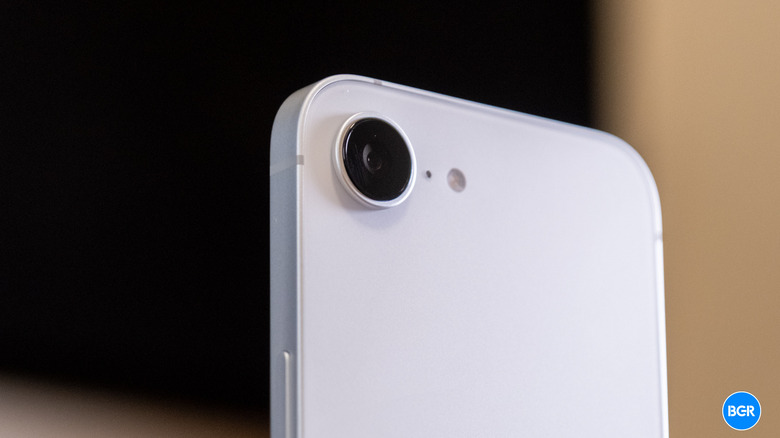
The 17e carries a single 48MP f/1.6 Fusion rear camera, but despite having just one lens, it punches way above its weight. In good lighting, images are sharp, colors are vibrant, and dynamic range is impressively well managed. Apple's computational photography continues to squeeze remarkable results out of a single sensor, and I found the iPhone 17e to offer an excellent overall image quality for a phone under $600.
There's a 2x optical-quality telephoto mode that works through sensor cropping, using that high-resolution 48MP sensor to give you a usable zoom without a dedicated telephoto lens. It works well enough for casual shooting, but it can't quite match the quality of a true optical telephoto.
The phone performs well in low light too. Images are decently sharp, even when zoomed in, and while you can't zoom further than 10x, images still look passable at that level of zoom. That's something not many other telephoto-less smartphones can claim.
That said, while you can get reasonably sharp digitally zoomed images from the iPhone 17e, you can't get around the lack of ultrawide camera — which the slightly more expensive iPhone 17 has. As a whole, the camera experience is, of course, pretty similar to the iPhone 16e. I really would have liked to see the iPhone 17e get the same great front-facing camera as the rest of the iPhone 17 series, but the front-facing camera on the iPhone 17e still takes great photos.
Conclusions
The iPhone 17e is a meaningful upgrade for anyone coming from an iPhone SE, an iPhone 11, or an iPhone 12. The improvement in processing power, the addition of MagSafe, and the other upgrades over those older phones make for an excellent device overall. If you have an iPhone 16e, then it's probably not worth upgrading, but if you're due for an upgrade, and want the cheapest entry-point into Apple's ecosystem, you'll love what the iPhone 17e has to offer.
The competition
There's a ton of competition at this price point. The Google Pixel 9a at $499 gives you a 120Hz display and a larger 5100 mAh battery, but it can't match the 17e's processing power or camera consistency. The Nothing Phone 4a Pro ($499) and Nothing Phone (3a) Pro ($459) are maybe the most aggressive alternatives out there, pairing 144Hz displays with 50W wired charging and dedicated telephoto cameras — all for less money than the iPhone.
The bottom line is that the Android side of the mid-range market has gotten very good. The iPhone 17e wins on processing power though. Then there's the iPhone 17, which is $200 more than the iPhone 17e. For that money, you'll get a better display and more versatile camera.
Should I buy the iPhone 17e?
Yes. It's an excellent phone for the money.