

5 Nostalgic Physical Video Formats That You Might Have Forgotten About
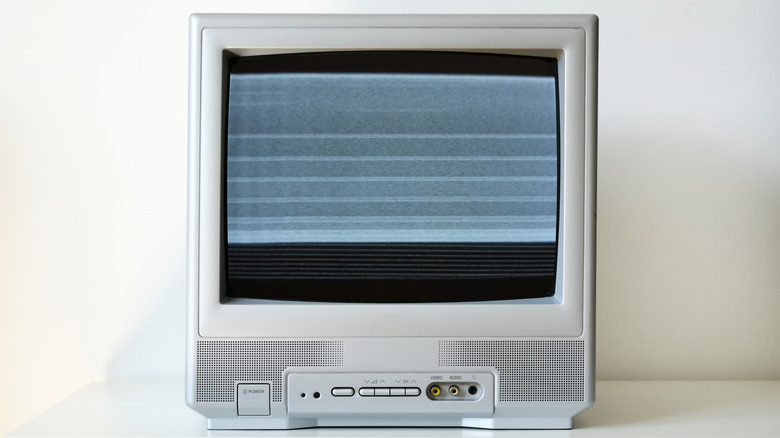
For about as long as video media has existed, a war of formats has taken place behind the scenes of the entertainment industry. The winners of each era were VHS, DVD, and the reigning champ of 4K content, Blu-ray. But what about those that didn't endure the rigors of time? In the background of history, there have been more forgotten physical video formats than you can count, from LaserDisc to Betamax.
Every one of these formats tried something new. Some of them were similar to the dominant formats, only losing out due to some bad luck, while others were proprietary systems that proved to be a little too niche for the market at large. All these formats have been abandoned and made obsolete, but they still maintain a cherished spot in a few hearts around the world, as they showcase fascinating efforts at innovation and diversification in a veritable wild west of home entertainment.
LaserDisc
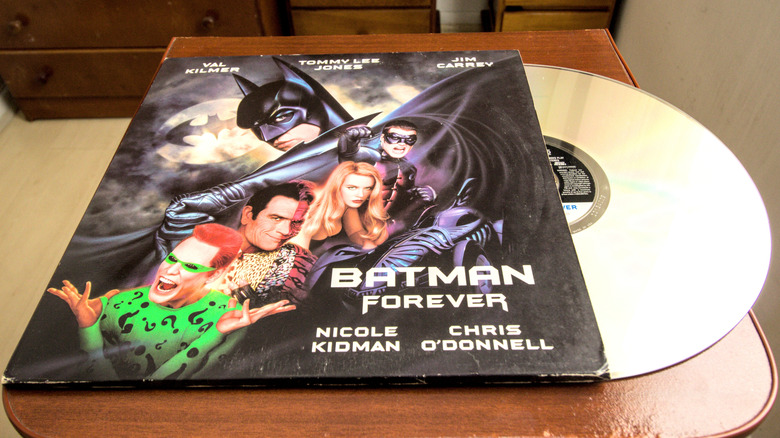
When talking about obsolete video formats, chances are that LaserDisc will be one of the very first to be remembered. Interestingly, this was the first video format to be based around optical discs, originally launching as "DiscoVision" in 1978. It beat DVDs by almost 20 years in the race to launch video discs.
The gargantuan size of LaserDiscs is the primary difference between this media format and DVDs, and it's what's helped LDs mark a generation in the history of pop culture. A typical LaserDisc measured about 12 inches in diameter, with the internal spiral track being as long as 42 miles. A LaserDisc was actually made up of two discs sandwiched together rather than a single one, with their recording sides both facing out. This allowed about an hour of a movie to be played on one side, and then the rest on the other side.
For its time, LaserDisc offered exceptionally high video quality, far better than VHS. Unfortunately, that meant both the discs and their players were prohibitively expensive, especially compared to the cheap and readily available VHS tapes and players – although the simpler TVs of the '80s couldn't highlight the differences too effectively anyway. The format gradually petered out in the early to mid-2000s due to lack of customer interest.
Betamax
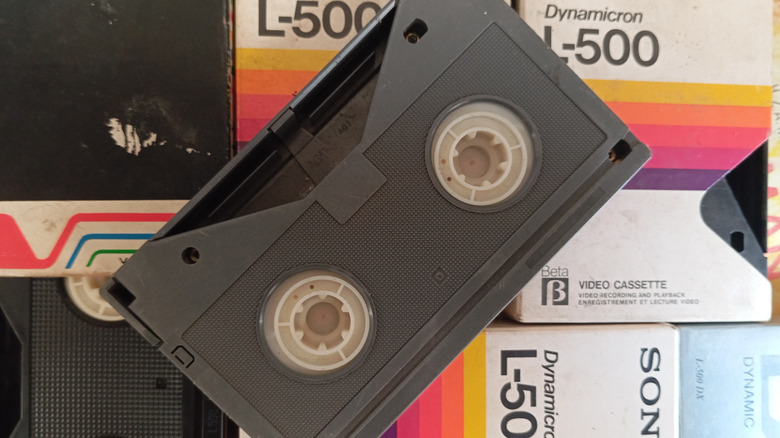
If LaserDisc is the forgotten predecessor of DVDs, then Betamax is that of VHS. Betamax was a cassette tape format like VHS, originally released by Sony in the United States in 1975, followed by the United Kingdom around three years later. The tape even worked just like VHS, being loaded up with half-inch magnetic tape that could store about an hour of video footage.
Compared to VHS, Betamax had roughly the same video fidelity and comparable pricing. What ultimately did it in, rather than any problems with the format itself, was some clever maneuvering on VHS' part. VHS cassettes could store up to two hours of footage, an obvious appeal over Betamax for convenience while watching movies and recording off a TV. Secondly, while the tapes were more or less equivalent in price, their players were a separate matter. A Betamax player could cost you around $2,000, while VCRs were about half the price, becoming as affordable as a couple hundred bucks by the 1980s — and you could even rent them from certain video stores.
Despite largely setting the precedent for cassette-based video entertainment, Betamax was ultimately subsumed by VHS and its generation-defining popularity, with even Sony itself jumping ship to VHS in the late '80s.
VideoNow
In the early 2000s, portability was the name of the game. Designing compact devices for music was already more or less of a solved science, so the next order in business was a video player you could carry around. Numerous brands and companies across the industry were developing their own portable video formats, each trying to be the first to get their foot in the door.
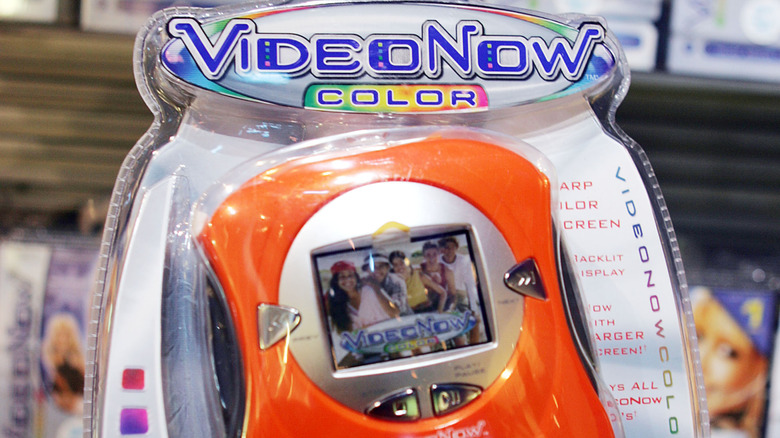
Tiger Electronics, an American toy manufacturer and subsidiary of Hasbro, took its shot at this battle in 2003 with VideoNow. The gadget was a child-friendly portable video player that consisted of a flip-open disc drive, topped off with a tiny screen. The VideoNow used a small proprietary optical disc for data storage called the Personal Video Disc, or PVD, instead of a DVD. A single PVD could store around 25 minutes of video and audio, perfectly sized for a single episode of a television show. This was ideal, because VideoNow was exclusively marketed to kids, and most discs were packed with Nickelodeon cartoons like "SpongeBob SquarePants."
The VideoNow was a convenient way for kids to watch cartoons on the go, especially before iPods came into being. But interest in the novelty wasn't that great because shows were in black and white. A new, color-capable VideoNow was released in 2004, though considering this thing retailed for $75, a second purchase for color may have been asking a bit too much.
UMD
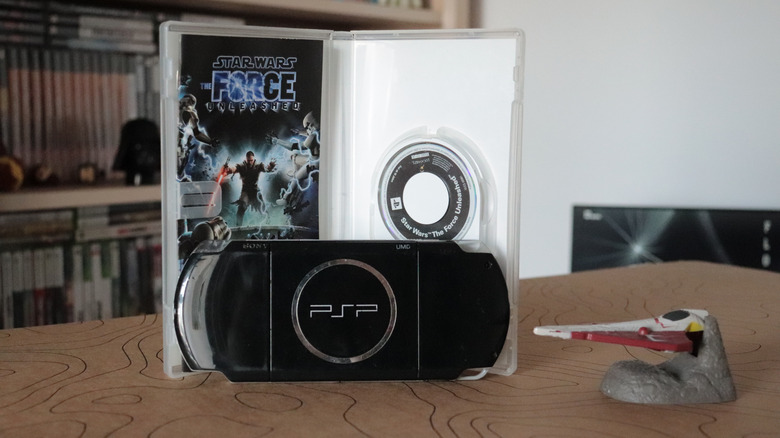
In addition to battling over portability, systems and formats in the early 2000s were also competing to be truly all-in-one platforms. The fifth generation iPod, also known as the iPod Video, wouldn't launch until 2005, so until then, it was still anyone's game. "Game" is perhaps the optimal word here, because in 2004, Sony would take another swing at format dominance with the release of the PlayStation Portable and its proprietary UMD format.
UMDs, short for "universal media discs," were the PSP's proprietary all-in-one optical discs. Rather than the cartridges used by Nintendo handhelds like the Game Boy Advance and Nintendo DS, the PSP used UMDs to load up its titles, though these could also be downloaded directly to the console's internal storage. In addition to games, these tiny discs were also used to deliver music and, more importantly, video. You could purchase UMDs loaded with full-length movies and television series from most electronics and video game retailers at the time. One UMD could store up to 1.8 GB of data, more than enough for most movies, so there was a fairly healthy library of titles available.
Unfortunately, there simply wasn't much interest in UMDs as a format. They cost about as much as DVDs with a fraction of the functionality, and while you could get a whole movie on them, the quality was somewhat iffy. It didn't help that the discs' plastic casing was prone to scratching and cracking, which could lead to dust accumulating inside. UMD movies were ultimately discontinued in 2011, with UMD games following in 2014.
Game Boy Advance Video
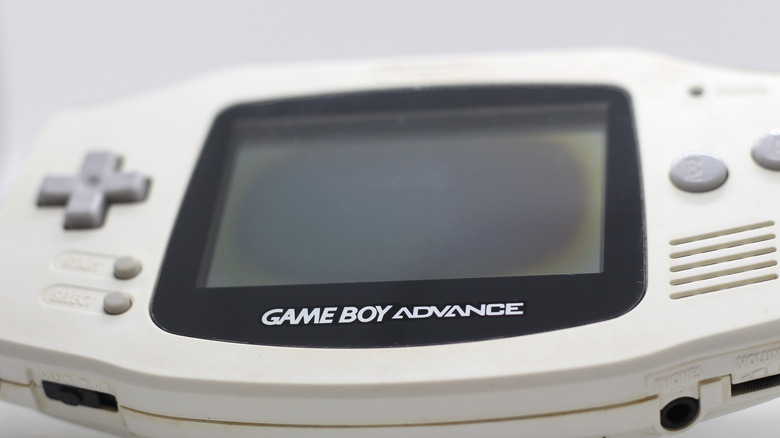
Speaking of video game consoles, while the PSP had a substantially higher performance than its contemporaries, that didn't stop Nintendo from trying to pioneer a video format of its own with the Game Boy Advance Video. This piece of physical media was a special offshoot of GBA cartridges, made specifically for playing video content primarily marketed toward children. The first Game Boy Advance Video cartridge was released in North America in 2004, three years after the GBA's initial launch, as part of a production deal with game publisher Majesco.
The cartridges were shaped just like the usual GBA games, but colored in a distinct light gray. Each cartridge held several episodes of television shows or one full-length movie, all heavily compressed to 240p. On the bright side, the cartridges were compatible with the original GBA, the Game Boy Advance SP, and even the Nintendo DS, which gave them a bit of cross-generation flexibility. The only thing they didn't work with was the Game Boy Player add-on for the GameCube, a measure taken to prevent users from recording the video content on their TV with a VCR.
A few dozen Game Boy Advance Video cartridges were released until the format was discontinued in 2007. Most of them, much like VideoNow's discs, included animations from Nickelodeon and Cartoon Network, DreamWorks' films like "Shrek," and some anime from Nintendo's "Pokémon."