

Sonos Play Review: Party-Starting Speakers
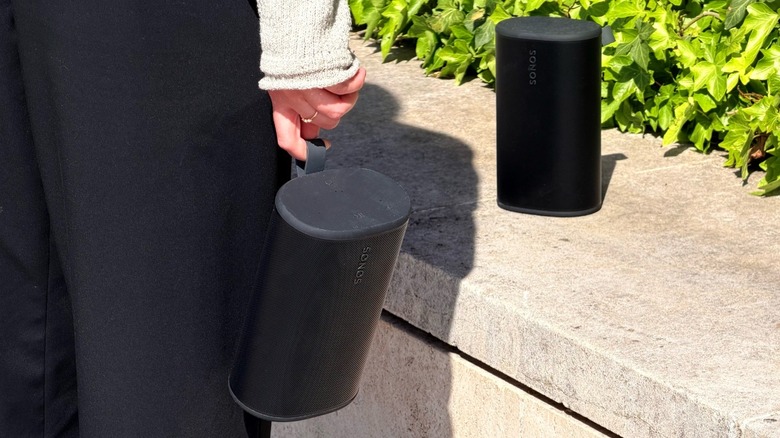
Early in March, Sonos announced two new speakers: the Sonos Play and Era 100 SL. These speakers arrive as the company is still recovering from the fiasco of a major software update that removed and broke core functionalities people relied on, like access to local music libraries, queue management, alarms, timers, and more.
While the software side still feels like a work in progress, we have been testing a pair of Sonos Play for the last couple of weeks, and at least one thing remains true about this product: Sonos is still a premium brand that is now filling a very interesting part of its lineup, as the Sonos Play costs $299 and competes with products like the Marshall Middleton 2 and the HomePod 2.
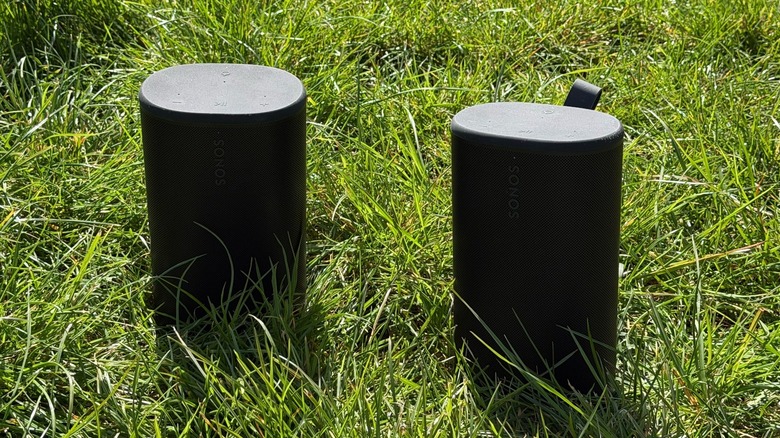
With portability in mind, these speakers can be great companions for indoor environments, outdoor parties and gatherings, and two of them are enough to make a bold impression. While sound quality can vary depending on whether you're connecting via Wi-Fi or Bluetooth, Sonos is back in action with its Play lineup. With spring already upon us, and summer quickly approaching, I'll note that these speakers have been turning heads on terraces, at parks, and at my friends' houses.
Sonos Play has the company's classic identity
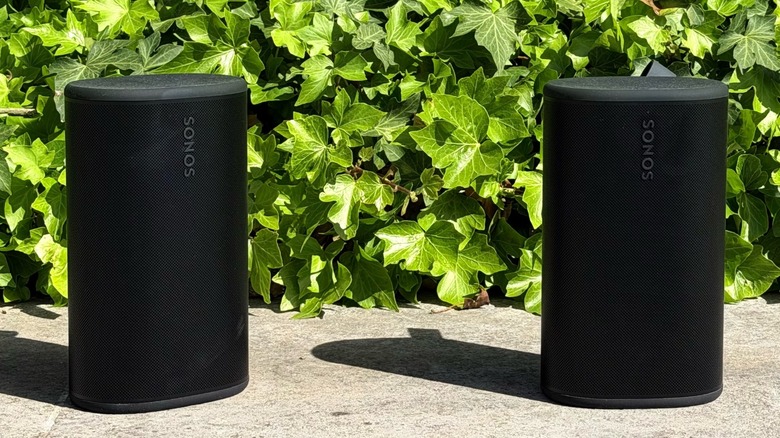
Sonos has a consistent design for its products. They might not look as classic as Marshall's speakers, but they do have a clean look. With the characteristic oval shape, they have a mix of rubber with an acoustic grille on the front and sides.
These speakers are 19 cm high, 11 cm wide, and 7.7 cm deep, which means they don't occupy a lot of space, and they can be easily placed on a bookshelf, a desk, or near your turntable. Even though they're portable, Sonos ships them with a magnetic base, which means they are always ready to go when you need to take them somewhere, whether inside your home or outdoors. Weighing around 1.3 kg each, they can be a bit cumbersome to carry around, but it's doable. Additionally, Sonos include a small lanyard for easier transport, like Beats with its Pill speakers.
Most of the Sonos Play's buttons are on the top of the speaker, including a Play/Pause button, volume buttons, and a button to activate voice commands. On the back of the speaker are the power and Bluetooth buttons, as well as a physical toggle to mute the microphone. Sonos also makes these speakers IP67 water and dust resistant, meaning you don't need to be afraid of rain or even spilling a glass of water on them. They'll survive.
Powerful sound with reasonable trade-offs
Sonos Play features two 90-degree angled tweeters, a central mid-woofer, and two force-cancelling passive radiators for bass. Sonos also uses an Auto TruePlay system through the built-in microphones to analyze the environment and calibrate the song. Even though the speakers aren't 360 degrees, they sound great from many angles. Still, you should consider positioning them appropriately for the best sound experience.
Like other Sonos products, these speakers connect to your phone through Wi-Fi, which means you can enjoy lossless-quality music if your favorite streaming platform supports it. While Dolby Atmos isn't always a home run for Apple Music users, having a reliable lossless experience is still a worthwhile feature of any home speaker.
In an indoor environment, the sound feels rich from the bass to high frequencies. However, once you go outside and start to rely on Bluetooth, then the bass is not as impressive in songs like Taylor Swift's "Ready for It" or Ambassador X's "Boom." I also realized that when there are multiple singers, like on ABBA's "Keep An Eye On Dan," you actually need to pay incredibly close attention to hear both Björn and Benny singing, though it's clearer in an indoor environment with the song playing over Wi-Fi/Lossless. The experience is always great, but not always perfect.
Reevaluating the Sonos app
This is my first time actively using a Sonos product. While I don't have the experience of a pre-2024 Sonos app and environment, we did cover the drama surrounding this update. Besides that, as mainly an Apple user, I've always been used to the perks (and annoyances) of just asking Siri to play songs on my HomePods. I love when the experience works well, and how everything is built-in into the system, but it's terrible when it goes sideways — which also happens a lot.
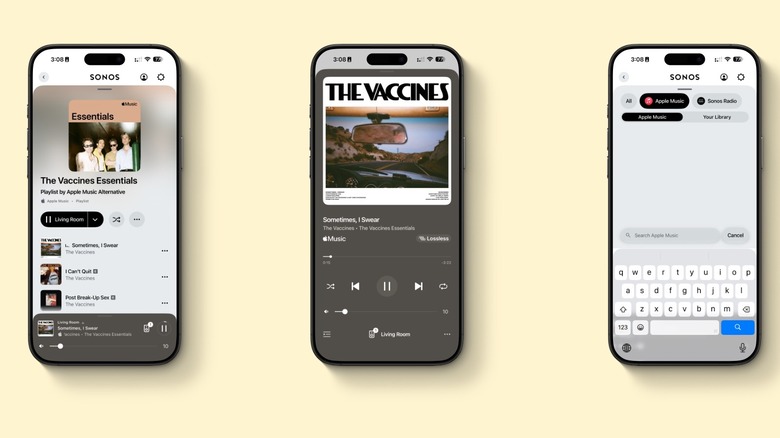
But let's discuss the Sonos app. The app is how you set up your Sonos speakers, and it's heavily reliant on Wi-Fi. If you're outdoors with your Sonos Play, the app will only tell you how to connect them through Bluetooth and pair the speakers together. Once you're indoors, you can use the app to either play Sonos Radio or your own streaming service like Apple Music. However, it's anything but ideal.
First and foremost, I blame Apple for how the volume buttons on the iPhone don't work with the Sonos app. It's incredibly annoying. Second of all, navigating Apple Music through the Sonos app is horrible. I can only use the Search bar on the Home Screen — otherwise, I just need to go through thousands of songs, artists, and playlists by scrolling, which means the experience is always laggy and it takes an extended amount of time to do anything.
Battery life and charging
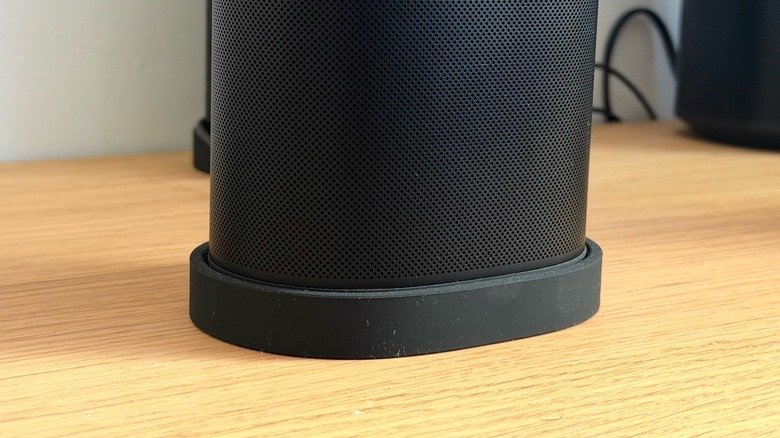
Sonos says the Sonos Play can last for up to 24 hours on a single charge. In my tests, I wasn't able to drain the battery before needing to place the speakers on the charger. However, none of my outdoor hangouts lasted more than a few hours. Still, that shows that for most experiences, users won't have to worry about the battery life of the product.
Another important element of the Sonos Play is that, to comply with EU legislation, it features a replaceable battery. Therefore, you can easily get a new battery instead of just replacing your entire system. A battery replacement kit costs $69 on Sonos' website.
However, my biggest issue with the Sonos Play is that the company doesn't include a USB-C power brick in the box, which is even more annoying when it requires at least 18W. I don't see the point of a speaker that features a charging station not having a proper power brick included. It does come with a USB-C cable, but that means I'll just have to use my MacBook's charger or a third-party one every time I need to charge the product. I think this is one of the speaker's biggest misses.
Should you buy a Sonos Play speaker?
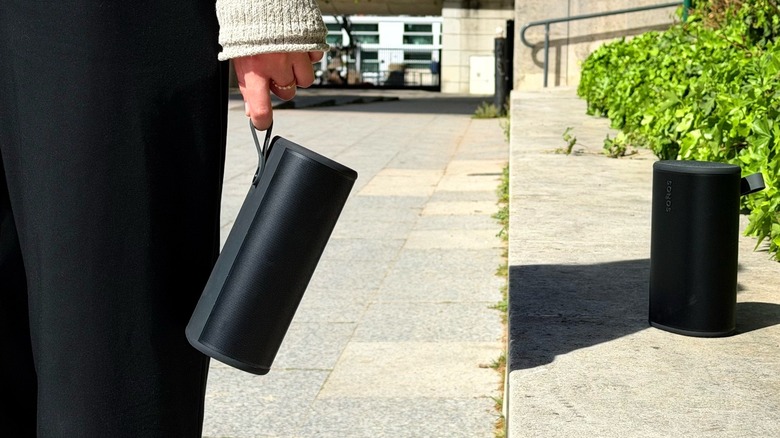
The newest speaker from Sonos is a solid addition with one fundamental flaw — the lack of a power brick — and a less dire issue, the mediocre app. Anyone in the market for a $300 portable speaker will like be satisfied overall, as the Sonos Play sounds great indoors, even if you only use one, and a solid experience outdoors if you have more than one. Still, it's important to note that those who prefer deeper bass might want to look elsewhere.
With Wi-Fi 6 and Bluetooth 5.3 support, this device is built to last for years to come. Some of the high points of the speaker are the replaceable battery, Sonos' high-end materials, and IP67 certification. Besides that, Sonos continues to ensure that the more of its products you own, the better your listening experience will be, as you can group different speakers and create a fully immersive soundscape. While having an ecosystem of Sonos speakers can be expensive, the company is on the right track when it comes to solving the issues with its app and regaining user trust. The Sonos Play is available at the Sonos online store for $299 in black or white.