

Scientists Just Took A Major Step Towards One Of Sci-Fi's Biggest Tropes
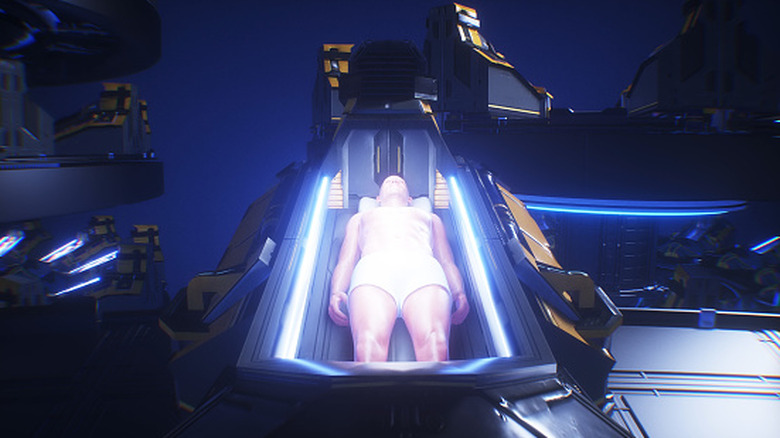
From "Alien" to "Interstellar," numerous sci-fi movies tackle the difficulties of keeping humans alive during long interstellar space missions by freezing characters in cryosleep. According to the trope, cryogenically freezing a body preserves the living organism, guarding against aging and minimizing its resource consumption. The notion that cryogenic freezing could be an effective way to keep a body alive has even inspired a famous urban legend about the ultimate fate of Walt Disney (or at least his brain). And like many sci-fi technologies (such as drone-destroying laser weapons or self-aware AI robots), cryogenic freezing may one day be a reality.
A group of German scientists recently demonstrated this by freezing parts of mice brains, only to "thaw" them in a manner that leaves at least some of their functionality preserved. Detailed in a recent study published in Proceedings of the National Academy of Sciences, the researchers were able to freeze and revive parts of mouse brains using a novel method that bypasses what has previously been a major barrier to effective cryogenic technology: the formation of ice crystals during the freezing process. These crystals can harm or otherwise interfere with cells and their functioning. That's why the researchers experimented with a different freezing method to preserve brain tissue in mice: vitrification.
Scientists used a unique method to preserve function in frozen mouse brain tissues
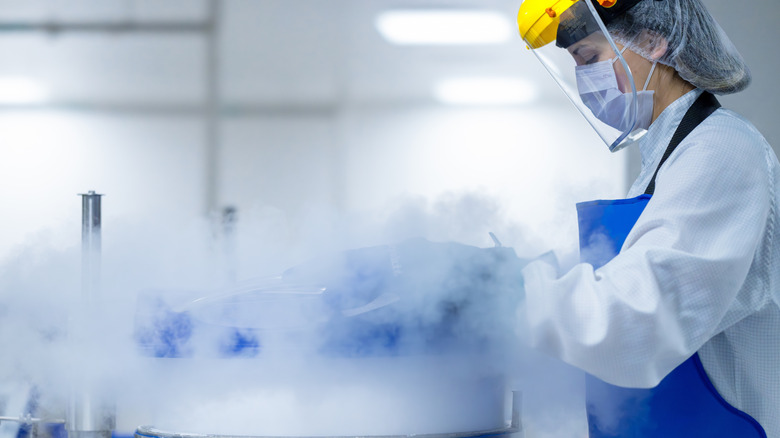
Vitrification is an approach to cryopreservation that uses a bespoke solution of cryoprotective agents to prevent ice crystals from forming when freezing tissues. The German research team specifically preserved slices of mice brains that contain the hippocampus, a critical section of the brain associated with functions like memory. They treated the samples with the cryoprotective chemicals before applying liquid nitrogen to rapidly freeze them. The researchers then used specialized solutions to warm up the frozen tissues.
Examination of the samples revealed that core tissues remained intact. Their neuronal responses to electrical stimulation were relatively close to normal. Importantly, the research team discovered that the preserved slices of hippocampus tissue maintained "long-term potentiation," an element of neuroplasticity that plays critical roles in learning and memory. In simpler terms, this essentially means the brain tissue's ability to perform key functions appears to have been unaffected (or at least minimally affected) by the vitrification process.
What the research means for the future of cryogenic freezing
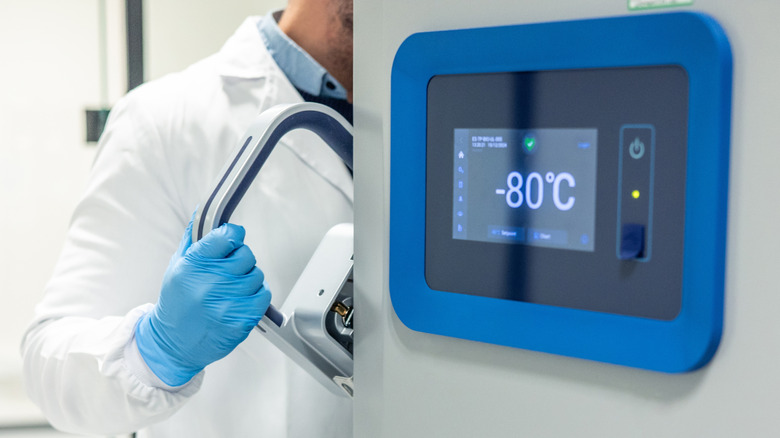
Discussing potential applications for this breakthrough, the paper's authors don't jump the gun. They're not suggesting we're just a few years away from freezing human bodies for long-term space journeys like in the movies. Instead, they discuss how freezing tissues in this manner could, for example, allow research teams to perform large-scale neuroscience research on the same tissues across multiple times and locations.
It's still worth considering the greater implications of this research in the meantime. Sure, freezing humans for interstellar travel is cool, but again, that's not the only potential use for cryopreservation. If research continues in this direction, vitrification may prove to be an effective way to preserve organs for donation or protect tissues as patients await treatment for diseases or brain injuries. The advanced research that the vitrification process allows for could also lead to other breakthroughs and innovations. Allowing Matthew McConaughey to time travel through a wormhole and save humankind could just be an added bonus.