

Why Did Apple Get Rid Of The Touch Bar On The MacBook Pro?
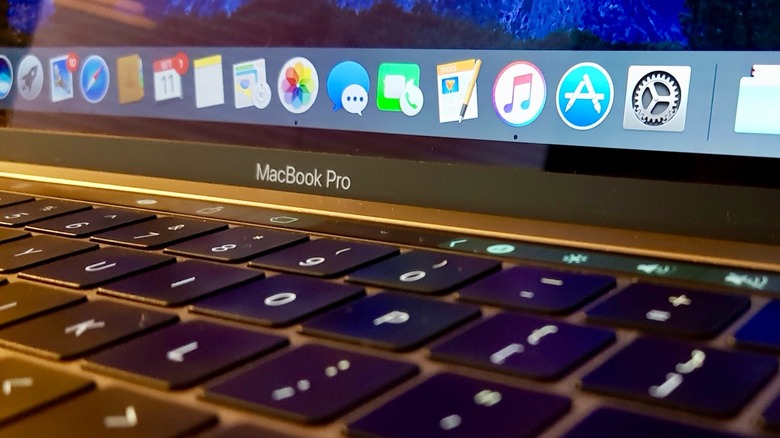
Apple introduced the Touch Bar on the 2016 MacBook Pro, which was one of the boldest redesigns this laptop has ever had. Not only did Apple fully embrace USB-C ports (and only those), but it also unveiled a new keyboard with the Butterfly mechanism, and the Touch Bar which replaced the function keys. With many controversies regarding this product, Apple took three years to tweak the laptop; the company added a physical Escape key next to the Touch Bar and switched out the keyboard. It took five years in total to fix the MacBook Pro, and replace it with the design we know today.
When Apple introduced the current generation of MacBook Pro in 2021, the company didn't give much of an explanation as to why it got rid of the Touch Bar. Apple's press release merely notes it was adding "physical function keys, including a wider Escape key, replace the Touch Bar, bringing back the familiar, tactile feel of mechanical keys that pro users love." With the 2021 MacBook Pro, Apple decided to introduce a more industrial design, and bring back MagSafe, HDMI, and SD support. In addition, the laptop gained a new miniLED display and retained the scissor keyboard mechanism. Still, to understand the fallout of the Touch Bar, it's important to see where Apple was at that moment and what happened in the following years.
The Touch Bar was a big innovation in the wrong product
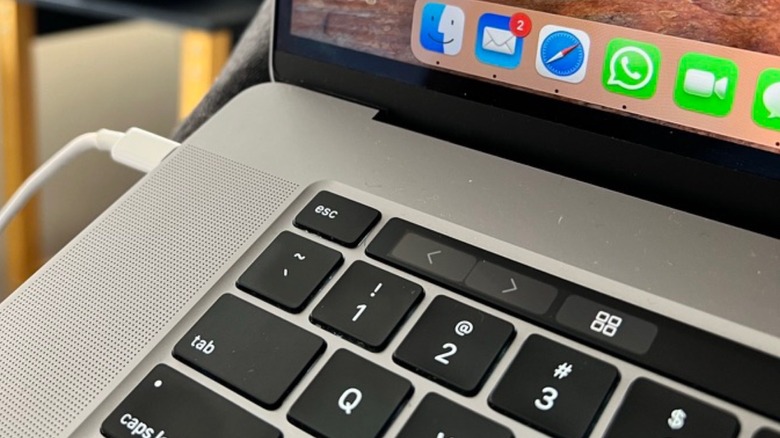
When Apple introduced the MacBook Pro with Touch Bar in 2016, marketing executive Phil Schiller said at the launch event that "we actually haven't been using them [function keys] anymore. So we've mapped other functions onto these keys. We've put volume and brightness on them." While the executive was right, as most users didn't take advantage of the function keys, this OLED strip was a bold take.
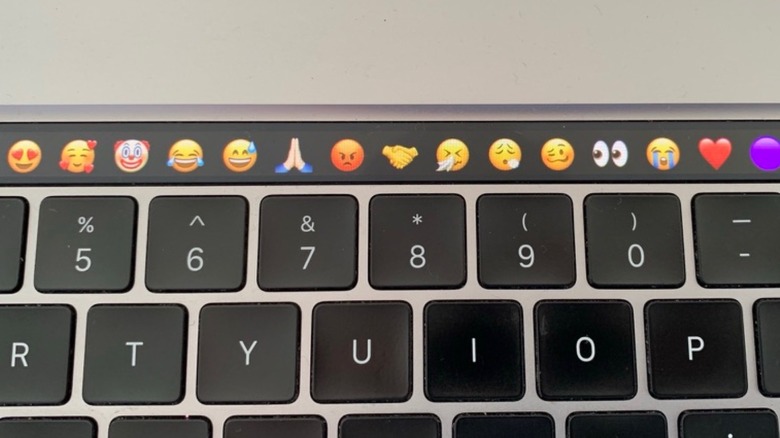
Many users complained that if something went wrong with the Mac, they couldn't use a physical Escape key. From a customer point of view, the Touch Bar felt like an extension of keyboard predictions available on the iPhone — an easy way to send emojis, and control parts of the user experience, like volume, brightness, and even scrub through a video with it.
What plagued the Touch Bar was more than its existence, but this entire MacBook Pro generation. The keyboard could fail quickly – so much so, that Apple had to pay $50 million for the faulty design. Apple also removed its innovative MagSafe charging feature, and without extra ports, customers had to buy several dongles to use the products they were always able to use on this laptop. On top of that, the Intel processors in this MacBook were already experiencing thermal throttling issues. Almost everything that could have gone wrong with this MacBook Pro did.
Apple might never bring the Touch Bar back, but this could be the right time
With the 2021 MacBook Pro, Apple showed it really listened to its users. More than that, the company was able to include new iterations of the M1 processor with the M1 Pro and M1 Max options. This laptop was so well-made that not only am I one of the several users still holding on to an M1 Pro computer, but the company only continued to improve it year after year.
Rumors suggest that Apple is readying a massive redesign in 2026 by introducing an all-new OLED display, touchscreen support, 5G capabilities, and even more impressive M6 chips. That said, this could've been the perfect moment to bring back the Touch Bar. It could still be really useful for everyday customers, especially by offering proper tweaks, like the addition of the Escape key, from the start. Rumors show that the company will once again go for a more radical design change, but with one main difference: Apple now controls its own processor, and so far it has only shown it can do wonders with it.