

What A Smart Thermostat Actually Saves You Money On (And What It Doesn't)
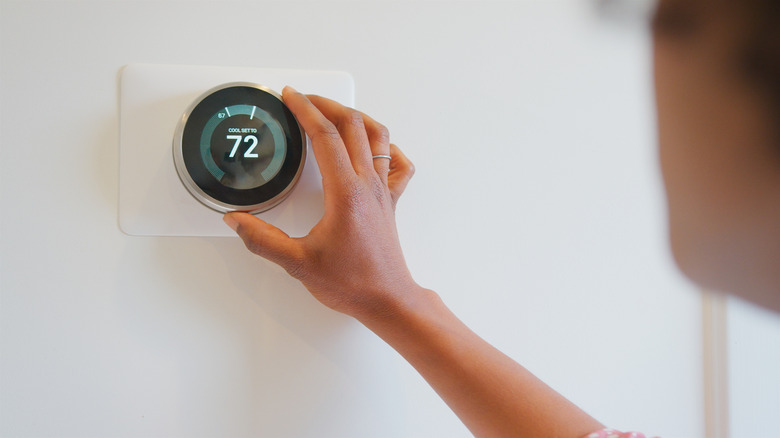
Smart thermostats can offer a range of features that may vary by model. However, a common feature of smart thermostats is the ability to adjust the temperature in a home based on activity. For example, a smart thermostat may "learn" when occupants are typically away from the house or apartment, and adjust the temperature accordingly. Such a feature can, in theory, optimize energy usage, reducing a user's bills in the process. However, before investing in one of these devices, you may want to be confident that they actually deliver on their promises.
Although research shows smart thermostats generally can save homeowners money, the specific way someone uses their smart thermostat can play a major role in just how much they save. It's important to conduct proper research before purchasing a smart thermostat, such as confirming that it is compatible with your heating and cooling system. You should also account for factors like initial price, features, and smart thermostat user reviews to be certain you're spending money on a unit that will actually save money in the long run.
Factors influencing whether a smart thermostat saves you money

There's certainly evidence that a smart thermostat can reduce a homeowner's utility bills. In the U.S., the Environmental Protection Agency found that a smart thermostat that meets Energy Star standards can reduce a user's annual heating and cooling costs by about 8%. That translates to an average of $50 in annual savings for the typical homeowner. Again, a smart thermostat can reduce energy usage by automatically adjusting itself based on user habits and behaviors, but many smart thermostats offer various modes and suggestions to help users achieve energy-efficiency goals.
That's not to say that installing a smart thermostat automatically guarantees a reduction in energy bills. The EPA's findings were based on the features and specifications of smart thermostats, but a National Bureau of Economic Research study paints a different picture. This study examined how people actually use smart thermostats and indicated that these devices might not deliver any significant reduction in energy usage or associated costs. This is because users may adjust the thermostats themselves, overriding the automatic "smart" features meant to keep energy usage low.
On the other hand, a separate study published in the journal Science and Technology for the Built Environment arrived at almost the opposite conclusion. This study found that users only manually override their smart thermostats a small fraction of the time. Perhaps more importantly, when they do, they might actually do so in a way that further reduces energy usage.
Making the most out of a smart thermostat

The main takeaway from these findings is that smart thermostats have the potential to save you money. That doesn't mean they always will. You should still monitor your energy bills and guard against overriding the automatic system in a way that could accidentally increase energy usage. For example, if you're constantly turning the heat up when the thermostat is trying to reduce your home's heating usage, the fact that your thermostat is "smart" won't likely make much difference to your energy bills.
Always remember to explore your options before purchasing a smart thermostat, too. Along with checking user reviews and other relevant information, it's wise to familiarize yourself with tips and tricks for making the most out of your smart thermostat. Taking the time to learn about your unit and how to optimize it is key to actually saving money with this type of device.