

Did The Breathometer Breathalyzer Survive After Shark Tank? Here's What Happened After Season 5
Season 5 of "Shark Tank," which aired in 2013, showcased a product that was meant to make driving safer for everyone. It was a breathalyzer designed to detect how much alcohol you had consumed and if it was OK for you to drive a vehicle. What made this product different was that it worked in conjunction with your smartphone. Though this idea got all of the panel of potential investors on the show, commonly called the sharks, to offer a deal, things did not turn out so well. The company, called Breathometer, eventually got into regulatory trouble, and now its breathalyzer is no longer available.
Breathometer's breathalyzer was part app and part hardware. To use it, you would breathe into a small device. Then, the app on your phone would determine if it was safe for you to drive based on the alcohol level the device recorded in your breath. The purpose behind this was to give people something to carry with them to help them realize if they were too impaired to drive, as personal judgment alone can be incorrect ... especially when alcohol is involved. The Breathometer breathalyzer also had other handy features. It could provide a time estimate for when you might be sober enough to drive, for example, and it could help you call an Uber if you didn't want to wait. The Breathometer was one of the first devices to use personal technology to detect potential drunk drivers, but work on this front has continued, as now new AI tech uses cameras to find people driving drunk.
Details of the Shark Tank deal
Breathometer was founded by Charles Yim. He was looking to sell these devices for $49. He also had big plans for the future of Breathometer and saw this technology as a way to break into new markets, using it to test oral health and even diabetes. The mission behind it, reducing drunk driving fatalities, was certainly moving and could appeal to people who enjoy going out partying or who live in some of the drunkest states in the U.S.
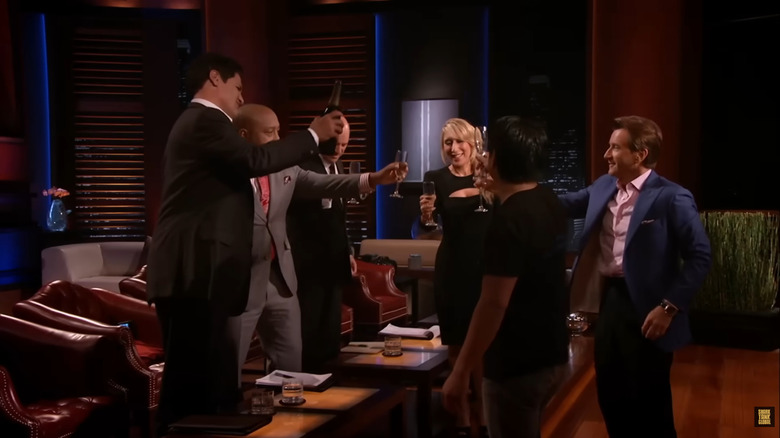
Yim asked for $250,000 for a 10% stake in the company, and the sharks were intrigued. They conversed about various levels of investment and even discussed all of them teaming up together to invest in Breathometer. Ultimately, all five did offer a collective deal for $1 million, and Yim agreed. Even if a deal is agreed to during the show, though, that doesn't mean it will still be finalized after the show. Despite all of the sharks being interested during the pitch, only Mark Cuban stayed with the investment for Breathometer.
What happened to Breathometer?
Mark Cuban went on to regret being the only shark who stayed with Breathometer, claiming that Yim would post photos of going on exotic vacations to social media and was, perhaps, blowing the investment money. Yim denied this, saying his travels were for business purposes to market the product.
Only a few years after the "Shark Tank" episode aired, Breathometer got in trouble with the Federal Trade Commission (FTC). The FTC had concerns that the breathalyzer didn't hold up to scientific testing and that it was not dependably accurate, thus misleading consumers. Breathometer was forced to issue refunds to everyone who had bought a device. As of April 2026, the Breathometer website is no longer active, and its breathalyzer products are not being sold anywhere. Its Twitter account has not been updated since 2015. Its last Facebook posts were in 2019, noting how the technology will be used for oral health testing. Those products also do not seem to be available anymore.
So, despite enormous pitch success on the episode of "Shark Tank," Breathometer's breathalyzer did not stand up against real-world scrutiny and challenges. It is no more today. Some companies are able to make the most of their deals with "Shark Tank," like the Ride FRSH car air fresheners from Season 14. It has continued on to be a success to this day and has even branched out to car-cleaning products. Unfortunately for Breathometer, it was not able to do the same and could be seen as a cautionary tale that even a deal with all five sharks signing up could run into problems down the line.