

Scientists Think This Clue In Starlight Could Reveal Hidden Alien Planets
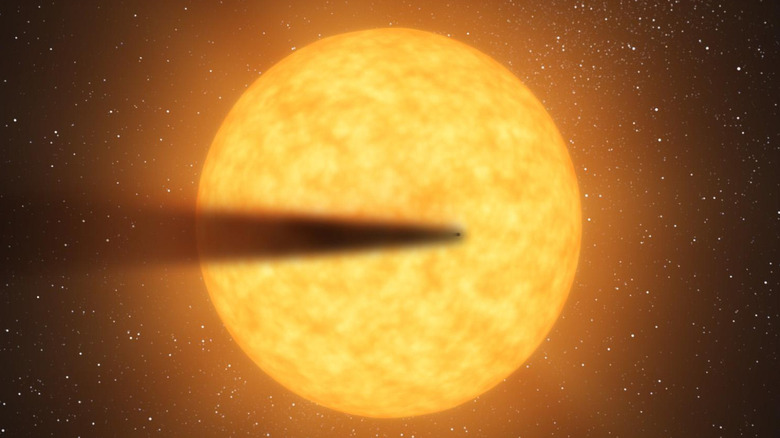
Astronomers have identified a clue hidden in the light of certain stars that's already led them to discover seven new alien planets, with more expected to come. To be clear, these alien planets likely will not have alien life, because they are so close to their stars that they're irradiated and crumbling. The discovery is important because it opens the door to a flood of new research.
A team of researchers launched the Dispersed Matter Planet Project (DMPP) in late 2015 after scientists studying hot Jupiter exoplanets noticed that some stars had unusually weak calcium emission lines in their spectra. The effect happens when planets orbit close to their stars. Heat and radiation vaporize rock, metals, and gases on the surface, building into a cloud with a comet-like tail. As starlight passes through the cloud, it absorbs specific wavelengths, including calcium. With those wavelengths dimmed, the star looks calmer than it really is.
In 2026, DMPP researchers released a study of 24 similarly calm stars. Fourteen of the stars hosted 24 planets. Seven of the planets were new discoveries. This new method of locating planets, even planets being destroyed, could have a significant impact on future research.
The clue gives scientists a faster way to find alien planets on crowded telescopes
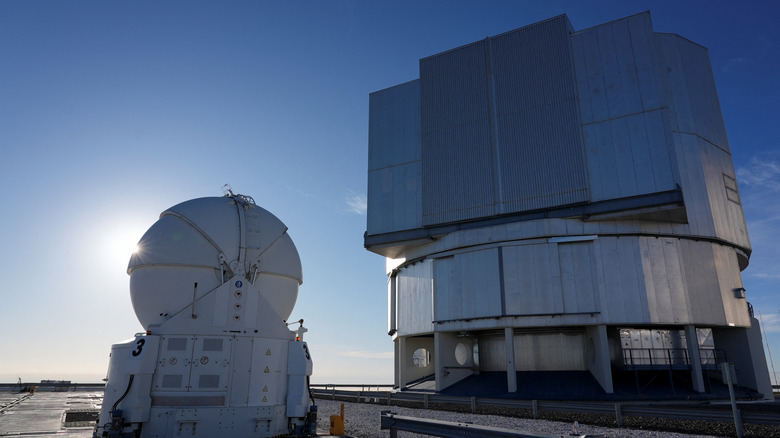
The researchers used telescopes with precision spectrographs in Chile, France, and Spain to confirm the stars had planets. Time on these coveted instruments is competitive. The European Southern Observatory, which operates several telescopes in Chile, gets 900 proposals each semester. Only a quarter get observing time. This breakthrough will strengthen those proposals because it tells astronomers where to look if they hope to make discoveries.
DMPP has already expanded its search for alien planets being destroyed by their stars. They cataloged 16,000 stars within 1,600 light-years of Earth to find 241 more stars that fit the dimmed-calcium profile. The team estimates those 241 stars could host about 300 undiscovered planets. Scientists still need to confirm the planets exist using a powerful telescope like the Very Large Telescope (VLT) in Chile.
The VLT can capture first-ever images of stars and even allow astronomers to see what they believe is a planet being born. The hard part is locating the planets. The DMPP method increases the odds of finding planets by 8 to 10 times the rate of typical radial velocity surveys. Beyond the numbers, the method allows planetary geologists to get a rare look at the insides of other rocky planets because they're being vaporized. The breakthrough also opens the door to new ideas. If calcium dimming in starlight is a clue for one type of alien planet, it means scientists can use other chemical signatures in starlight to find other planet types.