

The MacBook Neo Might Not Have Many Competitors Soon - Here's Why
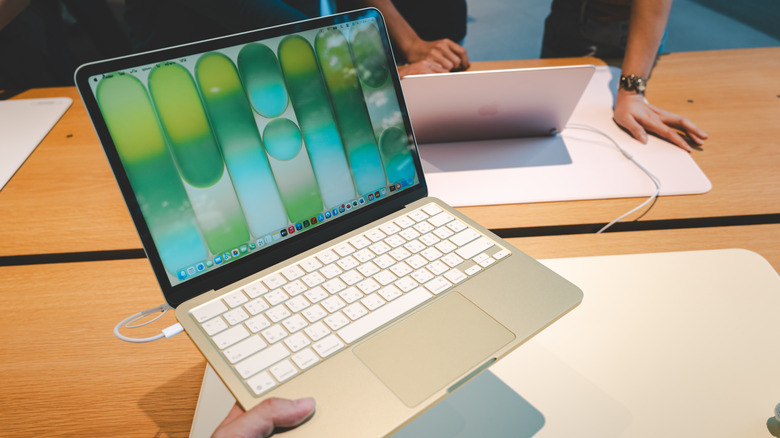
The new Apple MacBook Neo has taken the computing market by storm. A low-priced device aimed at non-power users and still packing a decent punch is rare in 2026. So why haven't other companies leapt onto the latest trend? Many people started asking this very question after Microsoft raised the prices of its Surface laptops and tablet hybrids. 2025's Surface 7, for instance, went from $999 to $1,499. Even Microsoft's entry point devices, which would compete with the Neo, have been raised to $1,049 from $799.
Looking at similar scoped devices, they have all either had their prices raised or are already too expensive out of the gate. So what's actually going on here? Apple has a significant upper hand over the rest of the industry with deep planning of its manufacturing, and on top of that, it's so far managed to insulate itself from the ongoing "RAMpocalypse". The tech industry doubled down on AI last year, despite concerns of its societal and environmental damage, and in doing so, has caused a shortage of tech, raising prices due to AI data centers hoovering up a good portion of everyday hardware.
RAM is the major factor
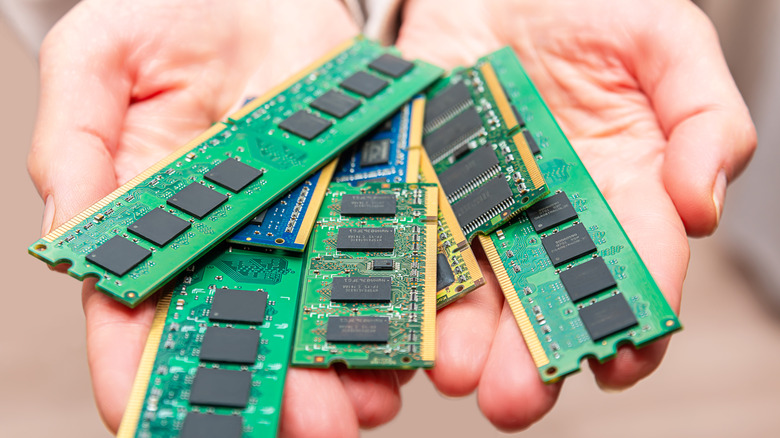
As has been the conversation for the last few months, AI has effectively nuked the production of RAM. OpenAI has a deal to buy up 40% of the world's supply, which will have an ongoing effect until after 2027. Every device that has an ounce of a computer in it requires RAM. Not only laptops, but TVs, smart devices, and so on. It's not known how much RAM Apple had to begin with, but it's not publicly worried about it so far.
92% of the world's RAM supply comes from three companies. One of them, Micron, has already pulled itself out of the consumer business and will instead focus on AI and business customers. SK Hynix and Samsung are splitting duties between consumer and business customers, with reports that Apple and Samsung have become rather friendly during the shortage. Korea Economic Daily reported in 2025 that Apple was increasing its supply from Samsung to 70%, from 60%.
Other computer manufacturers, like Asus, MSI, or Acer, aren't the massive moneybags with legs that Apple is. Worth nearly $4 trillion and raking in $416 billion in revenue in 2025, it has the capital to create pretty much whatever it wants. Hence, the MacBook Neo requires only 8 GB of RAM and an iPhone A18 processor. On the other side of things, Windows 11, which requires at least 4 GB of RAM to run, is only stable on 8 GB or above, due to the heavier overhead.
Cheaper parts, cheaper laptop
The MacBook Neo is, despite the praise it has received, very cobbled together. Not only is it a macOS device running on an iPhone chip, but it only uses 8 GB of unified RAM. For years, Apple (via Tom's Hardware) has claimed that its 8 GB is the equivalent of 16 GB, which might not be completely true, but it gives an idea of why it can cheap out on this end. The laptop is also aimed at the educational sector, with a $100 discount for students, as most tasks being assigned don't require a fully specced out device. That's just one reason the MacBook Neo might not be for you.
It helps that Apple also has complete control over its chips. In 2020, Apple transitioned to Apple Silicon with the M-Series laptops. It now only has to rely on plants like TSMC in Taiwan, as it had shored up production of other parts of its hardware in China throughout the 2000s and 2010s. Other manufacturers don't have this kind of stranglehold over entire production lines, with Tim Cook's work before becoming CEO of the company creating a smooth pipeline.
With this in mind, companies that produce Windows or even Linux-based laptops have to contend with the wider manufacturing crisis going on. Everyone gets a seat at the table, but companies like Apple or Nvidia, massive money makers, get to cut in line. However, even Apple is being bumped by the demand for AI, with the company now assisting with the push to American-made chips.