

5 Star Trek: The Next Generation Episodes Fans Unfairly Hate
It's a bit challenging to come up with a list of bad episodes of "Star Trek: The Next Generation" (TNG) worth defending, mostly because once the series hit its stride sometime in Season 3, very few truly rotten episodes popped up. The show's first season, deep in the trenches of a Gene Roddenberry-controlled writers' room, is a universally known mess. There's also very little to defend in Season 1 of TNG, with it staunchly rooted in Roddenberry's show-ruining rules (the crew couldn't fall out with each other, as an example) and generally poor stories.
Of the seven seasons of TNG, Captain Picard and the Enterprise crew went on many excellent, self-contained journeys. The worst episodes rated by fans across the web are usually those that don't have much of an impact on the wider universe, and more often than not, are memory-holed by the time the next episode happens. Like how in "Star Trek: Voyager" it's not often you see the show referring to the time Captain Janeway and Tom Paris turned into salamanders and had babies.
So let's dig through some of the worst-rated episodes of "Star Trek: The Next Generation." We're basing this on a variety of reviews from across the web, including IMDb's user-created list of the worst-ranking episodes. It's a large universe out there, and not every trip of Captain Picard's is as perfect as some fans would have you believe. However, you won't find any defenses of the first season here, as it is legitimately a bizarre season of TV.
1. Manhunt
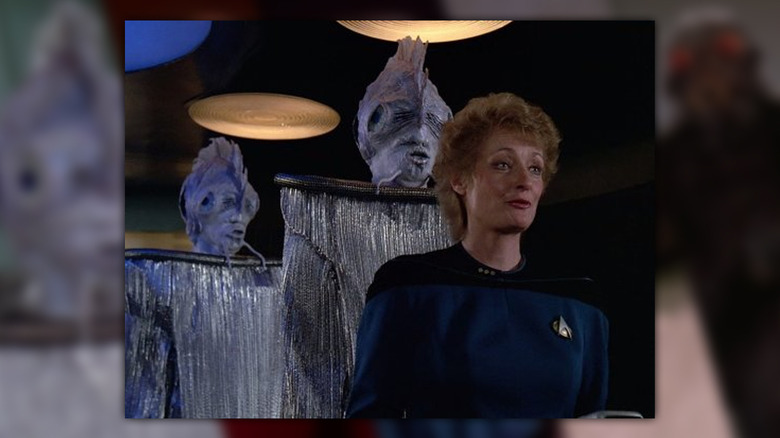
If Season 1 of "Star Trek: The Next Generation" was mostly bad, Season 2 is its weird transitional sibling. Inching closer to the perfect TV show TNG would become in Season 3, "Manhunt" is another oddity amongst the pile. The one "fun fact" here is that it features Mick Fleetwood of Fleetwood Mac as one of the Antedians that is being transported in the Enterprise.
"Manhunt" isn't a good episode, but it's by no means entirely terrible. Yes, Deanna Troi's mother, Lwaxana, can be head-in-hands cringe-inducing, but the episode still has some fun with the idea of an alien female going through their version of menopause. Lwaxana is undergoing "The Phase," which drives her hormones wild and makes her very ... romantically inclined, to put it politely. Despite the plot being something that fell right out of the 1980s, for good and bad, it helps enrich the Betazoid race a little.
Ultimately, the episode's twist of the Antedians actually being assassins is overshadowed by the unfortunate A-plot of Deanna's mother trying to find a new man. Her awkward interactions with Picard, Riker, and even Data turn a fairly self-serious sci-fi show into a mild rom-com at best. Its worst crime is surprisingly trying to create some romantic entanglement between Picard and Lwaxana, and not the rushed assassination plot crammed in at the end to redeem Lwaxana.
2. Masks
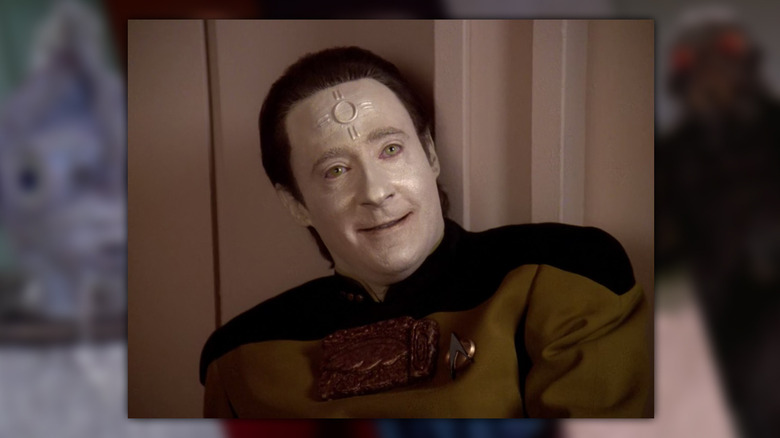
Ranked as one of the worst episodes of "Star Trek: The Next Generation," Season 7's "Masks" is certainly not one of those episodes. It's a low point of the season, but it barely scrapes the barrel of the worst the show can reach. The episode centers around a culture taking over the Enterprise for a recreation, with the android Data becoming "possessed" and displaying personalities he typically couldn't.
It's another episode of TNG that's just a mediocre bit of television. As we've said, it pales in comparison to the rest of the upper echelons of the show, but it is by far and away nowhere near the quality of Season 1. It's goofy, and the overall plot ends up becoming a little heavier than the show can muster to pull off. Something this heavy on symbolism and religion is sometimes not best handled by "TNG."
Behind the scenes, Brent Spiner has said that it's one of the more demanding episodes he's been part of. Spiner, who played Data, wound up playing another four different personalities through the episode, something that he wasn't expecting. In the book "Captain's Logs: The Unauthorized Complete Trek Voyages," he's quoted as saying that after a character-heavy episode, they're given a break between shooting episodes before they're required to be the main character again. Instead, Spiner went from the Data-heavy "Thine Own Self" into this, and had to come up with "whatever" he could muster.
3. Imaginary Friend
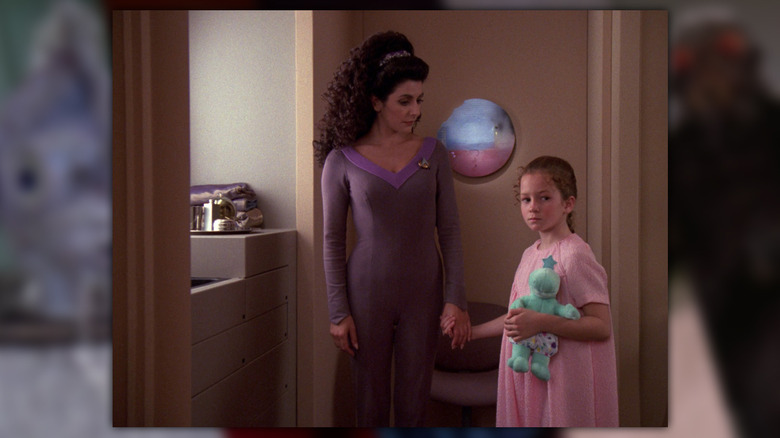
The worst bit of the "Star Trek: The Next Generation" episode "Imaginary Friend" is that it features a bad child actor at the center of the plot. Child actors are seriously hit or miss, with those good enough flung onto the big screen as soon as possible. It's a fifty-fifty split between the cast of "Malcolm in the Middle" and Jake Lloyd in "Star Wars: The Phantom Menace" for almost every film production using kids.
Aside from the terrible acting, "Imaginary Friend's" worst crime is one of TNG's worst habits: it sometimes forgets what these characters have done. Why is Deanna Troi, a Betazoid with psychic powers focused on feelings, unaware of how much belief in the titular threat to the ship the children have? The omission is similar to when Data reverts back to his early days as a misunderstood android in some later seasons.
The episode is, generally, mediocre. There's no real defense to put up around it, other than that it is mildly hated a little too much. However, when rewatching it, just brace yourself for some drab child acting to take up space in the episode.
4. Cost of Living
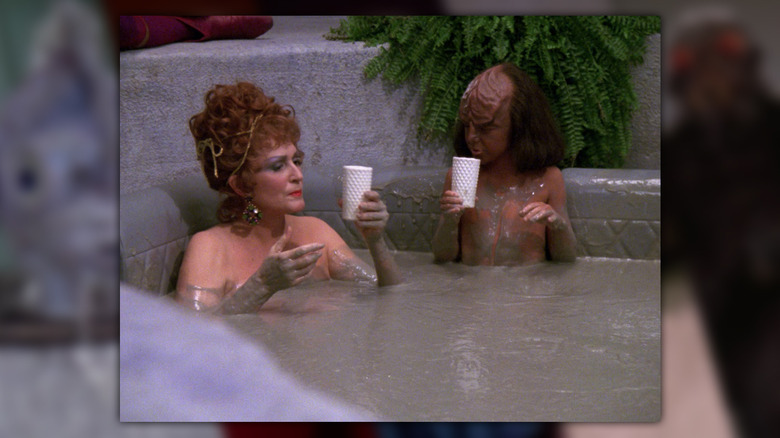
"Cost of Living" is another Lwaxana-focused episode of "Star Trek: The Next Generation," but this time, there's the addition of some of that Worf child-rearing into the mix. The Enterprise's Klingon security officer is having trouble with his child, Alexander, who refuses to do things other than play. Meanwhile, Lwaxana is marrying a man she's never met, but won't perform the Betazoid custom of being naked during the wedding.
A large part of the issue with this episode is mainly that Alexander can be an irritating character to watch, exasperated by his being a child on board the Enterprise. It's part of the point of the story that Alexander is annoying, but you know, there's a limit. Eventually, that annoyance peters out once the story gets into the swing of things, but overall, it's yet another mediocre episode of TV.
However, "Cost of Living" does feature an excellent sequence, where Lwaxana, having taken Worf's kid under her wing, has her advice used on her. Instead of being clothed during the ceremony to a man she finds she doesn't want much to do with, she commits to the Betazoid tradition of showing up naked. This offends her suitor, immediately leaving her at the altar. Overall, it's nothing to write home about or hate on. However, it's not Worf's actor, Michael Dorn's least favorite episode of "The Next Generation."
5. The Dauphin
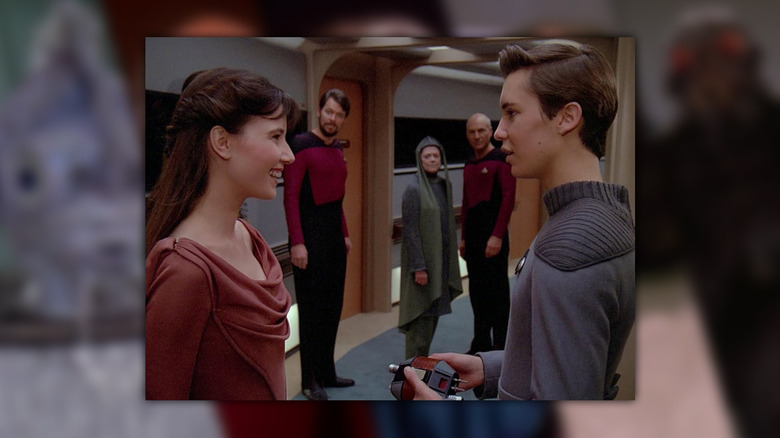
Wesley Crusher is a divisive character in "Star Trek: The Next Generation." A teenager aboard the Enterprise, played by Wil Wheaton, is often at the center of some of the more embarrassing moments in the series. In "The Dauphin," he's fallen for a future ruler of another planet, Salia, and subsequently goes through all that teenage hullabaloo.
This includes some rather awkward romantic moments aboard the ship, but this particular episode of TNG has some cracking moments within it. The main plot of Crusher and Salia is trite, but when he goes to ask the known bed hopper, Commander Riker, for advice on how to woo ladies, Riker goes all in. The scene between bartender Guinan (Whoopi Goldberg) and Riker is so smarmy and cocksure that you immediately understand just how a man who can't sit on a chair properly manages to seduce these people.
The love plot in "The Dauphin" is fans' main complaint, and while it's not at all effective, there are far and away worse episodes of TNG out there. Maybe it's due to Crusher's central focus in the episode, or the governess, Anya, turning into a horrible beast with equally cheesy costumes. It was always fun when shows ran for 22 or more episodes in a season, because there was time to have bad episodes like "The Dauphin," which houses several great moments — like Doctor Pulaski defending the sick patient from being killed.