

Those Tiny Holes In Airplane Windows Have An Important Purpose
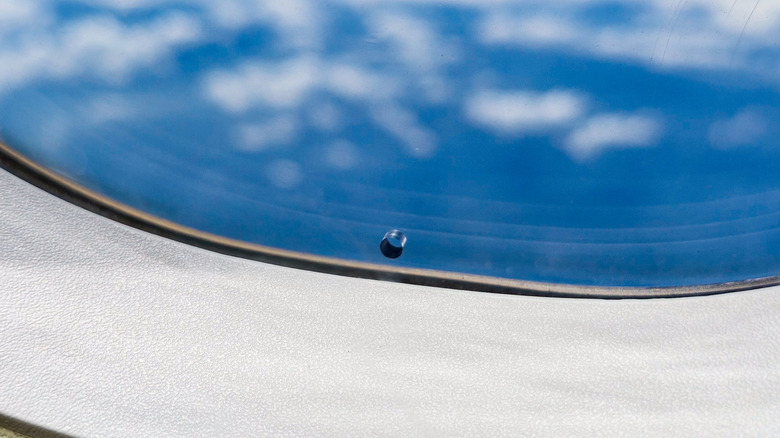
The window seat is arguably the best seat on the plane. Not only do you get to be away from all the hubbub of the aisle, but you also get a mostly unobstructed view of the sky and Earth. But have you ever noticed the tiny hole in some of the airplane's windows? It's usually located near the bottom of the window pane, and some people might only notice it when looking directly down through the window.
If you have ever noticed it and wondered why there's a hole in this airplane's window, then you're not alone. This is just one of the interesting things about airplanes that people might not know — like the fact that they still use floppy disks for airplane software. And there is actually a really good reason for that hole to exist.
These tiny holes are usually referred to as "breather holes" or "bleed holes," and they exist to help contain the difference in pressure within the airplane's cabin and outside of it. Breather holes appear in just about every single airplane window to help alleviate the pressure between the outer window pane and the middle one.
Why airplane windows need holes
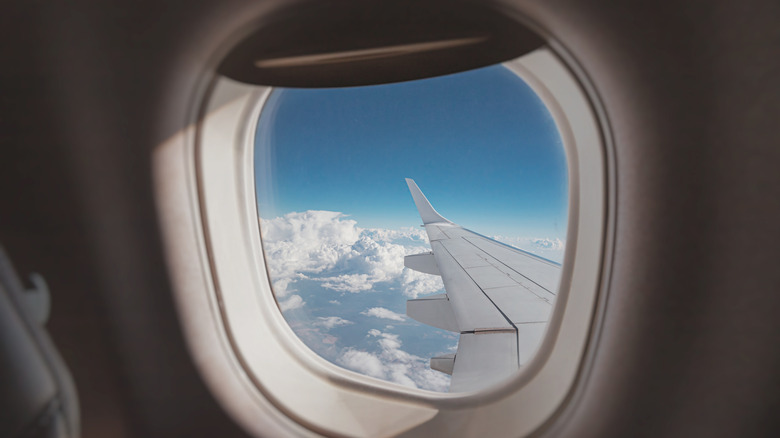
Airplane windows are usually made up of three distinct panels. The panel the passengers are closest to inside the plane is purely cosmetic. If you've ever rested your head against the window while listening to music on the plane, while you look out at landscapes below, then you've come directly in contact with it. The reason this panel exists is to keep the second window panel clean. The middle panel has a more structural function, as does the outer panel.
These exist to help protect the pressure of the cabin from the much lower pressure outside the airplane's hull. But why do airplane windows need multiple panels? Well, it's all about taking precautions. If something were to happen to the plane's outer window panel that might force an emergency landing, then the middle panel would still provide protection from the elements outside.
Because the middle panel acts as a bit of a fallback for the exterior window, it needs to be able to operate at a similar pressure, otherwise it would see a rapid pressure change if the outer window were to crack or break. Instead of the pressure change being immediate if something happens to the outer window, the inner panel is already equalized to the pressure through gradual changes, so it is less of an abrupt difference.
What would happen if airplane windows didn't have bleed holes?
If airplanes didn't have bleed holes, then the most noticeable effect would be a build-up of condensation on the window. While that might not sound like a big deal, it would actually hinder visibility for more than just the passengers. Flight attendants need to be able to see out the windows to ascertain if there is any fire or debris to worry about during evacuations. Additionally, having the windows covered with fog or condensation would also hinder the visibility into the cabin, should the first responders outside need to see inside for any reason.
Beyond that visibility issue, not having the bleed holes in the windows would likely lead to long-term degradation of the seals around the windows. This would mean more time under maintenance to fix those issues and problems with air pressure leaks. Because many modern airplanes travel at such high altitudes, and the cabin needs to be pressurized, any kind of leak could disrupt the air pressure and the overall safety of the cabin. That's why airplanes haven't always had bleed holes in the windows, as they haven't always flown at the higher altitudes that many aircraft do today.