

The AirPods' Environmental Problem Nobody Talks About
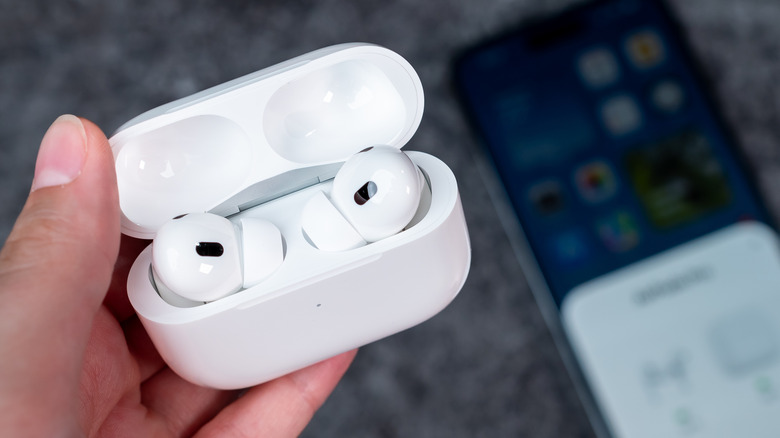
Apple AirPods are some of the best wireless earbuds for audiophiles, bolstered by a comfortable fit and accessible design. However, since they were first introduced in 2017, and well into their current version, AirPods have had an enduring environmental problem. While Apple likes to tout its environmentally-conscious practices in creating the AirPods, which aren't for nothing, the device's limited lifespan of less than two years — compounded by Apple's reluctance toward user repairs — make them problematic from an environmental perspective.
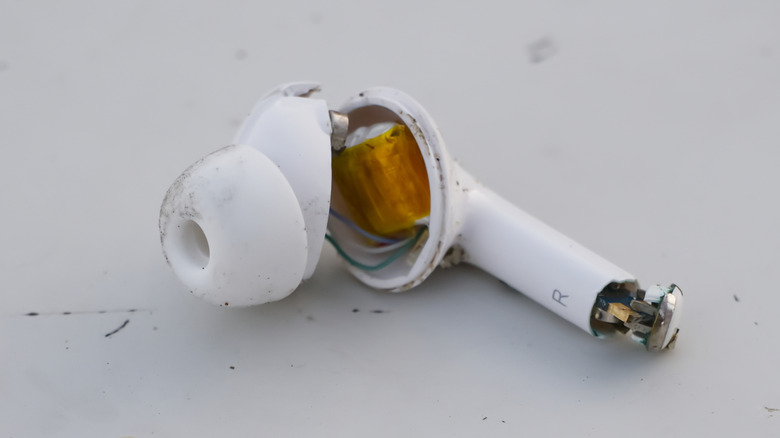
The production of AirPods is relatively environmentally-friendly, thanks to a company-wide focus on reducing its carbon footprint and high percentage of recycled content found in the AirPods Pro 3. But once the battery stops holding a charge after about 18 months of use, there is little-to-nothing a user can do to prolong the lifespan as AirPods cannot be opened without completely destroying them. This essentially forces owners to dispose of their AirPods and buy another set, which undoes a large portion of any environmental benefits Apple's production procedures may yield.
AirPods are made of and powered by recycled materials
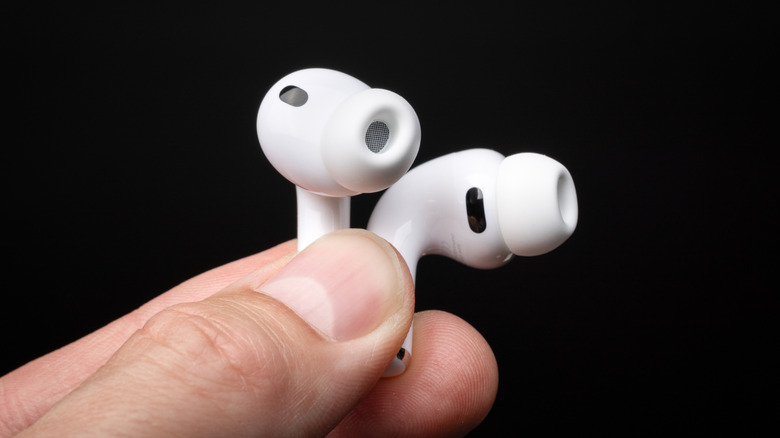
To be clear, the production of AirPods is not an absolute negative for the environment. As part of Apple's ambitious plan to be carbon-neutral by 2030, a portion of all of its devices are made of recycled materials. In the case of the current model of AirPods, the Pro 3, the earbuds use 40% recycled content, the MagSafe charging case is made of 65% recycled plastic, and the batteries come from 100% recycled cobalt and 95% recycled lithium.
Apple also encourages users to recycle AirPods that have reached the end of their lifespan through its Trade In program. You can send broken or non-functional AirPods to Apple and receive a credit toward new devices, while the company handles the recycling process. In a vacuum, this sounds like a net benefit for the environment, and while these procedures help ease the AirPods environmental problem, there are still some weaknesses in Apple's approach.
AirPods' lifespan and lack of repairability are big problems
There are several problems that worsen the environmental impact of every pair of AirPods Apple manufactures. First and foremost, AirPods have a definite shelf life, not unlike when your smartphone becomes too old to use. Every part of the device, from the batteries to the speakers, is on borrowed time from the moment it rolls off the production line. The precise lifespan of a pair of AirPods varies depending on the model and how you're using them, but generally speaking, things will start to fail at around two to three years of ownership.
AirPods are made partially of recycled materials, but as Apple keeps manufacturing new units to replace failed ones every few years, those environmental positives can start to shrivel up. A solution to this would be allowing users to prolong their AirPods' lifespan through repairs and parts replacement, especially the batteries. Unfortunately, at least with the AirPods Pro 3, there's no way to open the earbuds or the charging case without ruining them.
Even if you could open the devices, Apple doesn't sell replacements for their proprietary parts, so there's no way for end users to fix them. This means that when your AirPods fail, disposing of them is the only option. Sending old AirPods off to Apple for recycling helps, but due to the proprietary design, only Apple can do this, while many third-party recycling plants can't help.