

Major Semi-Truck Makers Are Switching From Diesel Engines To A New Hybrid Option
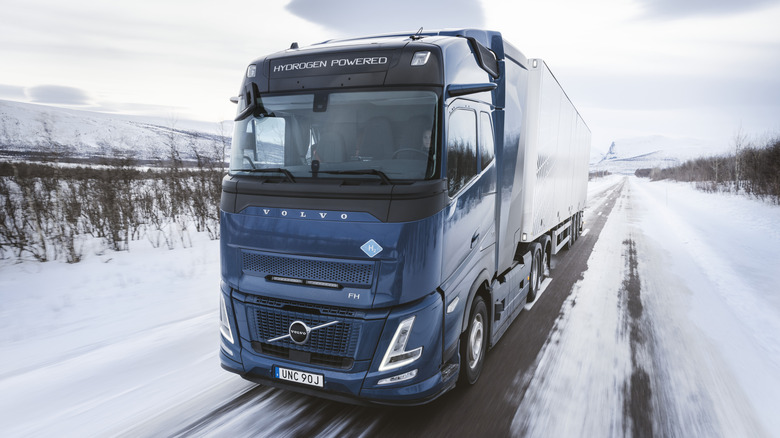
As the trucking industry shifts toward zero emissions goals, companies are experimenting with alternatives to fossil fuels to power their newest lines of freighter trucks. One technology that could prove especially effective is hydrogen power, which could provide a low-cost alternative to traditional electric-powered trucks. Already, manufacturing giants like Volvo, Man, Mercedes-Benz, BMW, Toyota, Hyundai, and Honda have announced plans to develop semi-trucks fueled by hydrogen.
As it stands, hydrogen-powered engines come in two general forms. The first is the fuel cell, which uses hydrogen to generate electricity. Lighter than their lithium-ion counterparts, whose heavy batteries are impractical for long-distance logistical journeys, hydrogen fuel cells offer longer ranges and shorter recharge times for companies looking to meet zero emissions standards. However, hydrogen fuel cells require manufacturers to create wholesale manufacturing processes, creating a major investment barrier to market entry. Hydrogen combustion engines offer a cheaper, less intensive transition because they share several parts with traditional diesel combustion engines. However, because they replace diesel with hydrogen, these engines mostly produce water vapor rather than pollutive exhaust. Companies are investing in both technologies.
Despite the environmental gains, several hurdles stand in the way of making hydrogen-powered trucks widespread. One major hurdle is availability. As it stands, green hydrogen isn't nearly as ubiquitous as alternative fuel sources. The lack of public fueling infrastructure is another major roadblock, particularly for a trucking industry that needs widespread refueling options for long trips. However, some companies are set on overcoming these issues, rolling out pilot programs of the revolutionary technology in hopes of reaching zero emissions.
The hydrogen fuel-cell trucking movement
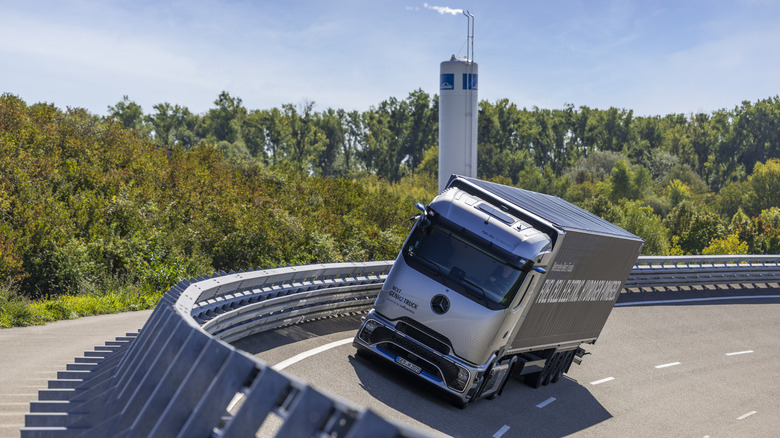
Several manufacturers have turned toward hydrogen fuel-cell technologies as a viable alternative to traditional electric trucking solutions. Mercedes-Benz, which is the largest stakeholder of trucking giant Daimler Truck, is expected to start producing the first 100 units of its NexGenH2 hydrogen fuel-cell truck this year. Utilizing liquid hydrogen rather than compressed gaseous hydrogen, the vehicle could offer longer ranges than other fuel-cell trucks. Another German manufacturer, BMW, is taking advantage of Europe's hydrogen-powered freight project, H2Haul, to initiate test drives of its hydrogen fuel-cell truck. Done in collaboration with Iveco, DHL, and Teal Mobility, the pilot program will send test trucks between Leipzig, Landsberg am Lech, and Nuremberg to gauge the viability of hydrogen trucks across uncertain, variable conditions.
Asian car giants are also looking to deploy fuel cells in new lines of trucks. Hyundai, for instance, became the first company to mass produce the technology for commercial consumers when it released its XCIENT Fuel Cell truck in 2020. Selling roughly 200 units to European clients, the trucks have racked up over 9 million miles to date. Hyundai is even deploying fuel-cell technology in South Korea's new hydrogen-powered stealth tank. Meanwhile, Japanese giant Honda showcased its Class 8 Hydrogen Fuel Cell Truck Concept as early as 2024. The truck, which is powered by three Honda Fuel Cell Modules, underwent testing on California roads in 2025. To date, no major rollout has been announced. Toyota, which has had a checkered history with its hydrogen vehicles, recently signed a memorandum of understanding to join Cellcentric, a German startup co-owned by Volvo and Daimler. Cellcentric produces the cells behind Mercedes-Benz's NextGenH2 line.
Hydrogen combustion engines: A less costly alternative
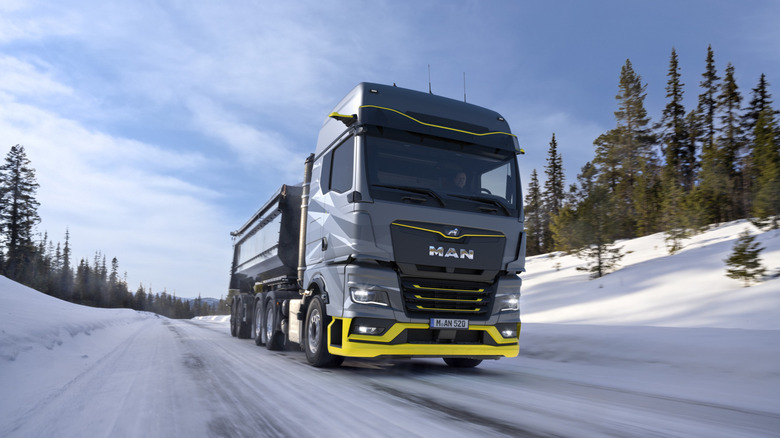
Several European manufacturers have turned to hydrogen combustion engines as a less costly alternative to hydrogen fuel cells. Because they share many of the same components as diesel engines, companies can reuse several of the same manufacturing processes, drastically lowering up-front production costs.
European giant Man Truck & Bus became the first firm on the continent to launch a line of hydrogen combustion trucks in 2025. Dubbed the hTGX, the truck uses Man's H45 hydrogen combustion engine, a hydrogen-converted D38 diesel engine. The initiative is a strong example of Europe's commitment to hydrogen fuel, as the company received a €35 million grant for buyers to fund their purchase of the hydrogen truck. Already, Man announced its first sale to German logistics firm WTK, a good sign for hydrogen combustion's viability. Another major company looking to capitalize on hydrogen combustion technology is Volvo, which began road testing its hydrogen-powered heavy trucks in April 2026, in hopes of releasing its hydrogen combustion semis across Europe by 2030. The swiftness of Volvo's timeline is due to the company's success with High Pressure Direct Injection (HPDI) technology, which the Swedish giant already deploys in its 10,000 gas-powered trucks. Ultimately, Volvo hopes to add its hydrogen combustion trucks to a lineup that will also feature battery-electric and fuel-cell electric vehicles.
Despite these positive developments, the hydrogen-powered trucking industry will need to overcome several hurdles on its way to widespread viability. For one thing, countries need to invest in building out support infrastructure for hydrogen combustion and hydrogen fuel-cell trucks. Developing production pipelines is also a major challenge. Ultimately, it's likely that hydrogen-fueled trucks will need to overcome the same cost and feasibility concerns of their electric vehicle counterparts.