

Apple's 5 Most Infamous Design Flaws
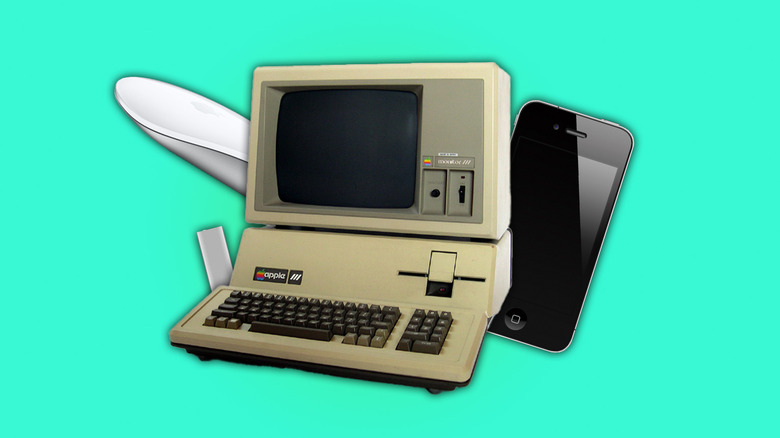
Apple isn't a company that messes up designs very often. Since bringing Steve Jobs back under its roof in 1997 and handing over the reins of design to Jony Ive, who helped design the iPod and iPhone, among many others (until he left in 2019), the company's design faux pas have been rare. However, when the company does miss, it's major news.
From antenna problems to ports in the wrong places and class-action lawsuits over a keyboard design, the Cupertino company has had its fair share of mishaps. People often focus on these failures from Apple because it's a company that prides itself on its designs. When something goes horribly wrong, it's irritating as a consumer, but still endlessly fascinating.
If you want to see what Apple really looks like on its back foot, you should read up on the period after Jobs left the company. With a new CEO about to enter the scene for the first time since 2011, we're sure that at some point, this article will be updated with yet another set of problematic hardware. Who knows, maybe the foldable iPhone or even the rumored all-glass iPhone might wind up on here soon.
iPhone 4 'Antennagate'

There aren't many incidents of Apple coming out and admitting fault. The iPhone 4's antenna problems were one of those times. Built with a wrap-around, external cover for the antenna, the iPhone 4 was susceptible to a reduction in signal if touched in the wrong spot. In a 2010 "Letter from Apple," the company claimed that this was due to an incorrect formula for tracking how much signal the phone was receiving. Even Steve Jobs himself got out there and said that people should just hold the phone differently.
However, as the scandal rolled on, it became apparent that Apple was aware of the problems. Internally, the senior antenna expert, Ruben Caballero, had told Jobs and senior management at Apple that there could be problems with the design. According to Bloomberg in 2010, a phone carrier also envisioned problems with the external ring. The small gap in the corner of the shield was enough to cause problems when covered by hands.
Eventually, the problem escaped Apple's PR department, with Consumer Reports also finding that the issue persisted in its review of the hardware. Apple rightfully folded under the pressure, offering free bumper cases to help solve the issue. The class-action lawsuit was eventually settled in 2012, with the court ruling that those who hadn't already taken Apple up on its free bumper case offer were due a $15 payment.
Butterfly keyboards
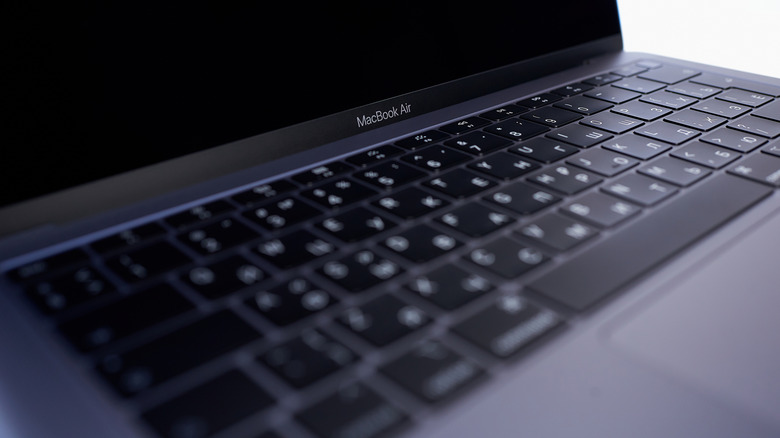
One of Apple's biggest blunders, the butterfly keyboard, was a disaster from start to finish for the company. A fresh design underneath the keys, the butterfly mechanism introduced a hinge when the key was pressed, with the hinge pushing down like a butterfly wing in motion on the connection below. However, the design left it open to damage, with even dust or small bits of debris able to completely break the keyboard if caught in the mechanism.
While probably missed by a good majority of Apple users, the resultant lawsuit eventually meant Apple had to shell out $50 million to make up for the disastrous keyboard. Even future iterations that introduced more protections and membranes to the design weren't enough. When Apple refreshed its MacBook line in 2020 alongside the switch to Apple silicon (M-series chips), it also ditched the butterfly keyboard.
It's not known how many keyboards were affected by the problem. Apple remained coy about the entire issue, hoping to shuffle it under the rug. Since the butterfly keyboard incident, the company has stuck with more traditional designs instead.
Magic Mouse 2
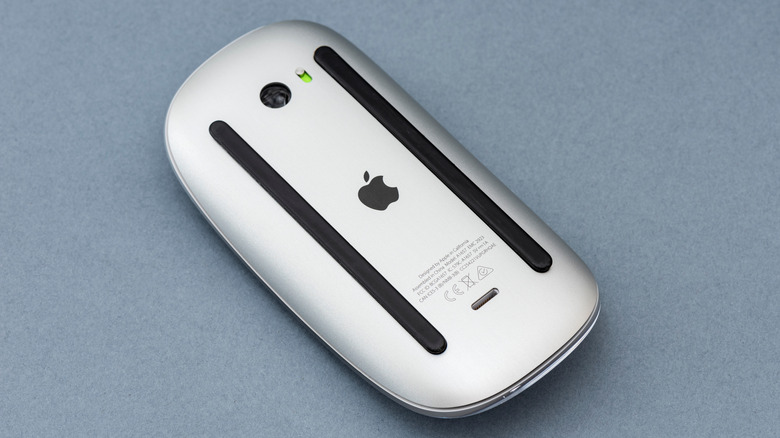
Yes, we could talk about the hockey puck mouse, but aside from it being a flop in terms of design, do you know how annoying it is that the Magic Mouse 2 still isn't fixed? Released in 2015, the multi-touch mouse, meant to be a bridge between the touchpad and a regular mouse, has its charging port on the bottom. Even when the device was revised to drop the Lightning port in favor of USB-C, Apple still kept it underneath.
Yes, the Magic Mouse 2 has a truly impressive battery, but it is completely unusable while charging. Most computer mice come with a charging port situated on the front of the mouse, acting like a traditional cable when connected. At some point, Jony Ive and his design team just got a little too contentious for no real reason. Apple has never really commented on why it decided to place the port there, either.
There's also no indication from the company as to when or if it will ever replace the aging peripheral. Being over 10 years old at this point, it's simply easier to hook up a regular mouse to a macOS device and tweak the settings. Apple reporter for Bloomberg, Mark Gurman, did publish a piece with rumors that Apple was redesigning the mouse with the port in mind, but that was in 2024. For now, it's either the Magic Touchpad or Magic Mouse 2 for official mice from Apple.
Apple III
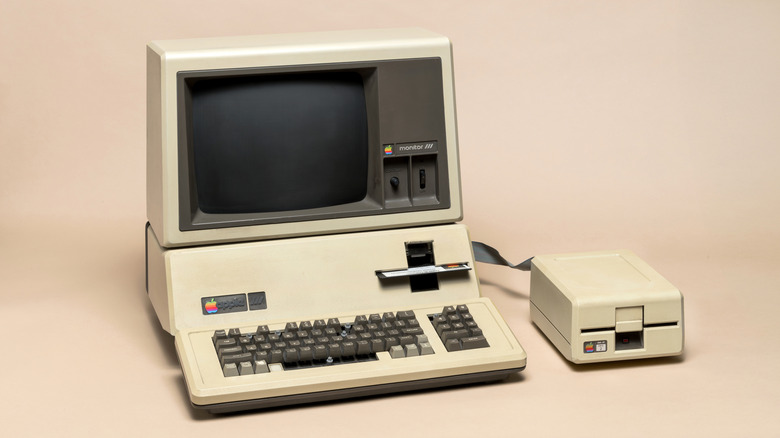
Sometimes old tech is hilarious in retrospect. The Apple III is one of those devices, but with a maximum price of $7,800 in 1980 (around $30,600 in 2026 dollars), this is a machine that shouldn't have had these problems. There's a reason it often gets brought up when Apple's biggest product disasters come up as a topic. Due to its overall design, the Apple III got incredibly hot. Between early DRAM chips, actual moving parts, and no vents, it was reported by a computer magazine of the time, Byte, that "the integrated circuits tended to wander out of their sockets." A reported fix for this that supposedly came out of Apple at the time was to lift the device 3 inches off the desk and drop it, hoping the chips would reseat themselves.
In the 1980s, Steve Jobs was a tyrant in the making, but was already issuing wild design decisions. He wanted a PC that would run quietly, so fans and vents to keep the device cool were out of the question. With everything contained inside, including the power supply, the Apple III would get so toasty that key components would slide out of position and cause data corruption. The built-in clock also stopped working after hours of use.
According to reports, each of the first 14,000 units had these defects, leading to a recall. It was such a bad situation that Apple eventually killed the Apple III not long after launching the IIe, which leveraged the success of the Apple II with fresher hardware. A III Plus was also launched in December 1983, less than two months before the launch of the original Macintosh. However, despite being an improved version over the very faulty original, Apple culled the line entirely by September 1985.
Third-generation iPod Shuffle
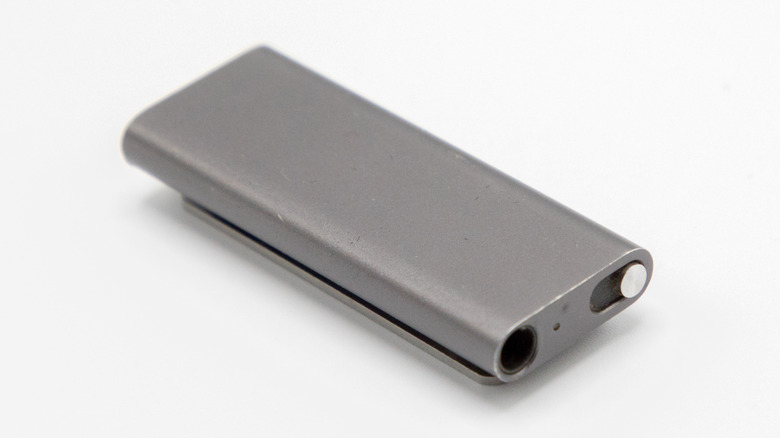
The iPod Shuffle was an ingenious concept from a business standpoint when it launched. It provided a fairly cheap way to enter the iPod ecosystem, but you had to sacrifice the decision-making that iPods brought with them. The original was released in 2005 and was effectively a glorified USB stick with music controls. Its follow-up in 2006 redesigned the device to be smaller — like a small badge with music controls on the front. Its fourth and final design squared things off in 2010, offering familiar controls without relying on earbud buttons.
Notice how we skipped over the third generation? That's because it was a bizarre choice from the company. The iPod Shuffle was already a limited device in terms of what it could do. There was no real control over what music would play, but you could at least easily pause and skip songs. The third-generation iPod Shuffle did away with all buttons on the device, turning it into a small object that had a headphone jack. Using the included earbuds was, for some, the only way to have direct control over what was being pumped into their ears, even if the quality of those old Apple earbuds was not great.
Thankfully, the ultra-minimalistic music player was dropped in 2010, as the final generation of the iPod Shuffle debuted. The iPod brand would be entirely dropped in 2022, with the Shuffle's fourth generation being there to see it out.