

This 1,000 HP Electric Aircraft Motor Could Change How Much It Costs To Fly
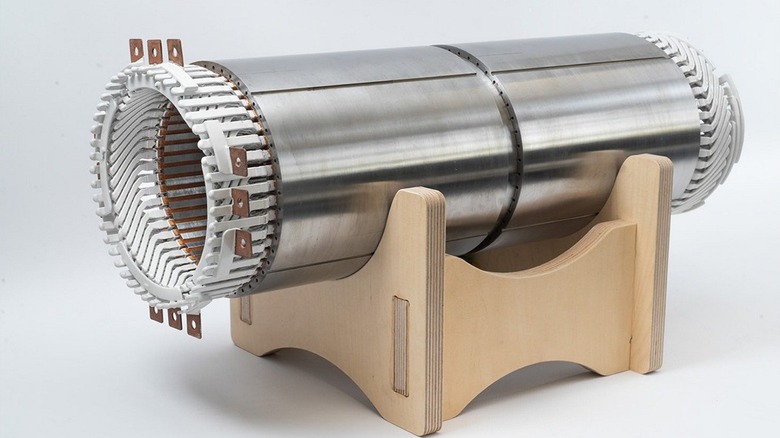
In a major step towards making the wide deployment of hybrid-electric-powered aircraft more practical, a German firm has produced a motor capable of producing 1,000 horsepower in a compact, 207-pound package. Developed at the Fraunhofer Institute for Integrated Systems and Device Technology, it is capable of power output typically found in small turboprop engines and could be used to power regional aircraft as well as helping AI driven flying taxis become a reality. In aviation, every ounce is crucial, so keeping this electric aircraft motor's weight down to just over 200 pounds is an important step towards real-world feasibility.
A lightweight, electric engine could significantly reduce the operating costs of flying — namely via fuel savings — especially for regional aircraft where efficiency gains during takeoff and climb matter a lot. A savings that could be passed on to the consumer. A lighter motor can enable longer range, larger payloads, and greater efficiency, all of which would make this Fraunhofer design appealing to companies and researchers developing hybrid-electric aircraft, and perhaps real flying cars.
There are also a number of safety redundancies built into the motor, which is critical in aviation. It is composed of four independent sections, each containing its own inverter, winding, and control systems. Should one fail, the three other segments are capable of picking up the slack and averting a total system failure.
The motor's key innovations
While the 1,000 hp output figure is eye-catching, the truly important metric here is the power-to-weight ratio. According to Fraunhofer, its motor has an 8 kilowatts per kilogram (kW/kg) ratio, a big step up from the typical 2-4 kW/kg of EV motors and other aviation designs that top out at around 5 or 6 kW/kg. To achieve that level of efficiency requires a number of important developments. One of these is the use of hairpin copper windings in the motor's stator, the stationary part that creates the magnetic field that interacts with the spinning rotor.
Hairpin windings are flat, U-shaped copper conductors that replace the traditional use of round copper wire. Their shape allows engineers to pack more copper into a smaller space, which raises power density and makes it easier to disperse heat. Speaking of heat, another important piece of the puzzle is the use of direct oil spray cooling. Versus air cooling, the oil spray makes heat dispersal more efficient, meaning the electric motor can work harder without overheating ,and be designed with a smaller footprint.
What it means for flight
The Fraunhofer project is part of a larger initiative called Project AMBER, funded by the European Union. AMBER's aim is to drive the development of more sustainable fuel systems, like hydrogen cells and hybrid turbines in aviation. In practical terms, that means the motor is being developed with regional aircraft in mind rather than as a one-off lab demo. The Fraunhofer design will be paired with Avio Aero's Catalyst advanced turboprop engine to create a parallel hybrid, meaning both the sophisticated, fuel-burning turboprop engine and electric motor work together to turn the prop.
The overarching implication is that aviation is moving towards propulsion systems that avoid traditional fuel sources, like the Luft Pinoy that blends an EV and an eVTOL system. While fully electric long-haul air travel, especially at the level of large commercial aircraft, remains out of reach at the moment, demonstrating this kind of energy density means hybrid regional aircraft that burn less fuel and produce fewer emissions are within striking distance. It fits neatly into Project AMBER's goal of reducing carbon dioxide emissions generated by aviation by up to 30%.