

Why Are Some People Getting Rid Of Their Oura Rings?
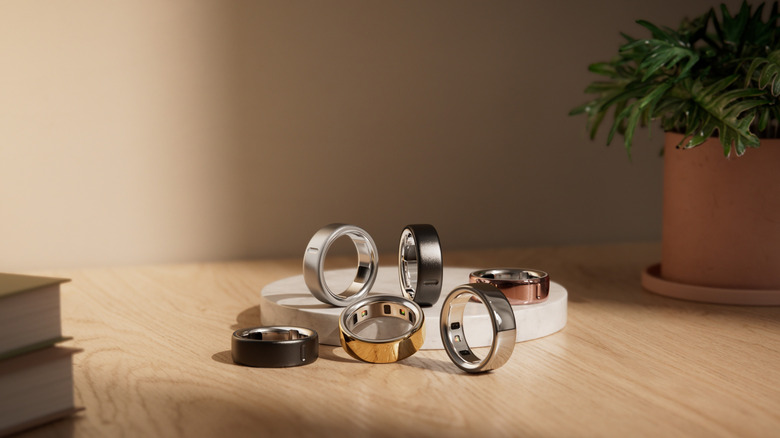
Some customers are throwing their Oura smart rings on the scrap heap as concerns mount regarding the company's military partnerships. The trend, which spread across social media like TikTok, Instagram, and Reddit, stems from an August 2025 press release in which the smart wearable maker touted its deepening relationship with the U.S. military, citing an upcoming factory in Fort Worth, Texas, and its deployment of programs created by controversial big-data broker Palantir Technologies. The Finnish company's connection to Palantir, whose technology has been tied to the Trump administration's controversial surveillance and mass deportation efforts, has sparked outrage and privacy concerns.
Oura has unequivocally denied selling its users' data. According to a video posted by the company, its partnership with Palantir is completely separate from its consumer-facing business. Instead, Oura's Enterprise Platform uses Palantir's FedStart hosting environment, a popular software-as-a-service system that allows private companies to meet strict federal government security mandates without undergoing the onerous security clearance accreditation process. Oura uses Palantir's cloud environment to host its processing of consenting military personnel's biometric data. According to the company, customers sporting its new Oura 4 smart rings are not affected.
Some customers remain unconvinced by the company's explanations. For one thing, Anthropic's fallout with the Pentagon and Silicon Valley's subsequent acquiescence testifies to both the administration's willingness to pressure private partners and the potential fragility of its liberal resistance. While Oura currently refuses to sell its clients' data, no legal rules guarantee these protections. Despite assurances, some customers argue the importance of boycotting companies tied to an increasingly pervasive American surveillance state and the administration orchestrating it. Ultimately, the saga points to broader concerns regarding users' biometric data.
A mission-ready product
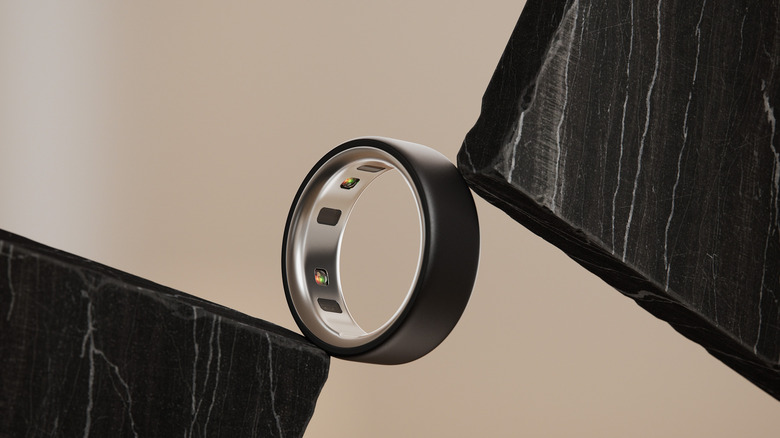
In the wake of the revelations, social media swirled with accusations about Oura and its contracts. Conspiracy theories accused the Finnish firm of secretly selling customers' biometric data to the U.S. military. Meanwhile, videos showcased angry customers throwing their smart rings into the garbage. The reality of Oura's contract with Palantir is more benign.
In an era in which cloud security is at a premium, Palantir's FedStart has become an essential tool for private companies looking to participate in government contracts. Companies like Anthropic and Google depend on FedStart to provide services that meet federal security requirements. For Oura, such a partnership is essential to servicing its largest enterprise customer, the U.S. Department of Defense. Cloud security is critical in executing these types of contracts. In 2017, for instance, data from smart wearable Strava revealed the locations of secretive military outposts and intelligence stations. Oura's partnership with Palantir looks to make this sensitive data more secure.
The Pentagon has deployed Oura's multi-functional smart rings since 2019, following a series of deadly U.S. Naval collisions linked to sailor sleep deprivation. Since then, the company has partnered with the Navy to study crew fatigue and worked with the Army to track soldier biometrics during field exercises. According to press releases, Oura is also collaborating with the U.S. Army Combat Capabilities Development Command Soldier Center, Air Force Research Laboratory, and Naval Health Research Center to develop "mission-ready" products. The Pentagon even hands out the devices to select personnel as an employee benefit. However, the relationship between Oura and the Pentagon isn't infallible. In 2025, for instance, the Pentagon nixed a $96 million contract with the company, following a series of protests by customers and competitors alike. Despite the setback, Oura continues to strengthen its ties with the U.S. government.
Ring around the Roe v. Wade
This is not all to say that advocates' concerns are without merit. For one thing, wearables aren't covered under HIPAA, meaning that customers must depend on company rules rather than medical privacy laws to protect their biometric data. To Oura's credit, its privacy policy explicitly states that it does not sell customer data. However, the company remains bound by the U.S. Data Privacy Framework, and it can be compelled to provide customer data under court order. And while Oura has stated it will push back against surveillance and prosecutorial requests, critics argue that such lines-in-the-sand are at the company's discretion.
As several high-profile tech firms cozy up to the administration, it is reasonable to question whether any company's commitment to user privacy will remain steadfast. This is particularly true given Oura's increasing overtures to the administration as it lobbies to circumvent onerous regulations. Furthermore, a slate of patent-infringement lawsuits filed to bully competitors out of the market add fuel to the speculative fire. And while neither of these factors mean that Oura is poised to change its privacy stance, Silicon Valley's recent history of trading safety for regulatory favor isn't encouraging.
One concern cited by users that abandoned their smart rings was Oura's tracking of menstrual data. Previously a selling point, advocates now worry that it could be used to limit abortion access and prosecute women seeking to exercise their reproductive rights in a post-Roe v. Wade landscape. More broadly, the discussion highlights growing tensions around consumer privacy. As it stands, companies like Oura ask customers to depend on the moral fortitude of their executives to guarantee their right to privacy. Increasingly, it's a bargain customers are unwilling to make.