

5 Privacy Features Only Apple Has
Apple has turned user privacy (and the security that goes with it) into a top priority for its products over the years, whether hardware or software. It wasn't just a marketing message. Many Apple devices and several key Apple apps are end-to-end encrypted. Apple also offers ways to reduce online user tracking via apps and services on the iPhone and iPad and in the Safari browser. The company has built tools that reduce location data collection over the years, and it has developed a method to offer private cloud-based AI services. Finally, the company has a strong, device-level tool that can strengthen the protections against malware and spying attacks, improving user privacy in the process.
Apple's relentless pursuit of privacy has indirectly benefited people who do not use Apple devices or services. The company has pressured some of its main competitors to adapt, especially Google, which has improved the privacy features in its Android operating system over the years to narrow the gap with iOS privacy features, despite Google's direct interest in collecting user data for its advertising business. Even so, Google has not matched Apple's privacy features perfectly, taking longer to adapt some of them.
Everything is encrypted, even iCloud backups
Apple uses end-to-end encryption (E2EE) at various levels across its products. iPhones are encrypted as soon as the user sets a lock screen passcode, with Face ID offering faster authentication. The Face ID data (and Touch ID before it) is also encrypted in the Secure Enclave inside the custom Apple A-series chip. Consumers who have multiple Apple devices can enjoy the same encryption on their iPad, Mac, and Apple Watch, including Touch ID on MacBooks. The Vision Pro spatial computer also comes with an iris scanner called Optic ID that offers security similar to Face ID and Touch ID.
E2EE protects key apps on the iPhone and other devices, including iMessage chats, FaceTime voice and video calls, and the Health, Home, Find My, and Keychain apps. The iMessage app is a particular highlight here, as the default iPhone messaging app has always offered E2EE. Third-party apps like WhatsApp and Signal offer similar encryption, but Google needed a longer time to bring end-to-end encryption to the main Android messaging app. Google Messages, which has switched to the RCS standard in recent years, received E2EE support a few years after Google embraced the standard. RCS-to-iPhone messages have yet to receive E2EE support, but the feature is in the works and will launch with iOS 26.5.
When it comes to encryption, iCloud's Advanced Data Protection is another unique Apple privacy feature. The feature is optional, allowing iPhone users to encrypt iCloud apps (Photos and Notes) and iPhone backups. The feature is strong enough that Apple was forced to remove it for U.K. consumers following pressure from the government to add a backdoor to the cloud data. Google One backups for Android don't offer end-to-end encryption for certain data, including photos and videos stored in Google Photos.
The limits on location data access
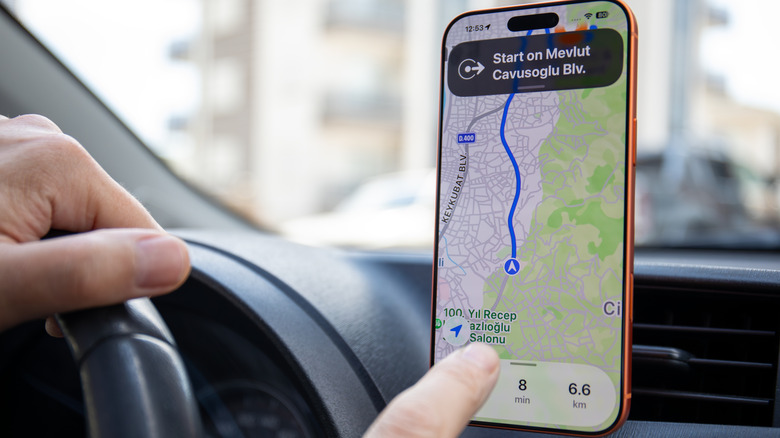
Location information can be valuable for advertisers, which may explain why Google has been tracking users in the past even when they thought they disabled location tracking. Those allegations led to a class action suit against Google, which the company settled for $391.5 million. Later, Google turned the Timeline history feature in Google Maps into an on-device repository, rather than hosting that data in the cloud as before. But while Google was dealing with its location-tracking privacy issues, Apple was building strong privacy protections to limit location data exposure. Apple Maps uses random identifiers and minimizes data collection because personal data is encrypted and stored on devices.
In 2020, iOS 14 brought users the ability to share approximate location data with apps instead of precise information. The same release added camera and microphone indicators that informed iPhone users when apps used these iPhone hardware components. Google added similar indicators to Android in 2021. iOS 26.3 brought a new Limit Precise Location setting that allows users to limit what location data they share with cellular networks. The feature only works with iPhones that use Apple's C1 and C1X modems, like the iPhone 16e, iPhone Air, iPhone 17e, and the M5 iPad Pro on specific carriers.
Apple also guards the location data built into the Find My network with end-to-end encryption. This means Apple product users can track their products (including iPhone, iPad, Mac, and Apple Watch), people, and AirTag-connected devices privately. The location of these items isn't shared with any third party. Google has similar anti-stalking and tracker-alert protections for its trackers, and Apple and Google have collaborated on a standard technology that prevents stalkers from using trackers to follow the movements of their targets.
User tracking prevention on iPhone
It's not only location data that advertisers want from internet users. They also want to be able to track people online across the apps and services they use, to serve more targeted ads. Meta and Google are examples of such companies, with the distinction that Google also owns Android, which means Android faces pressure to match iOS privacy capabilities. In 2020 and 2021, Apple released iOS 14 updates that featured two major privacy features unseen on rival products: App Privacy Labels and App Tracking Transparency.
App Privacy Labels forced developers to disclose up front what type of data their apps would collect from the user. The privacy disclosures had to be made directly on the App Store listing for a specific app. More disturbing for companies like Meta was the App Tracking Transparency (ATT) feature that forced all iPhone and iPad apps to ask for permission from users to track them online. Meta started a big campaign against Apple at the time, initially claiming that Apple's new privacy features would hurt small businesses. In 2022, Meta predicted that the ATT feature could reduce ad sales revenue by about $10 billion. Google has never matched these features on Android. The company added a "Data safety" label to Play Store listings, but it never matched the ATT feature that's still available on iPhone and iPad.
iOS 15 added other anti-tracking features, including Mail Privacy Protection, iCloud Private Relay, Hide My Email, and App Privacy Report, to limit cross-app, email, and web tracking. Safari offered its own Intelligent Tracking Prevention, launched in 2017, to prevent cross-site tracking on Apple devices.
Private Cloud Compute in Apple Intelligence
Apple unveiled its vision for generative AI features on iPhone and other products at WWDC 2024, where Apple Intelligence was the main highlight of the event. Apple announced various AI features for the iPhone, including tools that would process user data on the device and more advanced features that required cloud processing. These practices were not foreign to users, as existing AI products already used the cloud to process user data, including ChatGPT and Gemini. What Apple did differently was to focus on on-device AI and to announce a private cloud architecture that would ensure the privacy of user data processed in the cloud.
Called Private Cloud Compute, the feature doesn't have an equivalent from rivals. Google introduced a Private AI Compute feature in November 2025 for certain Gemini features, but it's not clear how widespread the use of Private AI Compute is for Gemini data processing. The worry with AI tools is that companies may use information from chats to train future AI products unless users opt out.
That said, Apple has fallen behind rivals when it comes to AI features on iPhones, with Apple Intelligence failing to deliver the AI vision Apple laid out at WWDC 2024. Apple is still recovering from the setback, reportedly having tasked Google with delivering a custom version of Gemini that Apple will use to power the revamped Siri. It's unclear how Apple's version of Gemini will work, but it should protect user data with the help of Private Cloud Compute. The ChatGPT-like Siri version is reportedly expected to be unveiled at WWDC 2026.
The ultimate security: Lockdown Mode
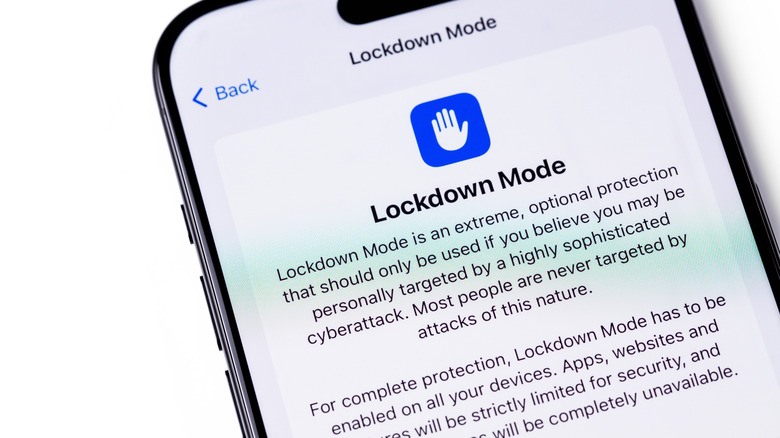
Taken together, the privacy features mentioned above are designed to protect user privacy at various steps. All Apple products can be encrypted, and several apps offer end-to-end encryption. iPhone users can lock apps with passwords and hide them. As we explained, consumers can use the built-in privacy features to block advertisers from tracking them online and reduce the exposure of location data. Apple Intelligence features on iPhone and other devices should also be private by design. But if an iPhone user is a high-value target, like a politician, dissident, journalist, celebrity, or other prominent figure, hackers may target them with sophisticated malware meant to extract data from users. That's where Apple's Lockdown Mode feature can be useful.
The purpose of Lockdown Mode is to prevent malware attacks by making it much harder for malicious software to get into the iPhone (and other devices). The feature will also reduce the functionality of the iPhone and may lead to a more frustrating experience, but that's a compromise people may want to make rather than have attackers target them with spyware. Lockdown Mode can be considered one of Apple's strongest optional privacy and security protections in Apple's software, a security layer that can be enabled and disabled on specific devices when such protections are needed.
Lockdown Mode was launched in 2022 as part of iOS 16, iPadOS 16, and macOS Ventura. Google brought a version of Lockdown Mode to Android called Advanced Protection Mode. The feature was released in 2025 as part of the Android 16 rollout, but devices that won't get the software update will not benefit from it.