

China Cleaning Up Its Pollution Might Have Sped Up Climate Change
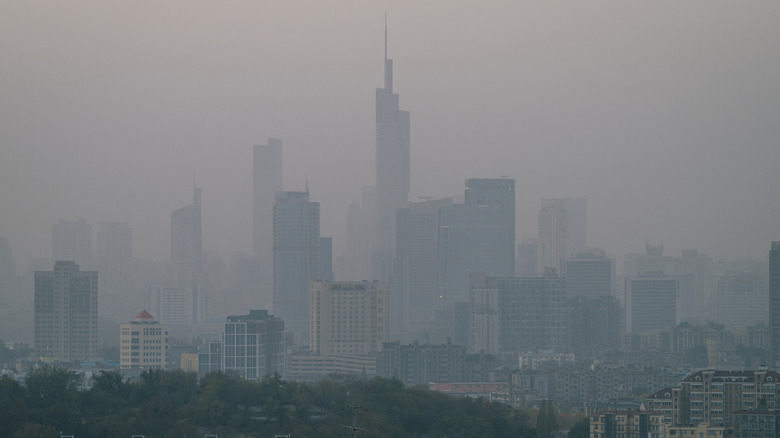
You wouldn't think cleaning up pollution would have the opposite effect of making things worse, but that may well be the case with east Asia and, specifically, China. The country and region have made great efforts to reduce pollution and air emissions. Since about 2013 or thereabouts, sulphur dioxide emissions have dropped significantly, by as much as 75%. It's a commendable mission that has had measurable effects. But a study published in Nature may link that cleanup — and the resulting air quality improvements — with accelerated global warming and temperature rises.
The idea is that less air pollution allows more sunlight to filter through the atmosphere, further warming the environment. Air pollution like aerosols build up after being released and reflect sunlight or change cloud reflection properties, allowing them to repel more solar radiation. That, in turn, creates something of a shading effect which cools the planet. To be clear, they did not directly cause additional warming but instead altered artificial properties that would shield some of the oncoming climate changes. The primary source of global warming can still be attributed to greenhouse gas emissions, and air pollution cleanup is still important — air pollution alone is responsible for nearly 2 million deaths in China per year.
Ultimately, 2025 was one of the warmest years to date, and it's only getting worse from there. Moreover, our current climate models can't really explain what's happening to Earth right now, because the real climate is incredibly complex. Scientists don't know exactly why the acceleration is happening, but they have some ideas, and there are likely a number of reasons beyond the air pollution cleanup. But it is still contributing.
The situation is more complex than you could imagine
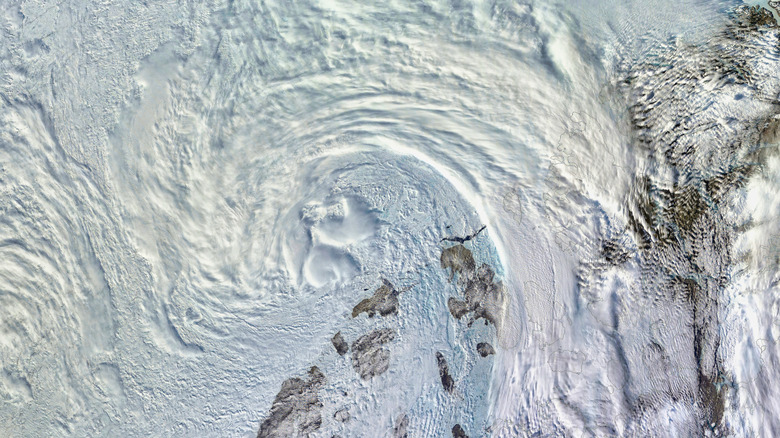
Interestingly, a similar study posits that anthropogenic aerosols, the same air pollution, is contributing to arctic weather or mid-latitude cyclones. By combining four decades of observational weather data, the study examines how those aerosols affect the cyclone tracks of storms moving north into the arctic. Researchers believe the result of higher pollution is a nearly doubled amount of cyclones and increasing damage to arctic ice, among other concerns.
Yet, bring the pollution down, like what is currently happening, and it eases the cyclone patterns and pressure on the arctic region. It also means that China's efforts to improve air quality have helped reduce sea ice loss. The melting ice and arctic sea ice loss is another major contributor to accelerated global warming and something we want to slow down as much as possible. Moreover, the world's coastlines are in danger no matter what we do at this point, because the melting ice sheets are causing sea level rise, and it's picking up pace.
This highlights how complex the entire situation is. It's not merely black and white in the sense that cleanup is accelerating global warming and therefore bad, as it's still offering some helpful properties elsewhere — slowing arctic sea ice loss. Instead, it's more like a tug of war between negative and positive consequences. Unfortunately, it does look like a game of tug of war that we're going to lose.