

4 Underrated PC Brands That Can Compete With Dell
The office PC scene has changed dramatically. A lot of lists for the best office PC, whether desktop or laptop, will often include the mighty Dell, but for a lot of people, its prices are often too high. This is especially exacerbated by the ongoing AI data center-induced shortage of PC parts.
It's ironic, as Dell was originally started with the goal of undercutting the competition. Using off-the-shelf parts, Michael Dell started selling pre-built PCs out of his dorm room in 1984, but with much lower prices than what IBM or Apple were providing around that time. Now, the company is known for its expensive, hard-to-self-service machines with proprietary parts and its confusing branding after killing the Dell XPS line.
However, despite Dell's dominance in the office space, there are plenty of different, underrated options to check out. Chinese brands like Geekom and Minisforum are facilitating low- to high-end machines that won't take up much space. Meanwhile, Framework is providing repairable, upgradable hardware. You don't have to settle for the big names anymore.
Geekom
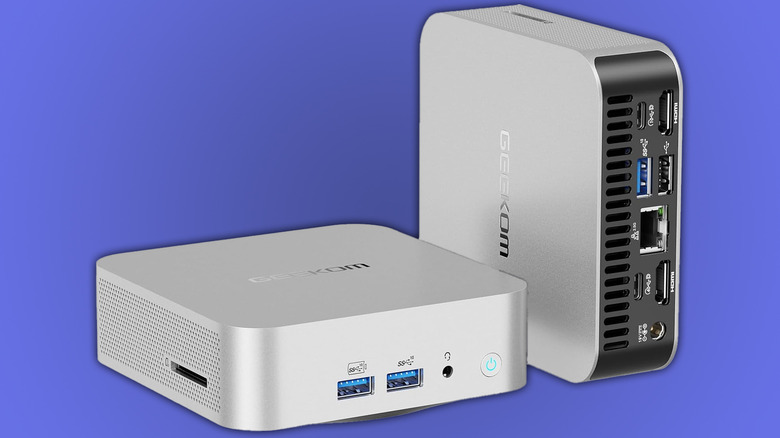
A small company out of China, Geekom, primarily makes mini PCs. These small form-factor boxes have become some of the best to buy for offices, as many tasks can be handled by the somewhat limited specs inside. Geekom's newer models, like the A8, have adopted higher-end mobile processors, which give them an edge over previous models for more intense workflows.
Geekom provides mini PCs with a wide range of specs, but you might want to avoid anything pre-Ryzen 7000 or Intel 12th generation, unless your workload is incredibly light. From the Ryzen 7000 and Intel 12th generation up, the processors and RAM configurations on offer will certainly handle more than enough for everyday work.
The mini PCs come loaded with ports, and sometimes two Ethernet ports for faster or more flexible networking. One of the top recommended models, the A8 at $879 (regularly on sale for around $689), has two HDMI ports for dual screen monitors, two USB-C, four USB-A ports, and an SD card slot. It's small, stays out of the way, and packs an AMD 8745HS chip for both work and some very light play (it has the same graphical ability as some 2023/2024 PC handhelds).
Framework
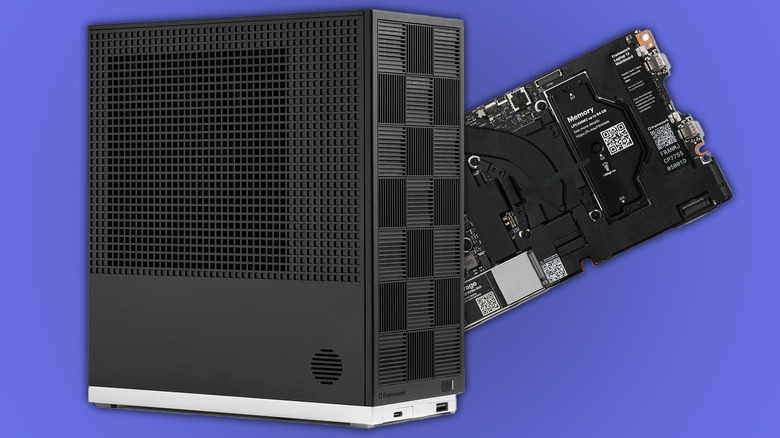
One of the more recent brands for tech enthusiasts to drool over, Framework is a unique provider in that it actively encourages repairability. Every device it sells can be self-serviced, and it's only the USB modules that are strictly proprietary. Of course, Framework sells every part you would need, but if you find a cheaper deal somewhere else for, say, an SSD or stick of RAM, it'll slot right in.
Framework is also a little different in that it only has one official desktop option right now. The Framework Desktop is a self-described "heavy-duty" machine aimed at intense workflows in the AI or machine learning industries. However, its exceptional power, thanks to the AMD Ryzen AI Max chips (both 385 and 395+), makes for excellent workstations and office PCs.
If you have a knack for not being terrified of PCs, you can also buy a laptop mainboard and whack it into a case, which Framework also sells separately. This brings you a much lower-cost, but easily repairable office PC that doesn't take up much room. The price starts at $449 when not on sale.
Chuwi
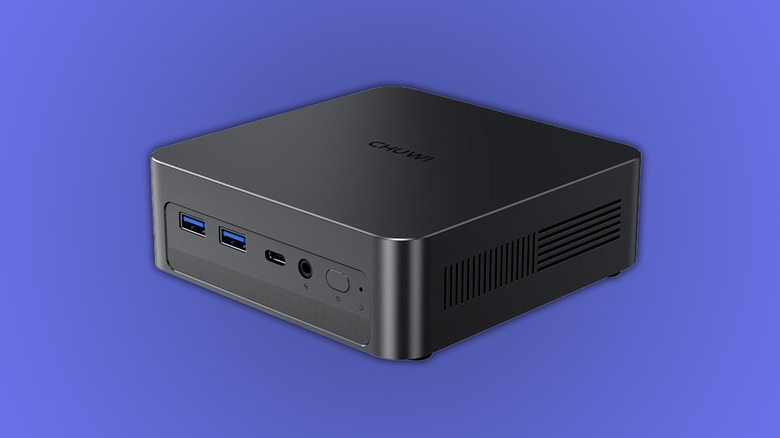
As you've probably noticed, outside of the major companies like Dell or Lenovo, office desktops have changed dramatically. As laptop parts have rapidly caught up, smaller companies like Chuwi can provide excellent specs in a tiny box. Similar to Geekom, Chuwi sells a range of devices, including laptops and tablets, without too much of a dramatic cost.
For the money, the $929 AuBox X with an Intel Core Ultra 7 256V will not only provide you with great performance for everyday tasks, but should be able to handle some more intense work as well. There's a cheaper model too, at $799, which should be better for those who know they won't be dealing with intense workflows.
Chuwi's laptops are super cheap, but sport lackluster hardware that's better suited for dedicated media centers or home servers. However, as a super cheap option, these should fit the bill for word processing, email, and web browsing. We'd probably stick with the mini PC boxes, as these provide the best overall pound-for-pound performance for the price, despite the ongoing price crisis.
System76
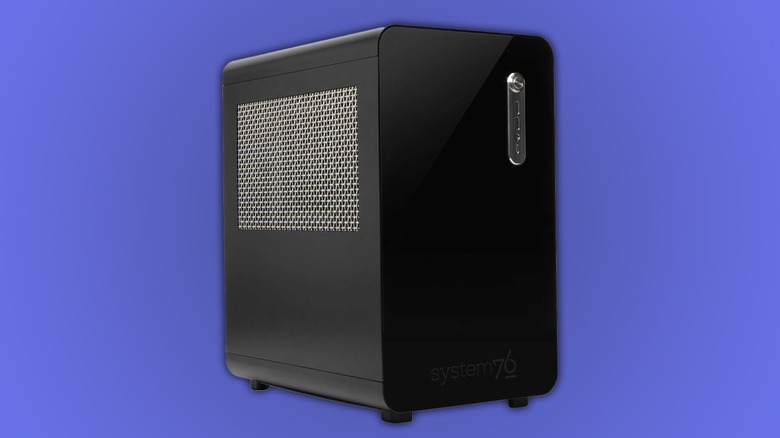
For those of us who have ditched Windows for Linux, or those who are looking for a solid, out-of-the-box Linux option, System76 is a fantastic option. A series of laptops and desktops that can be configured to your liking is available. The company also maintains its own Linux distribution, Pop_OS!, which is designed to make transitioning users to Linux a little easier. However, these PCs will run whatever operating system you need on them.
The Linux-centric company offers six variations of desktops to configure. We'd again recommend the Mira Custom and Prime Custom boxes, as these will give you greater control over the price. Again, System76 is a manufacturer impacted by shortages like any other lately, so expect prices to be a little more than usual. That said, at least there's no Windows 11 tax, where some companies tack on additional charges for the Windows license during configuration.
Aside from these machines, there are also workstations powered by AMD Threadripper processors, a mini PC starting from $899, and laptops. If you need an office machine that's geared towards the more technical side of the job, or again, just don't want Windows, System76 PCs are the way to go.