

5 Underrated Gaming Laptop Brands That Can Compete With Razer
We may receive a commission on purchases made from links.
When they're in the market for a new rig, some gamers are quick to pull the trigger on Razer Blade laptops, and for good reason. The company has built a reputation on sleek, black-aluminum machines like the Razer Blade 14 at $2,299.99. Yes, the ultra-thin laptops are stunning, but when looking upward at the higher configurations of the Razer Blade 16 and 18 reaching $5,000, one starts to wonder about cheaper alternatives that do the same job. Gamers don't have to spend Razer money to get top-tier mobile performance — there are several underrated gaming laptop brands with hardware that matches or beats Razer Blade specs while also providing better value.
These competitors often include features Razer omits, like a wider variety of port extensions or higher memory ceilings. Looking beyond the lure of the green triple-headed snake as a hardcore gamer or creative professional could save hundreds of dollars. We have identified five brands alongside their specific laptops that prove gamers can get fantastic performance without the Razer tax. All of them have at least an Nvidia RTX 5070 GPU and are stacked with some of the best specifications the gaming laptop market has to offer, representing a few of the most powerful gaming beasts users can get their hands on right now. These picks are based on their hardware specifications, display technology, and overall value compared to the Razer Blade lineup.
Lenovo
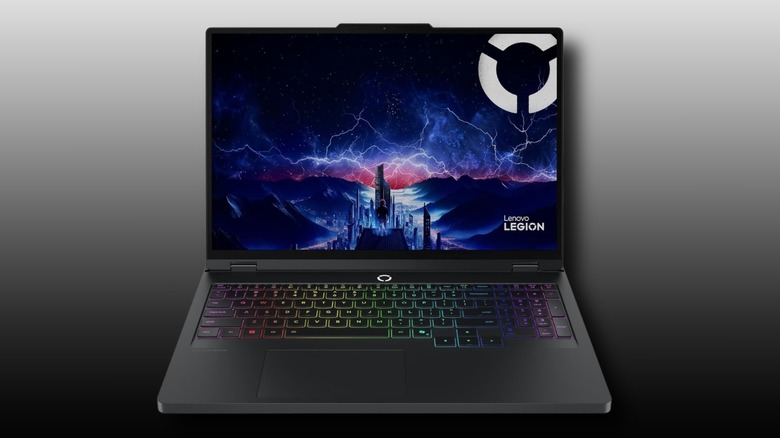
Lenovo has quietly become a dominant competitor in the gaming laptop space thanks to its focus on performance and specifications over flashy aesthetics. The Lenovo Legion Pro 5i, priced at $1,849.99, offers a greater value proposition than the Razer Blade 14 while saving $450 in the process. While the Razer Blade 14 includes an Nvidia GeForce RTX 5060 GPU for its $2,299.99 price point, Lenovo packs an Nvidia GeForce RTX 5070 GPU into its lower price point. There's essentially no argument to be made for Razer being the better choice here.
The screen is bigger too. The 16-inch OLED display on the Legion Pro 5i provides more screen real estate than Razer's base model while having a 2560 x 1600 resolution. It also doubles the Razer Blade 14's base memory with 32 GB of DDR5 RAM, so there are definitely no issues with complex game scene loading or creative workloads. Having a numeric keypad on a gaming laptop is a blessing for multitaskers, alongside five USB ports that offer far more peripheral support than Razer's minimalist design. With the addition of Wi-Fi 7 connectivity to round this package off, the Lenovo Legion Pro 5i is hands down the better gaming laptop option here.
Acer
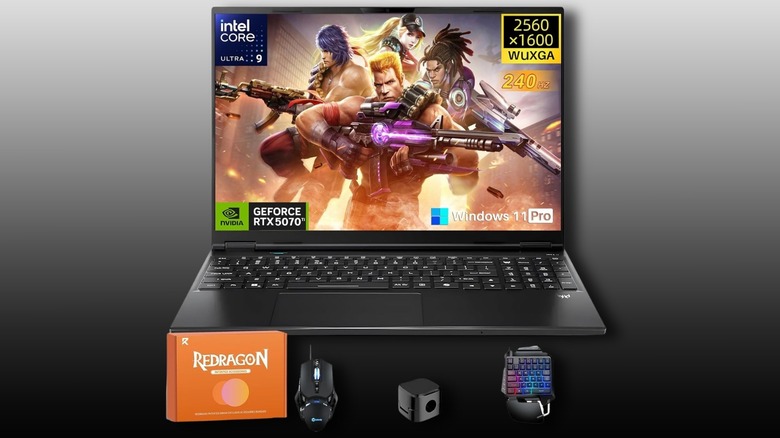
Acer has been pushing high-end features into its Predator line, with the Acer Predator Helios Neo 16S showing up as a direct contender against the Razer Blade 16. Retailing for $2,199.99, it's over $1,000 cheaper than comparable RAM configurations of Razer's 16-inch gaming laptop while matching its refresh rate. While Razer owners pay $2,399.99 for a 1 TB SSD, Acer packs a 2 TB SSD out of the box, which is great news for gamers who don't want to download a game every time they want to try tackling their backlog.
Graphical performance is a clear cut above Razer's alternative too. It has an Nvidia GeForce RTX 5070Ti powered by 12 GB GDDR7 of VRAM, which dwarfs Razer's RTX 5060 with only 8 GB GDDR7 of VRAM. That's also $100 less than the base Razer Blade 14, which illustrates how much gamers can save. When buyers also consider the Helios Neo 16S runs on an Intel Core Ultra 9 275HX and is backed up by a generous 32 GB of DDR5 RAM, it's hardly a challenge to see that Acer is providing the better deal here, especially with the 240 Hz OLED screen that matches Razer's visual fluidity for a fraction of the cost. Oh, and Acer also included Killer Doubleshot Pro networking that prioritizes gaming data to reduce lag in online matches.
Asus
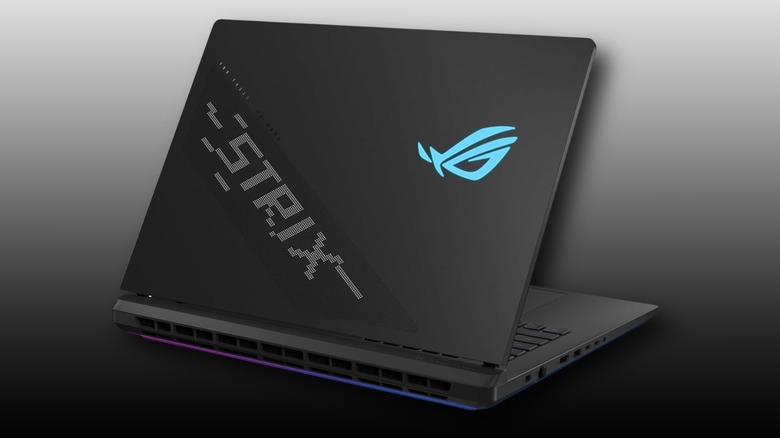
There's a competitive edge with bigger screens, so looking at the Razer Blade 18 might seem like a good choice at first, but the Asus ROG Strix SCAR 18 (2025) is a better technical investment. At $3,254.99, it's over $845 cheaper than Razer's comparably configured 18-inch model while including the same Intel Core Ultra 9 275HX processor found in Razer's Nvidia GeForce RTX 5080 model. Asus packed the same GPU into the Strix SCAR 18 too, which has a massive 16 GB of GDDR7 VRAM. It is worth noting here, however, that Razer offers an RTX 5090 model with 24 GB of VRAM for $4,899.99 with Razer Blade 18 configurations.
The 18-inch ROG Nebula HDR display outputs 500 nits of brightness and has a glossy finish to make colors appear more vivid. A key difference with Asus is aggressive cooling that looks the part with RGB fans, which do a far better job of cooling during intense gaming sessions while having a bit of gamer flair for good measure. It also features 32 GB of DDR5 RAM alongside a 2 TB SSD, matching Razer's top-tier storage capacity in its Blade line while saving buyers enough money for a flagship gaming monitor. It has the latest wireless connectivity standards, such as Wi-Fi 7 and Bluetooth 5.4, which matches Razer's offerings also.
HP
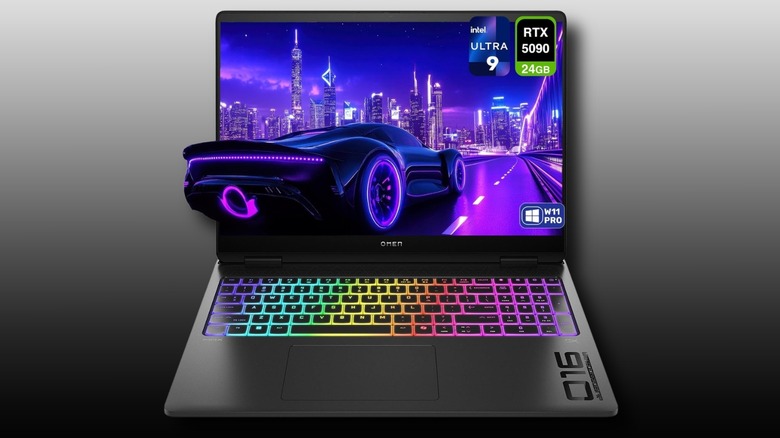
The HP Omen Max is aimed at power users who may find Razer's hardware configurations too restrictive. Priced at $3,769, it includes double the storage capacity of high-end Razer Blade 18 configurations at 4 TB. It also matches the top-end graphics card configuration with an Nvidia GeForce RTX 5090, packing a massive 24 GB of VRAM and ready to handle any high-density graphical workloads gamers and creatives throw at it.
A big advantage of going with the HP Omen Max is being able to expand its performance down the line. While Razer often locks gamers into their initial specifications, the Omen Max supports expanding to as much as 96 GB of DDR5 RAM, providing buyers with upgrade opportunities Razer Blade owners can only dream of. It uses an Intel Core Ultra 9 275HX processor to back these high-end specifications up, with a stunning OLED display that keeps up with Razer Blade laptops thanks to perfect blacks and solid contrast. It offers eight ports in total, including Thunderbolt and HDMI, making it a better option for streamers than Razer and other competitors. For gamers and creatives running full-spec AAA games and heavy workloads, HP gives users significantly more utility and storage for over $1,000 less than a top-tier Razer Blade 18.
Alienware
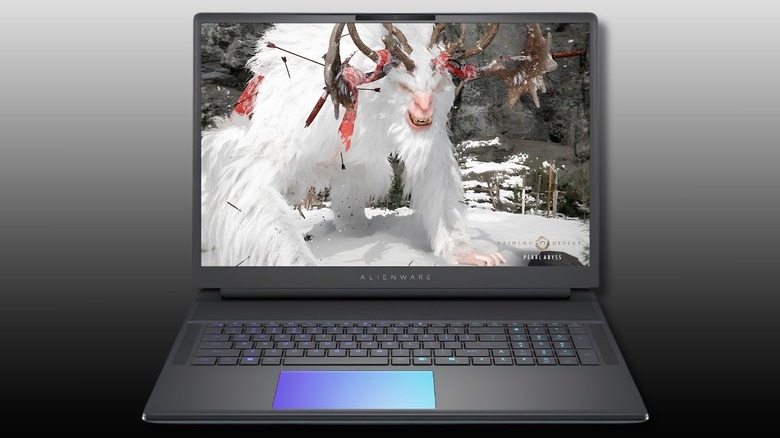
It's usually a healthy competition between Alienware and Razer for the top spot among gaming laptops, and Dell's gaming brand usually comes with its own name-recognition tax, too. But in the case of the Alienware 18 Area-51 gaming laptop, Razer's top competitor is offering power it simply doesn't provide. Retailing for $3,980, this laptop includes 64 GB of DDR5 RAM, which is double the 32GB DDR5 RAM found in the Razer Blade 18. This means running complex mods and hosting servers will run far smoother overall.
Its 18-inch display hits 500 nits of brightness, and a refresh rate of 300 Hz tops the Razer Blade 18's 240 Hz. At 9.56 pounds, it's a massive machine that houses a brilliant cooling system that can easily sustain its high-end Intel Ultra 9 275HX processor and Nvidia GeForce RTX 5090 even during the most intense firefights. This model also features a 2 TB SSD for easy Steam backlog access and Wi-Fi 7 for the fastest possible wireless internet speeds right now. Dell finished this model in a unique Liquid Teal colorway, which feels like a refreshing change considering we've had the same finish on Razer Blade laptops for years at this point. Razer wins when it comes to form factor and weight, but Alienware has pumped some great hardware into this Area-51 build for about $1,000 less.