

Bacteria And Sunlight Could Be The Future Of Sustainable Fuel
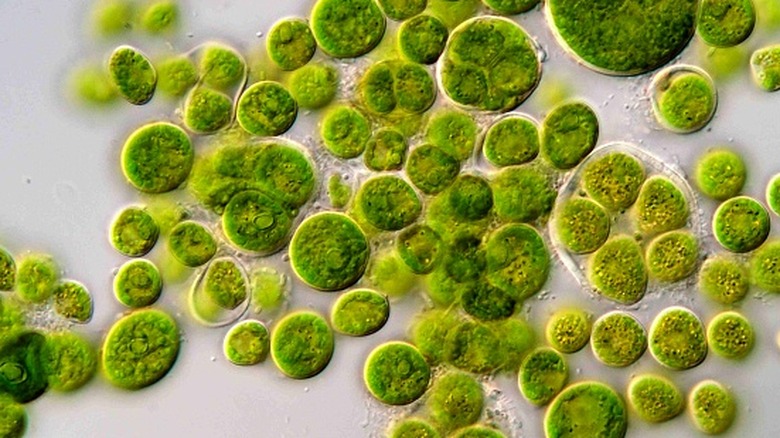
Biofuels are a promising replacement for standard gasoline and other power sources. These fuels are manufactured using renewable resources and come in a wide variety; scientists have even been experimenting with turning unexpected energy sources such as coffee grounds and urine into fuel. However, a new study demonstrates that we could one day use microorganisms to power our cars. All they need is a little sun and gene editing.
Recently, researchers revealed that they produced a new strain of cyanobacteria (sometimes erroneously called blue-green algae despite being bacterium). According to their findings, published in Biotechnology for Biofuels and Bioproducts, this "cyanobacterial mutant" secretes free fatty acids (FFAs) in abundance via photosynthesis. Moreover this new breed of cyanobacteria increases FFA production at "suboptimal" temperatures (approximately 77 degrees Fahrenheit).
Now you're probably wondering "Just what are FFAs?" Well, FFAs are a form of fatty acid that serve as an energy source for most lifeforms, including humans. So it's shouldn't be surprising that FFAs can be converted into biofuels, making these cyanobacteria ripe for biofuel farming. The researchers believe that their study has "potential advantages for industrial applications" and could lead to efficient and prolific biofuel production.
Why is this cyanobacterium so promising?
Admittedly, any breakthrough that can solve the oil crisis is worth discussing. For instance, we hope China's reverse combustion breakthrough can help mitigate gas shortages. However the crux of the cyanobacteria study isn't that it can create a biofuel precursor — that is important, don't get us wrong — but that the researchers also cracked the genetically modified organism (GMO) problem.
GMOs are a touchy subject in many regions since they can cross breed with other crops, producing unintended results. And yes, these cyanobacteria were genetically modified. Researchers replaced a specific gene (the aas gene, which makes cyanobacteria recycle FFAs instead of secreting them), with another that encouraged FFA production. However, according to the research paper, the method used to create the modified cyanobacteria didn't leave any "residual foreign DNA," which means it can't contaminate other species. The researchers believe this feature makes hypothetical cyanobacterial FFA farming ideal for regions with strict GMO regulations.
Furthermore, the cyanobacteria can potentially revolutionize the biofuel industry because they, well, secrete their FFAs. Normally, extracting materials from microorganisms requires a lot of time and energy — the cells have to be harvested and dried before the resource is collected. However, this new strain of cyanobacteria removes the need for most of that, reducing both the energy investment and biomass left in the aftermath. Finally, we can't forget that since the cyanobacteria FFA output increases at lower temperatures, scientists can use it to create biofuel farms in areas where "sunlight intensity and temperature fluctuate." Of course, this cyanobacteria is only one of many gas alternatives — Aircela is creating an "air-based" fuel system alternative that doesn't use petroleum — so it's a race to see if it can compete with potential rivals.