

5 Tech Brands That Lost Their Customers' Trust (And Went Bankrupt)
The tech industry has had its massive share of complete failures. In fact, some might argue that right now, it's going through yet another one of these situations with the artificial intelligence boom. Everyone wants to be the creator or the team behind a revolutionary product, but not everything is an iPhone.
From the Dot Com bubble, cryptocurrency, and medical fraud to just plain old inability to get with the times, there's plenty of corpses of companies to talk about. Some, like crypto firm FTX, are still shambling along in the midst of a years-long bankruptcy. Others lost all trust from customers and wound up shutting down.
There's never been a better time to take a look at tech history's failings and then watch as OpenAI and Anthropic burn through hundreds of times the amount of trust and money that failed companies did. It's a fascinating time, as the AI bubble brings all these memories to the surface.
Flooz

One from the Dot Com bubble but still relevant today, Flooz was a digital currency meant to be accumulated after purchases, which could then be redeemed for other products at participating sites. Whoopi Goldberg was the face of the TV ads, and it seemed like everything was Gucci for Flooz.com. However, in 2001, with a combination of the Dot Com bubble bursting and severe legal troubles, the company completely shut down.
This wouldn't have been so much of a problem if the Flooz points that had been purchased or acquired were left usable after the company shut its doors. Any lingering Flooz points that users had were now worthless, leaving plenty in the lurch.
One group of people, however, made off very handsomely with the situation in 2001, better than any of Flooz's customers did. According to the FBI, Flooz was used as part of a money laundering scheme in the Russian mob. An organized crime syndicate had spent $300,000 worth of Flooz, combined with stolen credit cards, to acquire currencies. With this, along with impending doom from the Dot Com bubble and a massive expenditure of at least $35 million of venture capitalists' cash, it all came tumbling down rather quickly.
RadioShack
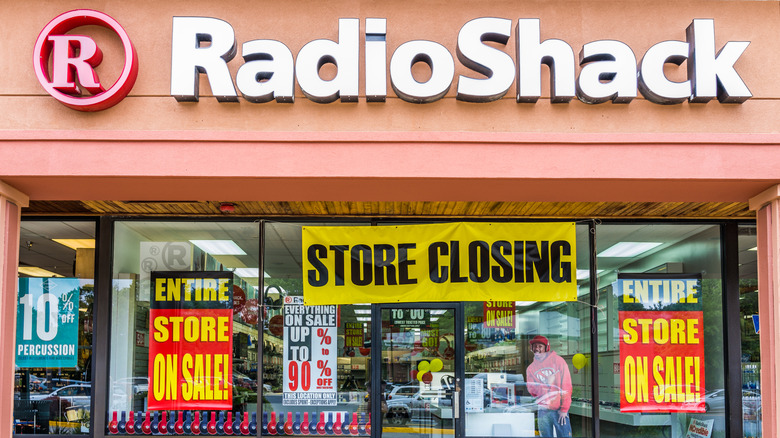
The once go-to location for all electrical needs, RadioShack closed its doors after years of pivoting away from the business that made it what it was. By shunting its customer base for the lucrative cell phone market, RadioShack wound up closing its doors in 2015, paying the ultimate price.
RadioShack had a myriad of reasons for shutting down, like management issues, but by nearly going all in on cellphones, it found that by 2014, 50% of its revenue came from it. That was rapidly shrinking, as the phone market changed substantially after the launch of the iPhone, with buyers opting to get it on a contract with network providers, which ate into RadioShack's business. With its original purpose now shrunk down, RadioShack just couldn't survive 2015.
RadioShack's time on top was when it provided personal computers, hobbyist electronics, and the like. Moving into phones was smart at the time, but it relied on that market too much. With the core audience now pushed away, it was nigh impossible to survive in the modern market. After bankruptcy, the assets were acquired by General Wireless, which also went bankrupt. Similar to PC company Gateway, it's now operated by a completely different company, Unicomer Group, as an online brand.
Theranos

A staggering case of customer deception, Theranos wasn't just a tech fiasco, but a medical one too. Run by Elizabeth Holmes, the Theranos situation escalated after its prized technology, claimed to be able to run extensive tests off just a few drops of blood, was found to be fraudulent. A medical journal raised alarms after Stanford's John Ioannidis published an article that pointed out that not a single peer-reviewed paper or research had been done on the tech.
It gets worse, as a tour of the facilities by then Vice President Joe Biden was revealed to have been a front, hiding the reality behind smoke and mirrors. As it began to snowball, The Wall Street Journal reported that its famed Edison blood testers weren't being used; instead, regular blood tests were being carried out. Once the Food and Drug Administration (FDA) and other official bodies got involved, it all came crashing down in 2018.
Walgreens and Safeway had both made deals to fit blood testers into stores, but after these details were unearthed, Walgreens ended its relationship with Theranos. Safeway had an earlier agreement, but that was terminated in 2015 after extensive delays and weird results were prodded by executives. Theranos' lies caused a loss of faith in the investment and business community and could have seriously endangered the public if it had been released.
FTX
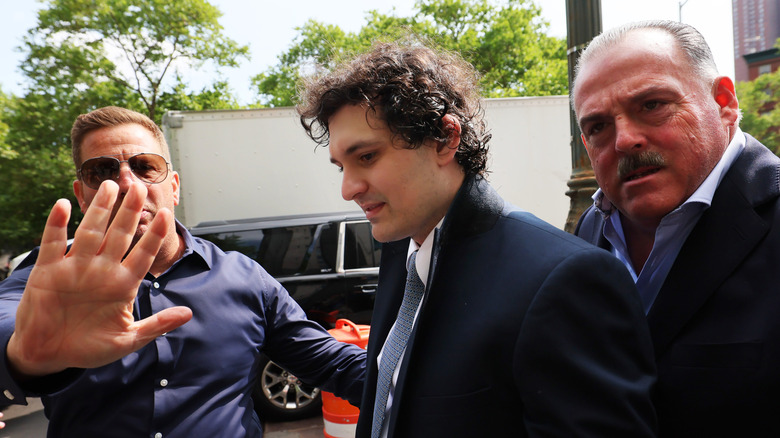
As complex a legal situation as Theranos, FTX is perhaps one of the biggest tech scandals of the 21st century. CEO Sam Bankman-Fried committed mass fraud using funds from users, who had deposited money into the cryptocurrency exchange. Despite massive revenue, FTX found itself in a very long, confusing legal quagmire as it was unable to provide users with their cash, leading to Bankman-Fried's arrest.
Customers found that they were unable to withdraw their cash after a surge in withdrawals left the rather well-hidden $8 billion financial hole incredibly exposed. This was spurred on by revelations that an FTX-affiliated trading firm held huge amounts of FTT, FTX's token used on the exchange. For brevity's sake, the token essentially only had worth as long as people believed in it. It held no monetary value when it was conceived, and with this other company holding so much, it called the entire structure into question.
With so much uncertainty around the company and how much the token was worth, it ultimately led to a massive sell-off, withdrawal, and subsequently FTX's ongoing bankruptcy. It didn't help that major cryptocurrency exchange Binance also sold all of its holdings in FTT in 2022. Since then, FTX has been in a permanent state of bankruptcy, with the current CEO having expertise in fund recovery.
Humane
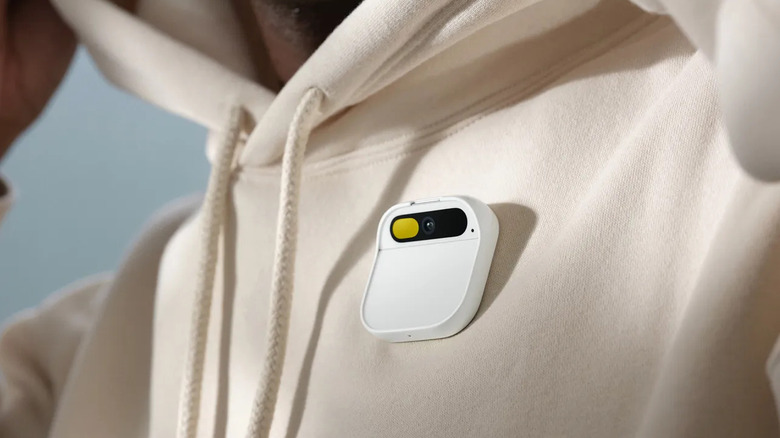
Part of the initial artificial intelligence wearables segment, Humane's AI Pin was meant to be the next step in whatever AI revolution had been continuously pitched since 2023. As soon as it landed in 2024, the reviews lambasted it for its failings. The Verge said that it was like "wishing on a star," in that you just had to hope it worked as intended. As of 2026, any purchased AI Pins no longer work, as the entire product was nuked from orbit.
Humane's pitch for the AI pin was that it'd be a helpful assistant throughout your day. Whatever faith the company had built during the run-up to the product's launch was suddenly gone. It was a fundamentally broken device, incapable of doing even some of the most basic tasks or getting the pronunciation of words or names right, like Beyoncé.
We say "informally," as Humane never officially went bankrupt. It did go through the motions by suspending sales of the device, dissolving teams, ending support, and even killing the whole device off. The rather useless Rabbit R1 has remained active, despite its failure at the most basic tasks expected of it. HP acquired whatever was left for $116 million. All that people remember it for now is being another failed product in the mountain of past and future failures of the AI industry.