

NASA's New Probe Is Heading Into Territory Unseen Since The 1980s
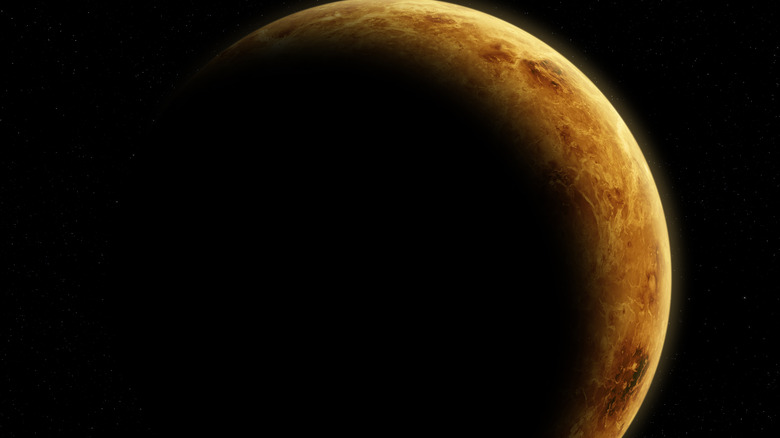
This year's Artemis II mission was special, breaking records, marking some historic firsts, and reigniting an interest in space exploration for many of those watching from the ground. But while a lot of people are looking to the moon and Mars, NASA also has plans to explore Venus in the coming years. Tentatively scheduled for 2030, the DAVINCI mission intends to study our closest planetary neighbor with flybys and an atmospheric probe that will gather information as it descends to the surface, marking the first Venus landing since 1984.
Throughout the '70s and '80s, the American and Soviet space programs sent probes to Venus with varying levels of success. The Soviet Union's Venera 13 mission holds the record for the longest time a probe has been able to transmit data to Earth from Venus' surface, lasting 127 minutes after it touched down on March 1, 1982. That may not sound like a long time, but it's impressive when you consider that it was only expected to last half an hour.
In comparison to Mars and the moon, Venus is far more difficult to land on due to its extreme conditions. The planet's thick atmosphere traps heat, making the surface temperature around 872 degrees Fahrenheit, which is enough to melt lead. Add to that an atmospheric pressure that's 93 times that of Earth at sea level, and it's pretty clear why two hours is a long time to last there. Though not the actual goal, DAVINCI could break that record while also giving us new insight into Venus, often called Earth's evil twin.
What past missions have revealed about Venus
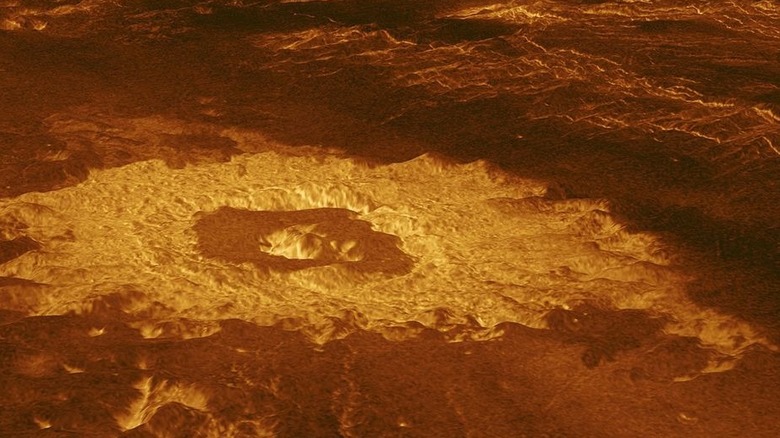
The first successful mission to Venus was 1962's Mariner 2, which gave humanity its first look at another planet from up close. It also made abundantly clear that Venus was not as Earth-like as philosophers, scientists, and authors had imagined thanks to its dense atmosphere and scorching heat. Two decades later, the Pioneer Venus mission found evidence the planet may have had liquid water hundreds of millions of years ago. That's led scientists to theorize that, despite its current state, Venus once had the conditions to support life.
There have been other important missions, such as Magellan, which created the first global map of Venus' surface after it arrived in 1990. Still, much of our knowledge about our planetary neighbor comes from data gathered in the '70s. Scientists have gotten a lot out of those observations, with recent studies finding possible proof of life on Venus and evidence of active volcanoes. However, the lack of concrete data makes it impossible to draw any actual conclusions about how Venus formed and changed over time.
What NASA hopes to learn from DAVINCI
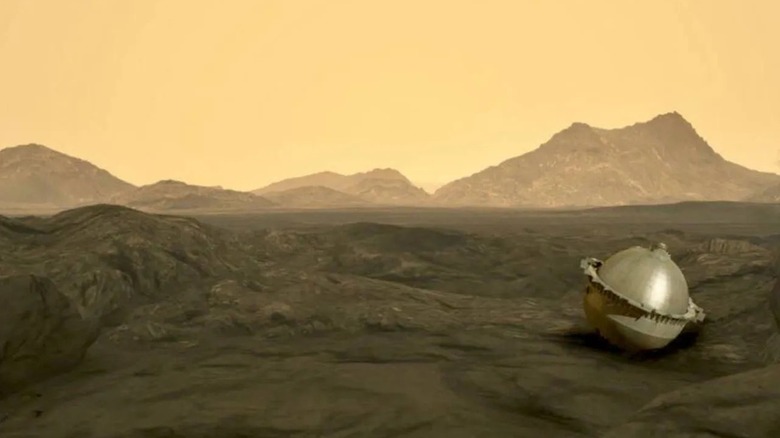
Though the mission is also named for the Renaissance man, DAVINCI stands for Deep Atmosphere Venus Investigation of Noble gases, Chemistry, and Imaging. It intends to study the planet in detail and will be the first mission to bring 21st century technology to Venus' atmosphere. DAVINCI will be able to deliver much higher quality images of the planet's surface thanks to modern cameras and AI that can sharpen images and create 3D topographic maps with them.
One major goal of DAVINCI is to explore Venus' unique terrain, including a mountain-like area called Alpha Regio. The new, more detailed images will help scientists determine if the planet has rocks that typically form because of water, which would give us a better idea of its history and whether it once had continents and oceans like Earth. Learning more about Venus can provide greater insight into Venus-like exoplanets (those outside our solar system), including whether they could support life.
DAVINCI's descent probe is designed to be more resilient, based on modern technology and things we didn't previously know about Venus. It will be equipped with better insulation for withstanding high temperatures and a stronger, acid-resistant parachute that can slow the probe without dissolving in the atmosphere. These improvements are meant to protect the equipment inside, not keep DAVINCI on the ground for more than 20 minutes. Still, a Soviet probe from the '80s lasted four times longer than anyone expected before succumbing to Venus' heat and pressure, so it's possible that DAVINCI could break Venera 13's record.