

Aqara Doorbell Camera G400 Review: Wide-Ranging Smart Support At A Reasonable Price
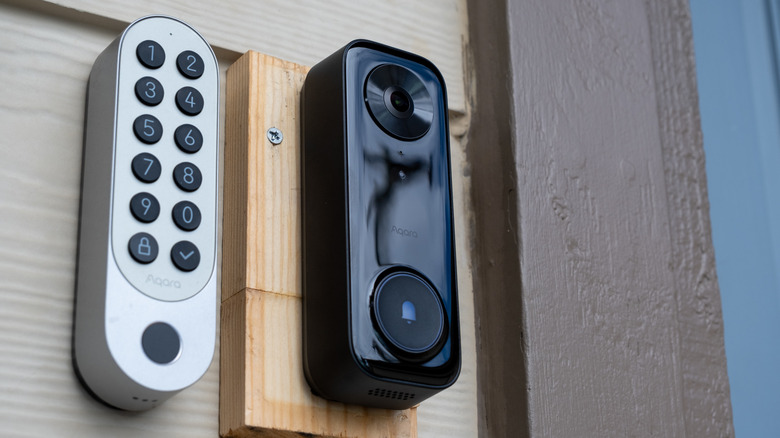
Aqara builds some of the best and most compatible doorbell cameras out there. I've been a big fan of the Aqara G410 video doorbell since it came out, and now, the company is hoping to expand its reach at a more affordable price point with the new Aqara Doorbell Camera G400.
The Doorbell Camera G400 actually has a lot going for it in terms of features. It's a hardwired-only doorbell — Aqara has dropped battery support entirely for this model — but there are two ways to power it: traditional low-voltage doorbell wiring or Power over Ethernet. That second option is the interesting one, and it's rare at this price. Pair that with a redesigned slimmer chassis and a new vertical camera sensor, and you've got a doorbell that's trying to solve both the installation headaches and the viewing frustrations that have dogged the category for years.
The question is whether the rest of the package holds up. In my testing and after digging through the growing pile of user reports, the G400 gets a lot right — but there are compromises worth knowing about before you buy one.
Design
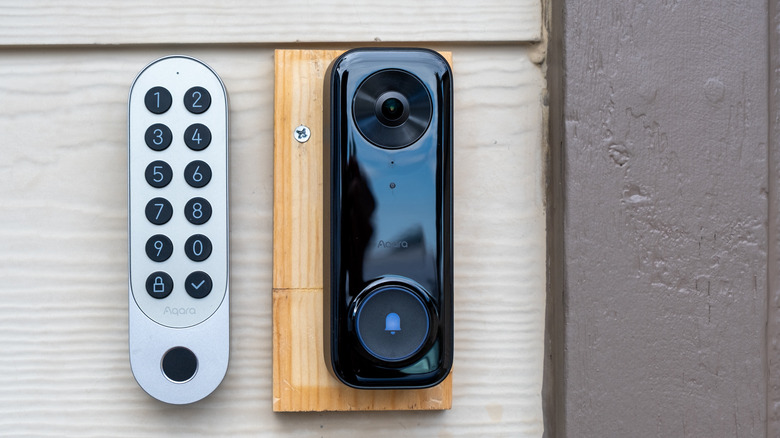
The Aqara Doorbell Camera G400 is slightly slimmer and has a smaller footprint than the G410, but it's still not necessarily the sleekest doorbell on the market. I actually would have expected it to be a little thinner and smaller, considering the fact that it doesn't need to house the six AA batteries that the G410 has a compartment for.
The G400 has a footprint of 141 x 53 x 32mm, and it has a separate chime that plugs in inside your home. But don't expect it to be as thin as, for example, a door frame. Thankfully, the included base plate means that you can install it on a door frame without too much issue, which is pretty helpful. But it will still be a little wider than most door frames, which isn't ideal.
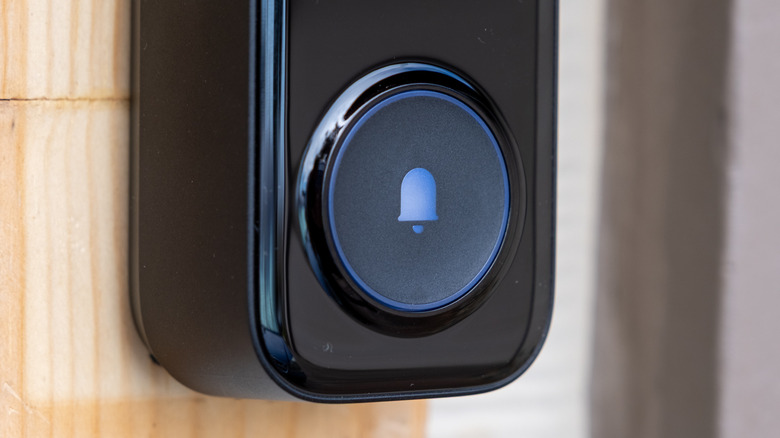
The device is built mostly with plastic, and while at times it can feel slightly cheap, it's not poorly-built. There's a combination of matte and glossy plastic, and it fits nicely to the frame in a way that makes it look mostly seamless. On the face of the doorbell, you can find the camera lens at the top with a button at the bottom, which is illuminated at night to make it easier to find.
Weather resistance is rated IP65, with an operating range of -20 degrees Celsius (-4 degrees Fahrenheit) to 50 degrees Celsius (122 degrees Fahrenheit). That's a meaningful upgrade for Aqara, which has historically been a bit light on weatherproofing for outdoor hardware. On the back, there's also a microSD card slot — which has moved from the chime on other Aqara doorbells. That's a double-edged sword. It simplifies the chime and makes it optional, but it also means swapping cards requires pulling the doorbell off the wall.
While the G400 doesn't have battery support, you do have two options for power. You can use existing doorbell wiring at 8-24V AC/DC, or you can power it with Power over Ethernet. Worth noting is the fact that if your home has an older 8V/1A transformer — and plenty do — the G400 won't get enough current to power up properly. That's not a deal breaker for most, and even if you do have that older wiring, an electrician should be able to swap out the transformer relatively easily. But it's something that you should keep in mind.
In the box, you get a 15-degree wedge bracket for angled mounting, wall screws and anchors, a mounting plate, sealing plugs, a detaching pin, an extension wire kit, and a mounting hole template. Setting it all up is pretty easy and involves screwing the base plate into the wall, wiring the doorbell for power, and then attaching it to the base plate. Keep in mind that the smart home QR codes are on the back of the doorbell, which is frustrating in terms of placement, especially considering I couldn't find a card in the box with these codes on it. In other words, if you forget to scan the QR code before you install the camera to the base plate, you'll need to pull it off during the setup process.
Smart home support
The G400 covers all the major smart home ecosystems natively: Apple HomeKit with HomeKit Secure Video support, Amazon Alexa, Google Home, SmartThings, and Aqara's own platform. For power users, it also supports local RTSP and ONVIF streaming, which means it'll drop into Home Assistant or similar professional-grade platforms without any workarounds. That's a genuinely valuable addition and one that separates it from most mainstream doorbells.
But there are two notable omissions. First, the G400 doesn't launch with Matter certification, which is a miss given the direction the smart home industry is moving. Second — and this is the bigger one for existing Aqara users — the chime doesn't house a Zigbee hub or Thread Border Router, both of which are included in the more expensive G410's chime. If you already have Aqara hubs in your setup, losing this won't impact you. If you don't, you'll need to factor in a separate hub if you want to use Aqara's broader device lineup.
Features
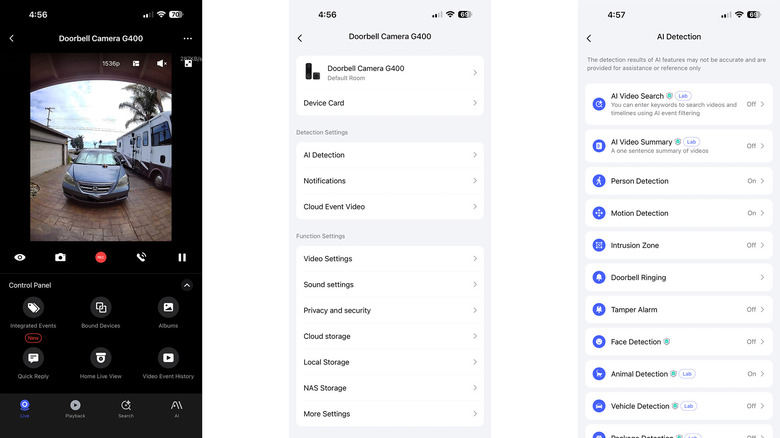
The Aqara Doorbell Camera G400 offers a number of features that make it smarter and easier to use. As you would expect, there are a range of AI-based detection features, which are split into two main tiers. Person detection, motion detection, and customizable zone intrusion detection all run locally on the device. That both means you don't need a subscription for them and they keep working during an internet outage.
The more advanced detection (face, animal, package, and vehicle recognition) runs in the cloud and requires an Aqara HomeGuardian subscription after the trial ends. This is where the G400 takes a step backwards from the G410, which handled face recognition locally. The performance of the cloud version isn't the best. For starters, it seemed to be somewhat slow, and it wasn't correct much of the time. I'm sure these features will get better, but in the meantime, it might feel like subscribing isn't worth the cash.
When someone rings the bell, the G400 launches a phone-style video call interface on your device rather than a traditional push notification. You can also set up custom quick replies — pre-recorded messages that play automatically based on time of day or smart home state.
Storage is one of the G400's strongest areas. It supports microSD cards up to 512GB for continuous 24/7 local recording, and it'll automatically back up that footage to an SMB-compatible NAS (network-attached storage) like Synology's. That's decently useful and something that very few doorbells at this price offer. Over a five-year period, skipping cloud subscriptions can save you several hundred dollars in recurring fees.
Video and audio quality
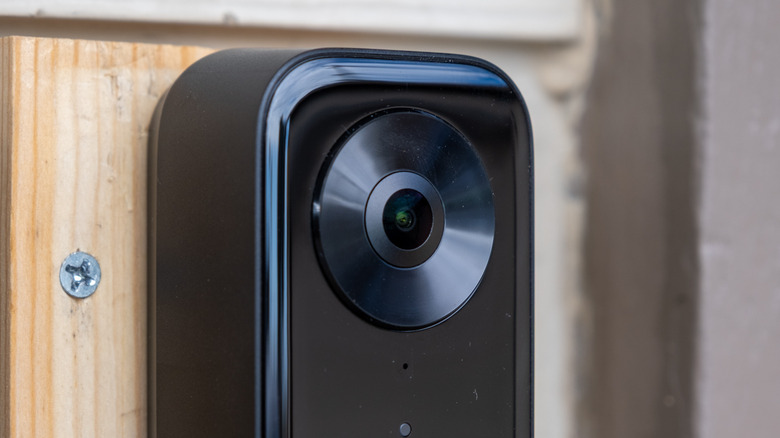
The camera has a 2K sensor capturing at 1536 × 2048 pixels, and critically, it's in a 3:4 vertical aspect ratio rather than the traditional 16:9 landscape format. Combined with the 165-degree field of view, this means you can see a visitor head-to-toe and a package sitting on your doormat in the same frame. That said, it does sacrifice horizontal field-of-view, and while I like the head-to-toe view, if you have a wider driveway or entryway, you may find that you're missing some coverage.
Daytime video quality is crisp with natural color reproduction. It doesn't have the washed-out, over-processed look that plagues cheaper doorbells. Packages on the ground are clearly visible, and faces are sharp enough at typical doorway distances to be recognizable.
The doorbell uses an infrared-based night vision system with 940-nanometer infrared LEDs. The footage is decently crisp, as is often the case with infrared-based systems. However, the lack of color night vision means you might miss out on some details that you would otherwise see. There's no spotlight built into the doorbell, so if you want to see in color outside your door, you'll need to keep a light on outside. That said, for most use cases, the infrared-based night vision is perfectly fine.
The camera's resolution is good enough. At this price point, you wouldn't necessarily expect it to be much higher. That said, there are plenty of video doorbells that do have a higher resolution for those willing to pay a little bit more. And, as usual, if you use the device with HomeKit Secure Video, you'll be limited to 1200p — but that's an Apple limitation rather than an issue on Aqara's end. Thankfully, Apple has announced plans to raise this limitation to 4K video, though it's unclear if older devices and existing products will support the higher resolution or if only newer products will support it going forward.
The built-in microphone handles two-way audio decently well. In testing, conversations with visitors came through clearly in both directions, without the tinny, laggy quality that afflicts cheaper doorbells.
Conclusions
The Aqara Camera Doorbell G400 isn't necessarily the most advanced smart doorbell ever made, but it's an excellent option for $100. The comprehensive smart home support alone makes it worth considering. Plus, it offers solid video quality and cloud-free processing.
That said, it's not without compromises. Cloud-based face recognition is noticeably slower than the local version the G410 offered, and that delay undermines some of the automation use cases that made Aqara appealing in the first place. Battery flexibility is gone entirely, which rules it out for many renters. None of these are dealbreakers in isolation, but together they mean the G400 isn't a universal upgrade — it's the right pick for a specific kind of user.
The competition
The Google Nest Doorbell (Wired, 3rd Gen) is the G400's main rival on the AI front, thanks to Gemini integration that lets you search your event history with natural language — things like "show me all courier deliveries yesterday." It's an impressive feature, but it requires an ongoing Google Home Premium subscription.
The Eufy Video Doorbell E340 is the better pick if you want color night vision, motion-activated lighting, or the flexibility of either battery or wired power. Reolink's Smart 2K+ Video Doorbell offers solid local storage and no-subscription operation, though it runs closer to $119-$150. And if you're a renter or genuinely need battery power, the older Aqara Video Doorbell G4 is still the easier install — at the cost of shorter video clips and the usual battery-doorbell compromises.
Should I buy the Aqara Doorbell Camera G400?
Yes, if you want an affordable doorbell with relatively exhaustive smart home support.