

China Just Beat Neuralink With A Commercial Brain Chip That Can Be Added To Health Insurance
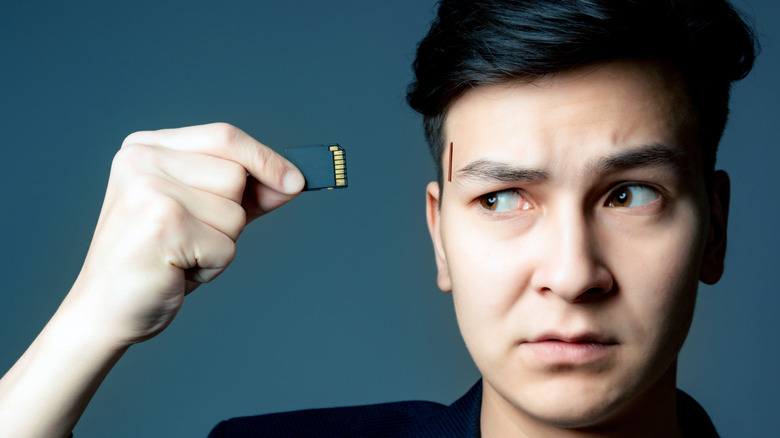
While one of Elon Musk's many companies, Neuralink, may grab the lion's share of headlines, it's not the only Brain Control Interface (BCI) on the block. The U.S.-based firm Paradomics has its own high-bandwidth brain interface in production, aimed at restoring speech for patients with severe neurological impairments. Other companies like Synchron are also making rapid progress in the field, demonstrating it's possible to implant devices in human patients without invasive, open-brain surgery (while Musk's company seeks to install its chips by drilling through the skull, a method as risky as it sounds).
China may have also beaten Musk to the punch with an implant that doesn't require cutting through the dura mater, the outermost membrane surrounding the brain and spinal cord. Instead, it rests above the brain's protective membrane. According to a report at Space Daily, the chip, called NEO, has been approved by China's National Medical Products Administration (NMPA) and is designed to help victims of paralysis caused by spinal cord injuries recover mobility. Neo has also been fast-tracked to allow co-payment coverage under China's government-run, near-universal health coverage program, placing it in the pipeline for reimbursement integration.
A practical approach to brain implants
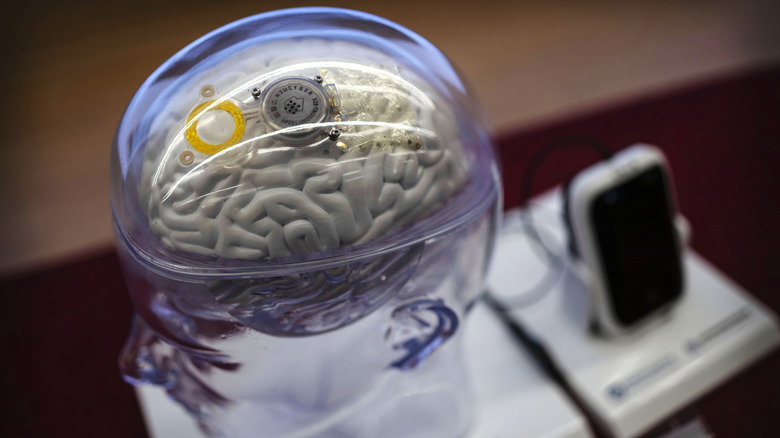
While Neuralink requires electrode threads to be implanted directly into brain tissue, the NEO system places eight sensors on the dura mater that then communicate with a robotic glove. The glove receives a user's neural signals and translates them into motion. That difference in approach highlights trade-offs in BCI development in areas like invasiveness, signal fidelity, and clinical adoption pathways, which could influence how investors and healthcare providers evaluate BCI technologies.
Neuralink has demonstrated some promising early results, including enabling monkeys to play video games with their minds, but it continues to struggle with regulatory hurdles in the U.S. and has expanded its policy and commercial efforts, including Musk's recent hiring of federal lobbyists. It has bold ambitions, including cognitive enhancement and direct brain-to-AI interaction, but its long-term commercialization timeline remains uncertain. In comparison, companies like Neuracle have a more (initially) modest strategy, focusing on near-term medical benefits, regulatory approval, and then scaling through the healthcare system.
Competition is heating up
BCI companies have begun popping up all over the globe. Aside from Neuralink, Neuracle, and Synchron (headquartered in Brooklyn), companies such as Blackrock Neurotech have been making headway in BCI technology since 2008. Blackrock Neurotech, which grew out of research at the University of Utah, has pioneered a number of neural implants and recording systems that have been central to many of the most influential demonstrations in the industry, including controlling computers, remote limbs, and other assistive devices.
Synchron's device, dubbed the Stentrode, is also impressive. Even though the Strentrode has not yet been fully commercially approved, it can be implanted within a blood vessel and doesn't require penetrating the brain tissue, which is generally considered safer (and may find an easier path to regulatory approval) than Neuralink.
The broader implications are clear. The BCI race isn't exclusively about the most advanced chips; it's about delivering safe, approved, and accessible products at scale.