

Jet Li's American Movie Debut Was As The Villain In A Hit Action Franchise
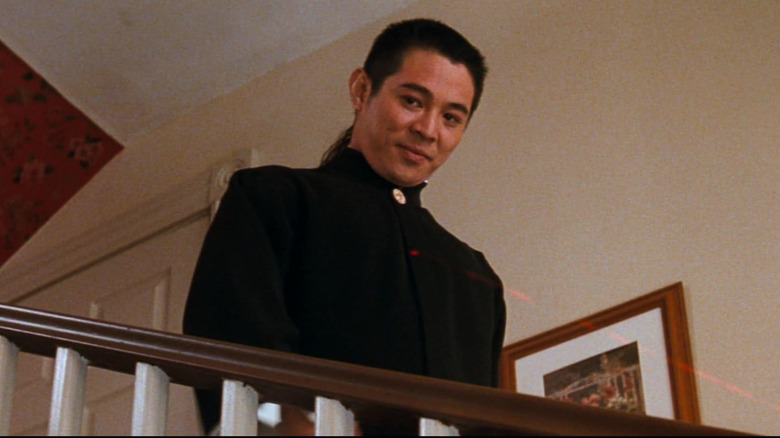
Jet Li was already an action superstar throughout Asia before Hollywood (and the rest of the world) finally noticed him in the late '90s. Coming off the heels of a professional martial arts career cut short, he wasn't even 20 when he shot his first movie, "Shaolin Temple," in 1982. Nine years later, he blew up with "Once Upon a Time in China," followed by two sequels, before starring in the masterful Bruce Lee remake, "Fist of Legend," and numerous other Kung Fu flicks that established him as one of China's best action stars. Still, it took more than 15 years until America gave Jet Li his break and introduced him to Hollywood audiences on the big screen in the long-running action franchise's fourth installment, "Lethal Weapon 4."
Although the Richard Donner-helmed (who also directed one of the best "The Twilight Zone" episodes starring William Shatner) film series was already beyond its peak in 1998 — 12 years after the franchise-launcher wrote itself into pop culture history — the fourth entry was still a big deal and probably the finest opportunity for Li to showcase his ass-kicking Kung Fu arsenal on US soil. He was cast as Wah Sing Ku, a Triad negotiator and right-hand to Chinese crime boss Uncle Benny (Kim Chan), alongside big-name franchise regulars like Mel Gibson — who recently played the villain in Peacock's "John Wick" prequel – Danny Glover, Rene Russo, and Joe Pesci. It's needless to say that The Fist killed it as the primary bad guy, which granted him the path to become a blazing phenomenon overseas, too.
Jet Li's martial arts and acting skills were already ripe before 'Lethal Weapon 4'
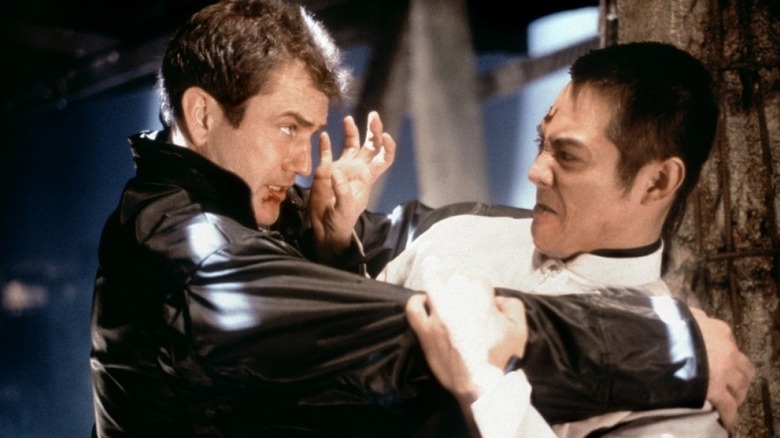
Even if your memory is hazy about what went down in "Lethal Weapon 4" plot-wise, you probably remember the fast-paced action scenes that involved Li in some capacity. The fourth sequel sees Murtaugh (Glover), Riggs (Gibson), and their families in a face-off with the Chinese Mafia and the Triads, operating a smuggling ring and trying to organize the release of four high-ranking Triad members from prison in exchange for counterfeit money. Naturally, the mastermind behind the mission is Li's Ku, who isn't afraid to get his hands dirty to reach his goals.
Donning a sly smile, traditional Chinese attire, and a sleek ponytail, Li unleashed his Kung Fu prowess on several occasions with a confidence and style that was distinctively his. "Lethal Weapon 4" might've been a step back from its predecessors in certain aspects, but Li's villain wasn't one of them. In fact, he's easily one of the best things the sequel had to offer, freshening up the franchise's somewhat tired formula. Although most critics didn't love it, and even if it failed to live up to the expectations that Warner Bros. had for it commercially, the fourth Lethal Weapon movie still made $285 million at the box office, against an estimated $140 million budget.
But most importantly, "Lethal Weapon 4" was the ticket for Li to go on a Hollywood career with a spree of solo actioners that finally turned him into a global star. And if you were an action head (like me) throughout the aughts, watching him rise and do what he does best in high-rated action movies like "Romeo Must Die," "Kiss of the Dragon," and "Unleashed" was a helluva good time.