

Solar Panel Plants Are Having An Unexpected Effect On Bat Behavior
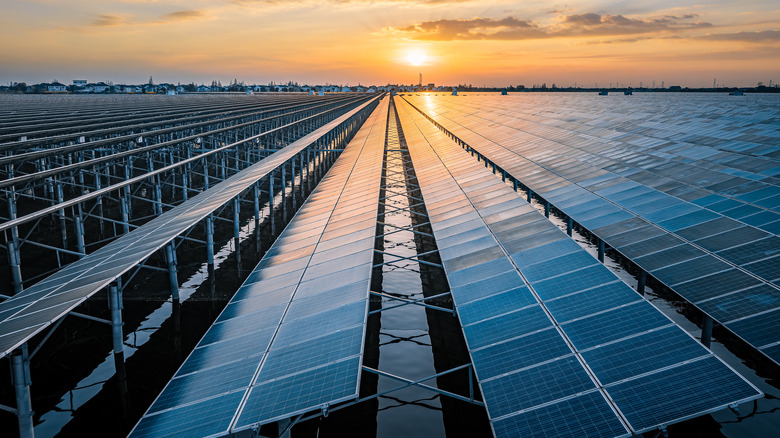
The French renewable energy company Compagnie Nationale du Rhône (CNR) manages a number of large solar plants in the Rhône Valley region of France. CNR also played host to a 2023 research project by Barré et al. of the University of Luxembourg, during which it was found that the solar panel plants were having an unexpected effect on bat behavior.
Some conservationists use GPS tech to save the environment by tracking tagged wildlife, but Kévin Barré and his team observed the bats in this study via acoustic monitoring with a microphone array. They recorded 15,273 three-dimensional bat positions, which enabled them to determine that the majority of bats flew up to 44% faster and 33% straighter in response to the solar arrays. This increase in expeditious flying translated directly into a decrease of up to 39% in feeding behavior for bats in the Rhône Valley testing area.
According to a research article by P. A. Flemings of Australia's Murdoch University (via Science Direct), solar panels act as "acoustic mirrors" for echolocation-reliant animals in the same way that bodies of water do. Assuming that bats are confusing solar plants for large lakes, it would explain why they treat them as places to fly over quickly rather than stop and feed. Moreover, the BBC reports that solar farms have contributed to a decrease in the U.K.'s population of bats, birds, and insects. It's a vicious cycle: fewer insects mean less food for insectivorous bats, which in turn harms the bat population even further.
Are solar panels worth the ramifications against wildlife?
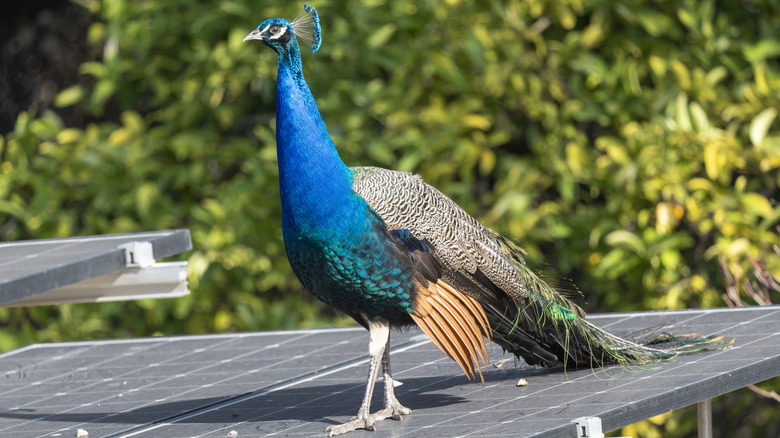
The Global Solar Council asserts that solar energy provides significant benefits for the power grid and reduces the overall cost of electricity. There are also documented instances of solar panels directly helping the environment; China's largest solar farm is creating fertile soil in the desert, to name one example. But are these benefits enough to outweigh the potential harm to animals living in those environments? Is there something that can be done to mitigate damage to local wildlife?
The answer likely lies in being prudent about how and where governments allow companies to place their solar farms. The CNR solar plants in France may have caused unexpected effects on bat behavior, but a 2025 study at an ecovoltaic solar energy development in the Midwestern United States showed that weekly bat activity near the ecovoltaic sites increased by approximately 50% during the monitoring period.
The aforementioned study suggests that solar developments can be planned with certain siting and management configurations that are actually beneficial to at-risk animal populations. This supports the idea that solar farms on degraded land can have a positive effect on local wildlife. When solar developments move forward without being thoughtful toward nature, though, it's up to communities to take a stand. One Senedd petition to "Halt Significant Developments on the Gwent Levels SSSI" received over 6,000 signatures from people all across Wales, serving as an inspiring example of community action.