

Solar Farms On Degraded Land Are Having A Surprisingly Positive Effect On Local Wildlife
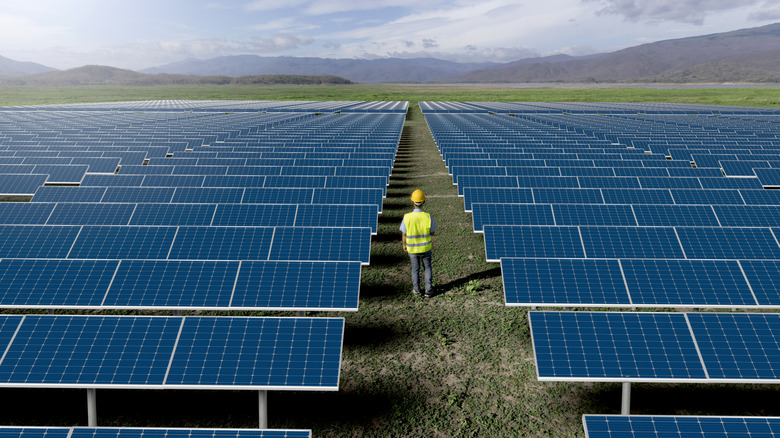
In the right location, and with appropriate planning, solar farms aren't only saving lives by decreasing fossil fuel dependency and improving air quality and human health — they also increase plant and animal biodiversity. This may seem counterintuitive, because solar farms are often associated with tree-cutting. But when they're placed on already-degraded land, and built with biodiversity in mind, solar farms can help restore pollinators, improve land, and even reduce site-source pollution.
It's important to note that even well-designed solar farms are likely to have a negative impact on land that's already healthy and biodiverse. In other words, a solar farm mindfully constructed on depleted farmland can have a strong positive impact — but cutting down a healthy forest to make room for solar panels is never a good idea.
To encourage thoughtful siting and design of new solar farms, environmental organizations and universities are conducting research and developing best practice guidelines. Under the right circumstances, these organizations suggest, solar farms can improve the environment (and have even changed entire deserts in China), decrease fossil fuel use, and boost the economy all at the same time.
Keys for building environmentally friendly solar farms
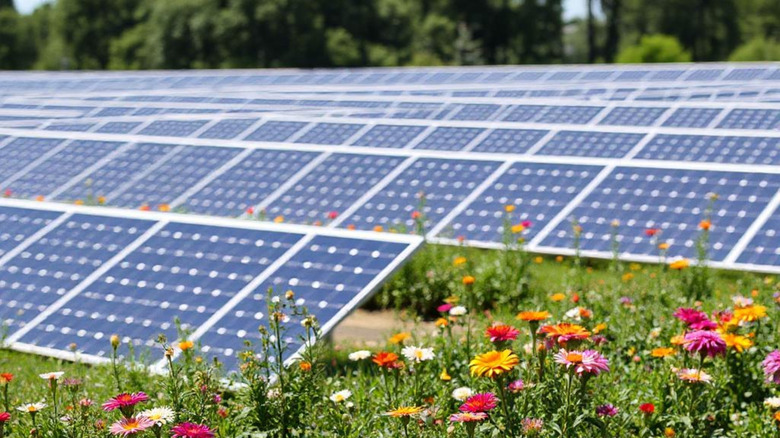
The key to making solar farms environmentally friendly is careful planning and forethought. To make this process easier, the Nature Conservancy has developed a set of guidelines for wildlife-friendly solar farm development. Those guidelines include careful selection of sites in already-disturbed or degraded land, restoration of native plants, and protection of water quality. Perhaps most importantly, the Nature Conservancy calls for the creation of continuous areas of undeveloped land, providing habitat for an entire ecosystem of plants and animals.
When solar farm developers follow these rules of thumb, especially on former farmland, they can achieve a wide range of positive outcomes. For example, by ending use of pesticides and herbicides, they help to improve water quality. By allowing and encouraging growth of trees and shrubs, they help improve soil retention and avoid erosion. And by allowing and supporting the growth of native plants, they encourage biodiversity. These steps are, of course, more expensive than simply plopping solar panels onto empty lots — but the outcome can be extraordinary.
Research and outcomes for Earth-friendly solar farms
Researchers interested in supporting solar energy and biodiversity have come up with some high and low-tech options for improving outcomes on solar farms (including a new energy experiment in California). For example, a recent study published by researchers at the Department of Energy's National Renewable Energy Laboratory (NREL) and Argonne National Laboratory shows the potential for solar farms to increase habitat for animals like bats and crucial pollinators such as butterflies. According to these studies, it's possible to actually triple insect abundance with thoughtful native plantings.
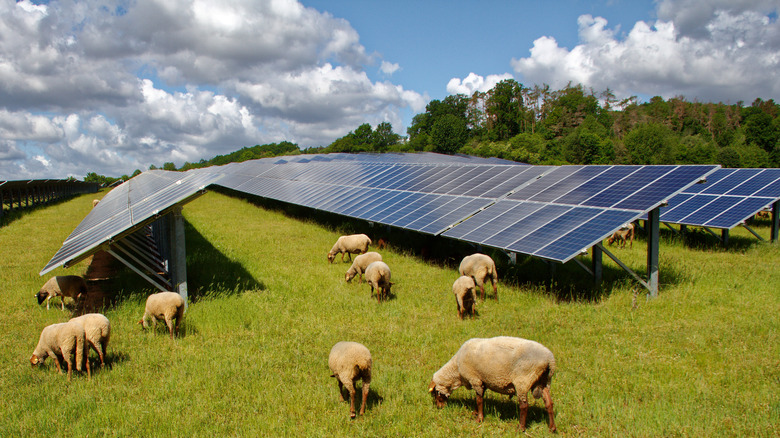
Another surprising result of careful design of solar farms is the creation of "solar grazing" fields where sheep and cattle can both graze and fertilize the land. And another research study finds that growing plants under and between solar panels is yet another option. Agricultural scientists are experimenting with high-clearance and tilted solar panels to increase growing options, and are finding that crops ranging from eggplant to broccoli can thrive on solar farms. While multi-use solar farms are still in the early stages, several states are already setting standards in place to encourage their creation.