

Why SpaceX Treats Its Rocket Launches Like Software Updates
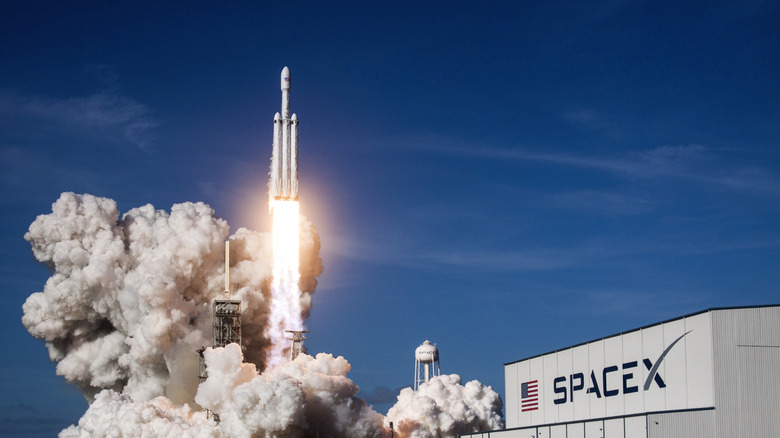
SpaceX has become the most successful commercial space launch service provider in history, having completed more than 600 missions to date, more than 500 of which featured reusable boosters. The company, launched by Elon Musk, has a history of treating its rocket iterations like software updates. Throughout the company's history, SpaceX has adopted a rapid iteration strategy, in which each new version of a rocket is incrementally improved over the last, much like the incremental improvements seen on smartphone software updates. This approach has been very successful, with the company now considered the leader in spaceflight technology.
SpaceX's approach to rocket design is unique in the industry, where early versions of rockets are test-launched and, in many cases, see spectacular failures. The company is known for learning from the data of its failures and expediting fixes, continuing rapid iteration cycles until a rocket is ready for production. SpaceX has built rockets that operate at a fraction of the cost of traditional orbital-class rockets and, in the process, broken new ground and set multiple records for reliability and reuse capability.
The SpaceX process
Former SpaceX upper-stage production lead Tim Berry previously revealed the process the company uses to achieve its ambitious goals for rapid iteration and improvement. Speaking at the 2024 American Institute of Aeronautics and Astronautics Aviation Forum, Berry revealed the steps that are drilled into each engineer at SpaceX. "You're constantly going back and finding opportunities to challenge your requirements, deleting more parts, simplifying, optimizing, going faster, and then finally, opportunities to automate, but only once you've really boiled down to the baseline process," said Berry.
SpaceX has used this process throughout its history, starting out with the Falcon 1 prototype. The company eventually reached orbit after a scrappy development campaign, a success that saved SpaceX from potential bankruptcy.
The world-beating Falcon 9 was developed with iterative changes at the forefront. The company built a prototype called Grasshopper that was used to demonstrate the technology required for landings that would enable reusability on the Falcon 9. The prototype served its purpose by not only demonstrating the technology but also providing key early learnings that were applied to the Falcon 9 and subsequent Falcon 9 Block 5. SpaceX has gone on to build the three-core Falcon Heavy, and most notably today, the Starship and Super Heavy booster stack.
Development of Starship
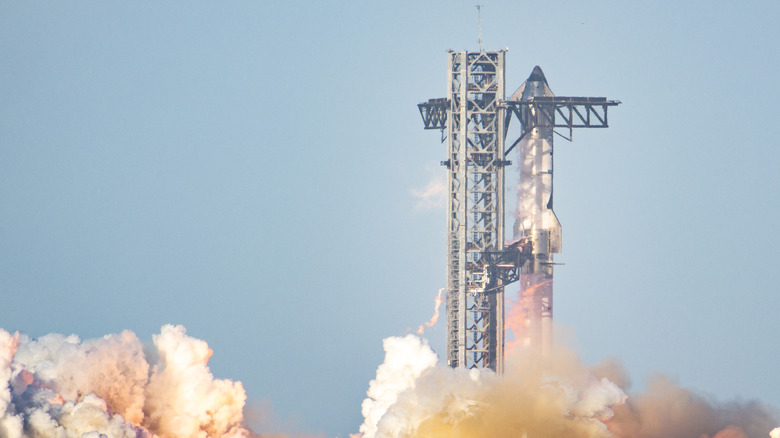
SpaceX took all of the lessons learned on its Falcon 9 and Falcon Heavy rockets and embarked on an ambitious rocket project called Starship. The company started out by building early "hopper" versions of the Starship spacecraft, launching them under their own power to altitude, and testing their aerodynamic properties as they glided back down to Earth. The spacecraft would fire up its Raptor engines as it got close to the ground, and perform a belly-flop maneuver before touching down. The company went on to test-fly the entire stack (again, with spectacular failures part of the package), and eventually went on to catch the 236-foot booster on the same tower it launched from.
The learnings from the first versions of Starship were applied to a major new iteration that flew on May 22, 2026. Starship flight 12 was the first test of the third version of both the Starship spacecraft and Super Heavy booster. The flight saw the Starship spacecraft reenter the atmosphere without the burn-through issues seen in previous iterations, which were known to be one of the program's biggest challenges. The spacecraft's heat shield performed well under the intense heat of reentry and paved the way for SpaceX to fly a fully orbital test flight in the near future. Besides SpaceX's mission to fulfill the role of NASA's next human-rated moon lander, the company announced in May 2026 that it will send its first private Starship to Mars. The flight was booked by cryptocurrency mogul Chun Wang, but dates for the proposed mission have not been shared.