

What Are Grid Fins Used For On The SpaceX Falcon 9 Rocket?
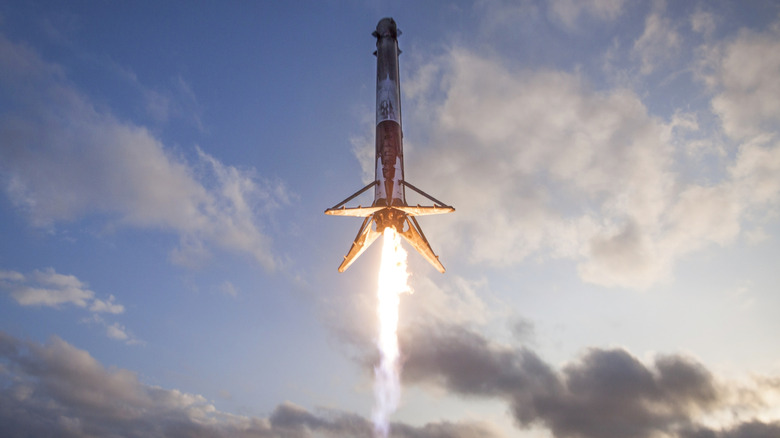
SpaceX's Falcon 9 is an extraordinary rocket for one standout reason — its first-stage booster can be used over and over again. SpaceX revolutionized spaceflight with the Falcon 9 by enabling it to land upright after returning to Earth, saving it from being lost at sea. This innovative system has allowed SpaceX to slash traditional launch costs by as much as 70%, according to SpaceX chief Elon Musk (via TechCrunch).
To safely land the Falcon 9 first-stage booster, the vehicle deploys a number of important systems. Key among these are the four grid fins that help steer the booster all the way to its landing target. This could be on the ground near the launch site or on a droneship stationed in the ocean. The Falcon 9's grid fins are fixed to the top of the first-stage booster and folded flat against the rocket body during launch to minimize drag. After separating from the Falcon 9's upper stage, the first stage automatically reorients itself for descent. Its engines then perform a series of burns during which time the all-important grid fins deploy to guide the booster through the atmosphere and back to Earth.
How the grid fins guide a Falcon 9 booster home
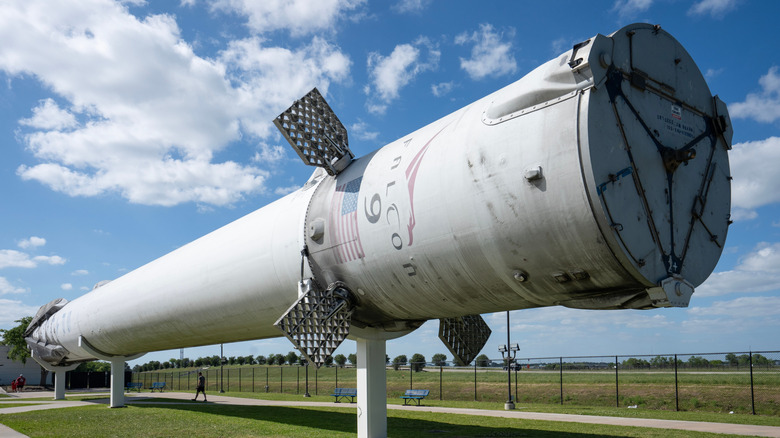
Nicknamed "potato mashers" and "waffle irons" for their distinctive design, the grid fins each have a surface area of about 21 square feet and are made of titanium in order to handle the extreme heat that's generated during the reentry phase. The fins rotate independently to alter the airflow around them, autonomously controlling lift and drag to influence the direction of the rocket's descent. The Falcon 9's onboard computers and sensors track its position, making the necessary adjustments to the grid fins and engine power as it descends toward the landing zone. This 2019 video, showing the Falcon 9's third consecutive successful droneship landing, shows the grid fins rotating to control the rocket's descent.
After the Falcon 9 returns to Earth, SpaceX engineers check the booster over, perform any maintenance work that's needed, and then send it on another mission. Several Falcon 9 first-stage boosters have already flown more than 30 times each.
While the grid fins perform a vital role for the booster's homecoming, its descent is also controlled by cold nitrogen gas thrusters, which reorient the booster in space, while one of its Merlin engines also fires to slow the vehicle during its high-altitude descent. Finally, the engine's gimbaled nozzle provides additional steering control.
Space X has taken the grid fin to the next level
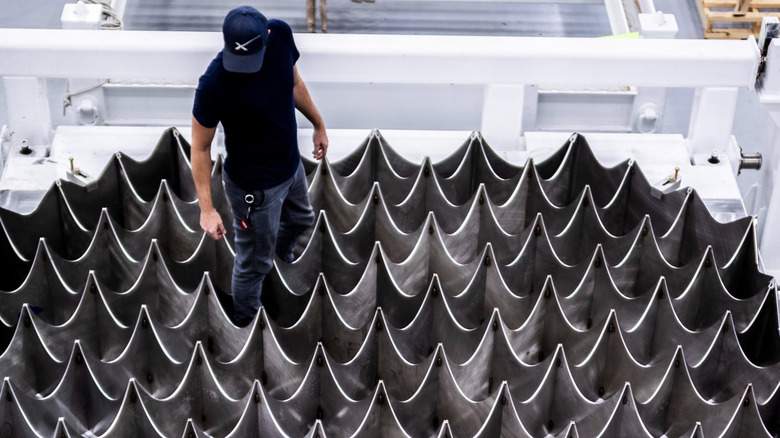
SpaceX has taken what it's learned from the Falcon 9, including the vital role of its grid fins, and applied it to its next-generation reusable rocket, the Starship. The 408-feet-tall giant is the world's most powerful rocket ever to fly. It could one day take crew and cargo to the moon, and even send send SpaceX first private mission to Mars.
After using four grid fins on the Starship's first 11 test flights, SpaceX used a new three-fin design (pictured above) for its flight in May 2026. SpaceX engineers found that the Starship's first-stage Super Heavy booster could descend just as well with three grid fins, which are 50% larger than the previous design. Eliminating the fourth fin maintains vehicle control while enabling the booster to descend at a higher angle of attack, which reduces landing propellant and therefore lowers costs.
Interestingly, SpaceX didn't invent the grid fin. The design originated in the Soviet Union where they were used on ballistic missiles in the 1970s and 1980s. The Soviet military kept the technology classified until 1985, when engineer Sergey Belotserkovsky published the first technical book about them. Still, it was SpaceX that brought the grid fin to wider attention via its Falcon 9 program. The humble grid fin has played a significant role in an amazing spaceflight story that could soon see SpaceX in the biggest tech flotation ever. Not bad for a few plates of metal.