

Underwater Speakers Are Having An Unexpected Effect On Jamaica's Coral Reefs
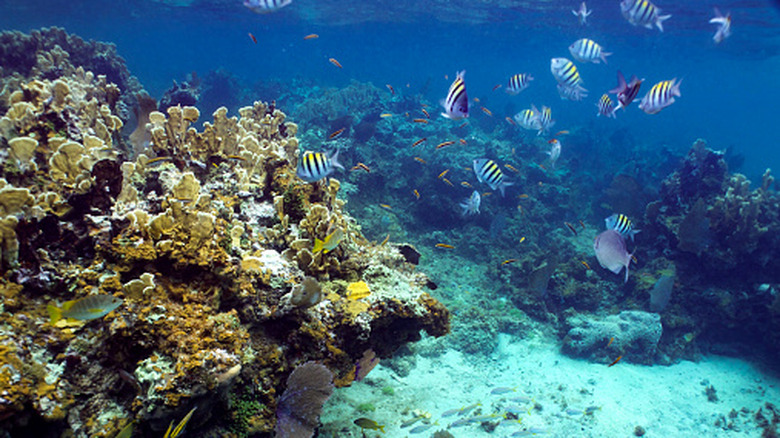
Coral reefs are essential for a healthy ocean and thriving fish colonies. Sadly, coral reefs are dying out in large part due to the global warming climate crisis. In fact, Australia's famous Great Barrier Reef is in severe danger of being destroyed. Now, hope to save damaged coral reefs has come from an unexpected source: underwater speakers.
A scientific team looked into coral reef off of the Jamaica coastline that was bleaching. This is a term used for the whitening of reefs that suffer from extremely hot ocean temperatures. Bleached coral are more vulnerable to dying off, but not beyond hope. The team hopes that by playing the sounds from a speaker normally associated with a healthy coral reef system — such as the noises of fish — that it could lure more marine life back into the bleached coral reef and thus help restore it.
This effort was inspired by similar work at the Great Barrier Reef, the details of which were published in Nature. It brought together a team of researchers from such organizations as the Australian Institute of Marine Science and James Cook University to try to save coral reefs and make underwater ecosystems thrive once again.
How it was discovered that underwater speakers can help coral reefs
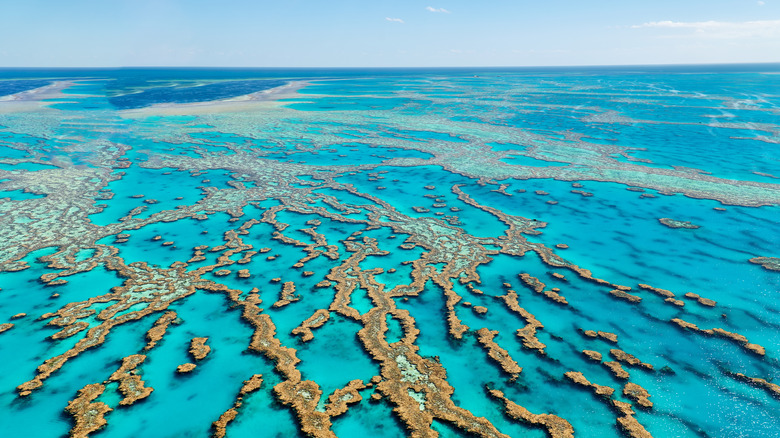
In 2017, the team of scientists conducted their experiment near Lizard Island on Australia's Great Barrier Reef, an area that had recently suffered severe coral bleaching that killed much of the local coral. To test whether sound could help restore reef ecosystems, they built 33 small artificial reefs from dead coral rubble and placed them near the damaged reefs. A portion of these reefs were equipped with underwater speakers that played recordings of healthy coral reef sounds over 40 days to see if it would attract fish back to the reef.
At the conclusion of the test period, they found that the artificial reefs with the underwater speakers attracted more fish than the ones without the soundtrack. In fact, they attracted twice as many fish that settled into the reefs much faster. While some young fish were naturally lost to predators, the number of fish on the reefs with speakers remained steady throughout the study, suggesting that new arrivals continued to replenish the population.
The research found that a diversity of fish life came to the coral reef, helping it on its way to becoming a healthy and thriving spot once again. Because fish play important roles in keeping reefs healthy, bringing them back to degraded areas could help speed up natural recovery. The study pointed out that it would be beneficial to attempt this technique at other reefs, which is exactly what's happening off Jamaica's cost.
The future for Jamaica's coral reefs
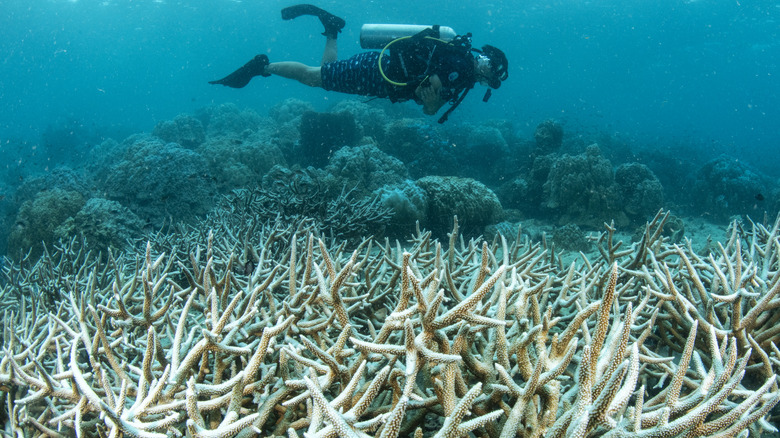
A few years after the Great Barrier Reef study was published, a diverse team is working together to try to recreate that success. Artist Marco Barotti creates 3D printed artificial reefs to help local ecosystems. Then, scientist Bethany Dean creates lab-grown coral. That coral is attached to the 3D sculptures. These are then placed underwater next to the dying reefs with underwater speakers that play the noises of heathy reefs 14 hours every day. These efforts are in tandem with the Alligator Head Foundation, a Jamaica-based organization focused on creating healthy underwater ecosystems and local communities that live in harmony with them.
As of this time of writing, it is too soon to see if the success of the experiment in the Great Barrier Reef has been duplicated in Jamaica's waters. However, the team remains hopeful that soon the bleached reefs will begin to return to life and the ecosystem will thrive with fish once again. As the coral reef is the first environment on Earth to reach a climate tipping point, it is essential to move quickly to try to save and restore them. If you are interested in taking part in helping reefs, the Alligator Head Foundation offers both volunteer and research training opportunities. It also provides donation avenues where you can adopt a coral, protect baby turtles, and help fund diver certification — the same type of divers that place these underwater speakers and artificial reefs where they need to go.