

Do Phone Power Banks With Solar Panels Actually Work?
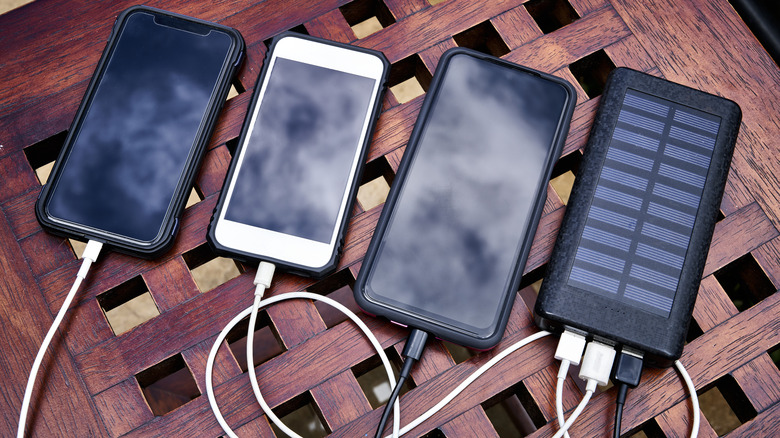
The idea behind power banks with solar panels sounds great: You charge devices using solar power, which is usually in abundance, without relying on a power outlet. Theoretically, it feels like a one-time investment. You get a solar power bank, charge it under the sun, power your devices, and the cycle continues. But the reality is very different. Power banks with solar panels are generally not as reliable as standard ones, and they are also a safety risk because of the very fact that they charge under the sun.
To be clear, there's no doubt that solar power banks, whether featuring single or multiple panels, do their job. They can charge your smartphone or run other low-powered devices like small LEDs and portable fans. The problem is that most people expect them to function the same way as a standard, fast-charging power bank, and that's where these devices fall short. Most solar power banks on the market don't fully charge in a few hours or even a day or two, even when kept in direct sunlight.
Additionally, under the sun, solar power banks can get really hot, with temperatures often rising up to over 150 degrees Fahrenheit. That's beyond the safe operating limits for lithium-ion batteries that are commonly used in power banks. Apart from reducing the battery's lifespan, higher temperatures also increase the likelihood of built-in controllers cutting off charging altogether to lower the heat levels. Even some of the manufacturers advise against leaving the power banks under direct sunlight for too long.
Power banks with solar panels are not as reliable
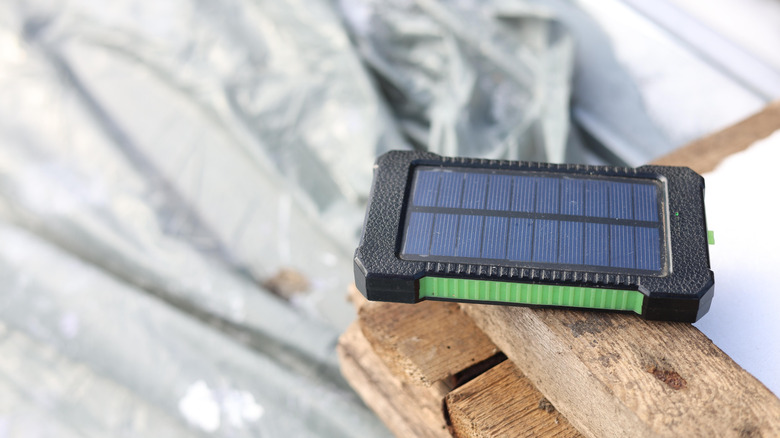
The biggest drawback of power banks with solar panels is that they need a lot of time to generate enough energy to fully charge even a smartphone. That's primarily because the attached panels are relatively small and can only generate a small amount of electricity.
For instance, when placed outside for two days, power banks with a single panel can generate between 0.8 watt-hours and 1.5 watt-hours of energy, while those with multiple panels typically generate six to nine watt-hours. To give you an idea of how small this is, the iPhone 17 has a battery capacity of 14.5 watt-hours. So, on average, you are getting 10-65% of an iPhone 17's battery after charging the power bank for two days. On the other hand, a standard 10,000-milliampere-hour power bank will charge in four to six hours and can generally deliver two full charge cycles for your iPhone 17.
Keep in mind that there are other factors at play here, too, things outside your control. For example, if there's little or no sunlight, the panels are placed in partial shade, or are covered in dust, the power bank will take much longer to charge, making it unreliable as your primary power source in critical situations. So, from a reliability standpoint, power banks with solar panels are not a practical everyday solution for most use cases, at least under the current scheme of things. Newer, better technologies might, of course, make them more viable in the years to come.
Use solar power banks as backup solutions
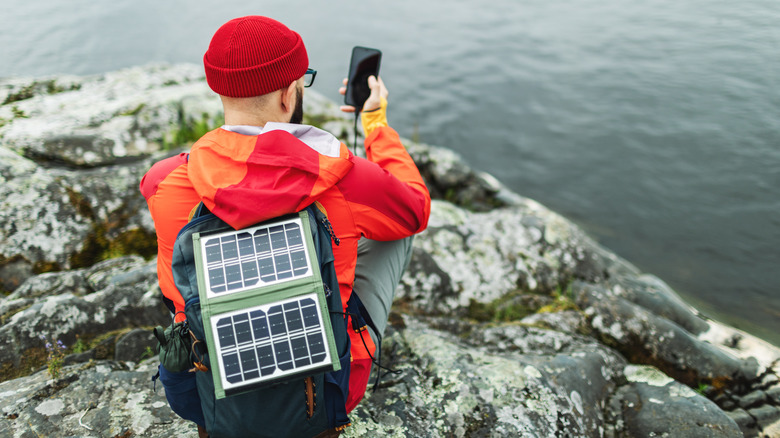
Despite all the limitations, there are cases where power banks with solar panels do come in handy. Many people rely on them in areas that are subject to frequent power cuts or places that don't receive electricity at all. That's because standard power banks are of little use here, while those with solar panels can generate enough energy to keep your phone and other critical accessories going, at least for a while. If you are looking to generate more energy, you can opt for power banks with multiple solar panels. Not surprisingly, those with one panel fixed to the body generate less energy compared to those that have multiple attached panels. Similarly, if you go on long hikes or spend time in remote places, these power banks can be a valuable addition.
Also, most reliable power banks with solar panels can also be charged from a wall socket. So that could be your initial charging source, while the attached solar panels can deliver additional power over time for as long as you are away from a charger.
All that said, regular power banks remain the more reliable choice for everyday use. Solar power banks are still a niche product catering to a limited set of users. As time progresses, the list of use cases they can handle well may expand, and they may become the primary source of power, but for now, they should be viewed primarily as backup solutions.