

This Homemade Laser System 'Successfully Eliminated' Every Mosquito In Its Creator's Home
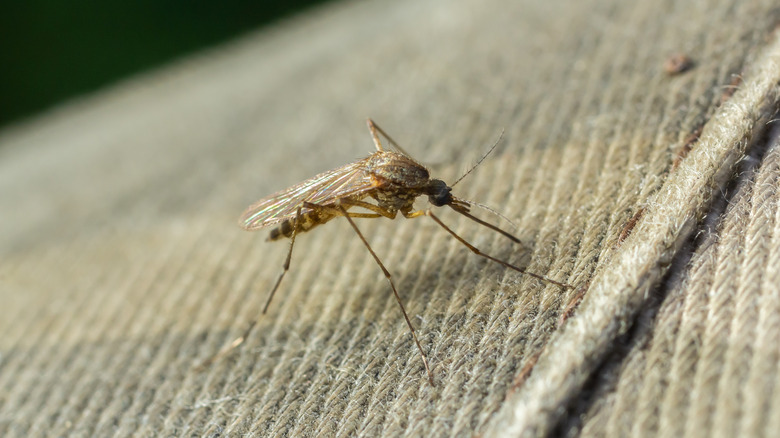
As a species, we've crafted all kinds of weapons in the battle against mosquitos, from turning human blood into mosquito poison to developing repellents that last for more than a week. Google is even experimenting with releasing millions of mosquitos in two U.S. states infected with a sterilizing bacteria. Now lasers have entered the battlefield. A robotics engineer named Steven Cheng has successfully developed an AI-driven laser system to track and kill mosquitos.
After months of work, he deployed a prototype pairing a camera with an AI model and what he describes as a laser cannon to identify, target, and eliminate mosquitos. Cheng tested a number of options for image capture to identify the pests before settling on a Canon DSLR paired with a high-magnification lens. In replies on his Twitter post describing the project, he admits that an industrial camera would be better suited to the task, but that for this stage he was just recycling hardware he already had access to.
At the price of being repeatedly bitten, he collected a huge dataset of mosquito images used to train an AI model for accurately identifying mosquitos. He then embarked on the lengthy process of annotation — labeling, tagging, and adding metadata to this information — to create the foundation that artificial intelligence uses to identify patterns or, in this case, assess targets.
From concept to prototype
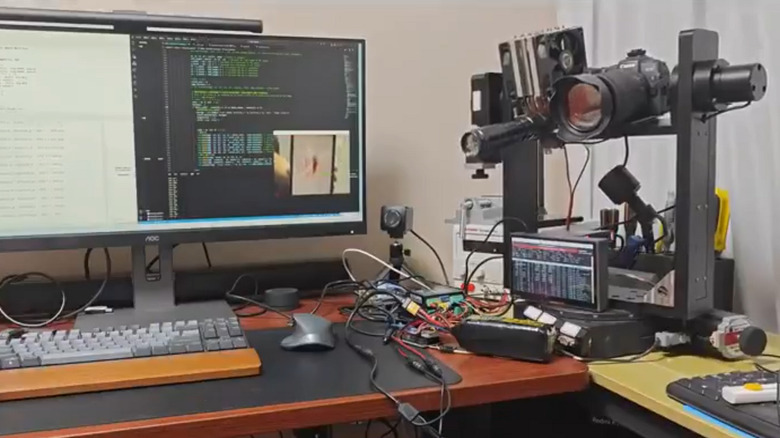
With the vision and analysis stages in place, Cheng assembled the weapon itself. He selected a laser and calibrated its output power to instantly fry mosquitos. To ensure the laser could achieve the precise level of aiming required to lock on to such tiny targets, Cheng attached it to a high-precision industrial rotary stage, which rotates an object by a controlled amount, often by tiny fractions of a degree, while keeping it steady and repeatable. It allows the laser to target mosquitos without wobbling and with a high degree of accuracy.
For safety, he added a second wide-angle camera to detect human bodies and flammable materials that the laser might burn. Cheng says he plans to publish the dataset on NenPower so other creators can replicate (or modify) it. He also seemed open to the idea of adding a microphone array, which would potentially allow the system to locate mosquitos even earlier. While Cheng describes the current iteration as a toy, he did intimate that a second version with further capabilities was in development.