

5 Podcasting Microphones With Great Audio For Every Budget
We may receive a commission on purchases made from links.
Regardless of having great guests or ranting about the state of AI data centers driving up prices of consumer tech, having a solid podcasting mic is the difference between listeners streaming until the end or not. Everyone wants the best gear possible, but a professional setup isn't always budget-friendly, and there are plenty of options to get great results. Granted, users aren't going to get the level of performance and clarity from a sub-$100 microphone as they would from a $400 one, but the compromises aren't as bad as would-be podcasters think, thanks to an extremely competitive market that covers every possible use case.
Having spent years testing dozens of audio interfaces and microphones in various recording environments, I know a thing or two about what separates a muddy-sounding RGB gaming effort from a reliable workhorse. Podcasters need voice isolation, noise-cancellation, and a clean signal to make edits and streams hit the mark. To save readers from going through an expensive trial-and-error phase, I've put together a list of five great choices for their next recording. This includes a mix of handy USB options and XLR fidelity, ensuring buyers get the best bang for their buck regardless of skill level or budget.
SteelSeries Alias Pro Kit
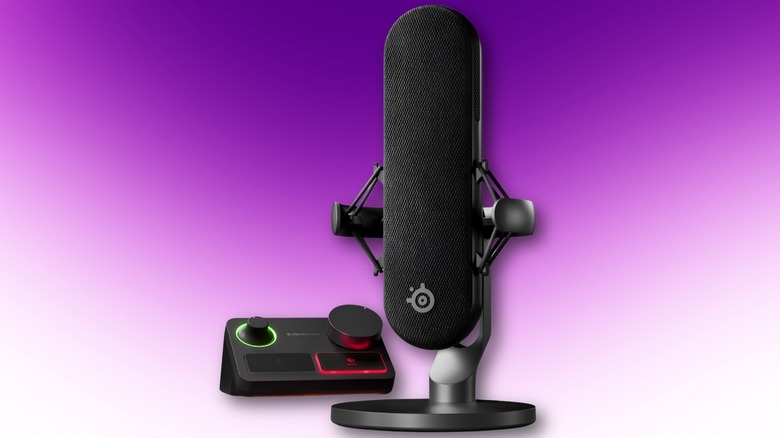
For podcasters who want an all-in-one solution that's also going to be great for multiplayer communication and streaming as well as podcasting, the SteelSeries Alias Pro Kit is a very safe choice. For $329.99, this bundle includes an XLR microphone and a dedicated desktop mixer. While it's obviously designed for gamers, its massive one-inch condenser capsule captures incredible vocal depth across highs, mids, and lows, making it perfect for a user's daily or weekly show. It features a cardioid pickup pattern rather than the 4-in-1 design some competitors use, resulting in higher-quality recordings.
The stream mixer and the accompanying Sonar software kick this microphone setup up a few notches. Users get physical dials for microphone gain and headphone monitoring on their desk, alongside responsive mute and buttons for sound and microphones, which light up red or green depending on whether they're toggled or not. It doesn't sound like a big deal, but bringing up menus in OBS and recording software during a live stream is cumbersome, so having this frictionless interface is a big win for podcasters.
It doesn't matter if users aren't audio wizards either, with Sonar providing helpful EQ presets to highlight a user's dulcet tones. It's great at rejecting keyboard noise and background noise thanks to the included heavy-duty shock mount.
Shure SM7B
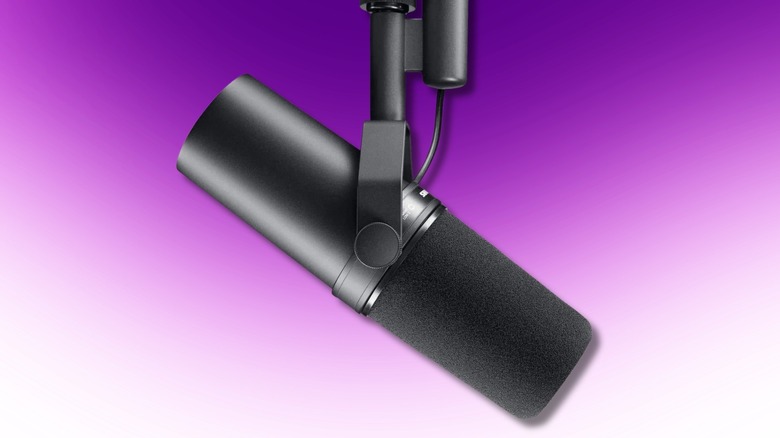
Walk into any radio or recording studio, and I can guarantee at least one Shure SM7B is being used. For $439, with sales around $370 from time to time, podcasters are investing in the undisputed industry standard for spoken-word microphones. Its flat frequency delivers a warm, rich tone that flatters nearly every vocal type, and everyone has probably heard one on their favorite podcast or radio station.
Because the SM7B is a dynamic microphone, it's brilliant at cutting out background noise. For users who might be recording in a room with no sound dampening or who are next to something noisy like an air conditioner, fear not! It includes a built-in pop filter that effectively eliminates harsh speech and drastic pitch changes. That means podcasters can speak into the SM7B without worrying about distorted audio spikes.
There's a flipside to this level of performance, however. The SM7B is notoriously gain-hungry, which means users will need a powerful audio interface to get a clean signal. Some users also find that using an inline preamp helps to boost volume without introducing electronic hiss. For serious Podcasters who want to take their audio quality to an arguably professional level, the Shure SM7B is the number one microphone, but it's arguably too big an investment for newcomers.
Shure MV7X
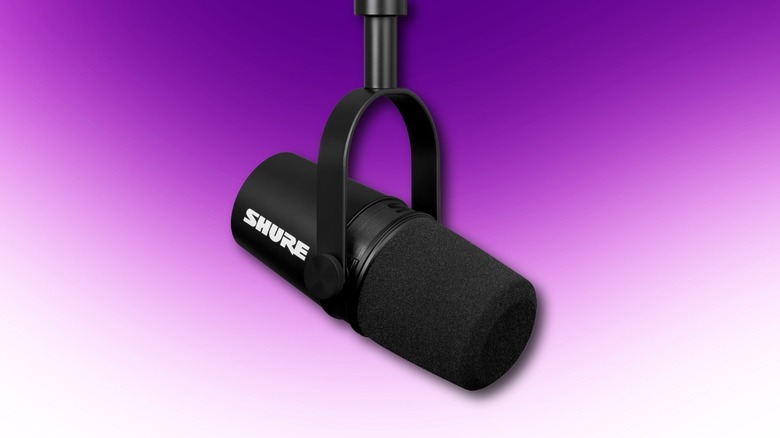
Shure thought ahead about their price of entry, resulting in the MV7X retailing for $199 (which usually drops by about $30 when on sale). It offers similar premium aesthetics and dynamic voice isolation found on the SM7B, but at a fraction of the price.
The MV7X is specifically tuned for podcasting, featuring a midrange boost that enhances dialogue clarity. Like its big brother, it still does a brilliant job of rejecting ambient noise, making it highly forgiving in less-than-ideal recording spaces. Buyers will still get that coveted broadcast tone, but the MV7X is far easier to drive, which takes the pressure off users who would otherwise have to buy expensive inline preamps to make this microphone usable.
A key point here is that the MV7X is an XLR-only microphone. Unlike the Shure MV7+ and MV7i smart microphone, it doesn't feature a USB port or companion software, so users will need a separate audio interface to get it working with their PC. A point of contention with the MV7X is the built-in windscreen being a bit thin, so make sure to pick up a thicker foam cover for a couple of dollars to eliminate pop and breathing noises.
Elgato Wave:3 MK.2
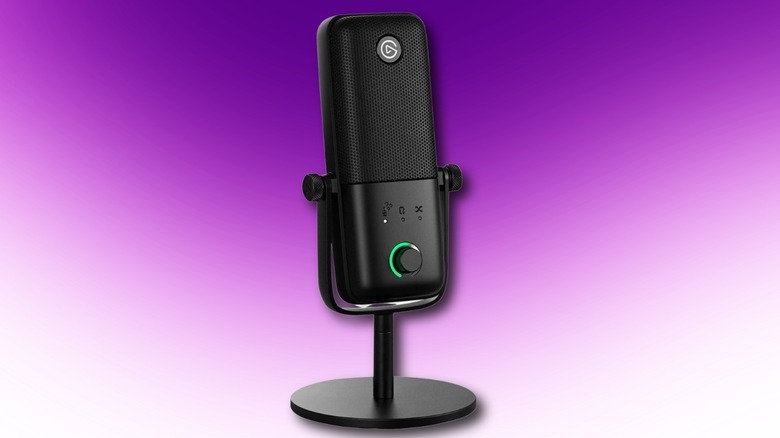
For podcasters who need a plug-and-play, dependable microphone for when they're out and about, the Elgato Wave:3 MK.2 is a solid buy at $169.99, especially since it doesn't require any additional hardware to deliver solid results. Users just need to plug it into their computer with a single USB cable and hit record.
Elgato packed this microphone with smart processing features, including a proprietary Clipguard technology. For example, if someone suddenly laughs loudly and shouts into the microphone, Clipguard automatically reroutes the audio to a lower-volume path, preventing distortion during recording. This feature alone makes the Wave:3 MK.2 a perfect option for energetic podcasters who struggle with managing their voice volume. The included dial on the face of this microphone allows users to control their audio directly, thanks to its push-button design, to adjust input gain, headphone volume and mic/PC mix on the fly.
The software comes in handy too. Wave Link acts as a digital mixer, allowing users to route different audio sources seamlessly. For example, podcasters can blend their voice with background music or guest audio from a video call. While condenser microphones are generally more sensitive to room noise than dynamic options, the Wave:3 MK:2 makes up for it with incredible detail, with a focus on a frictionless user experience overall.
Logitech Blue Yeti
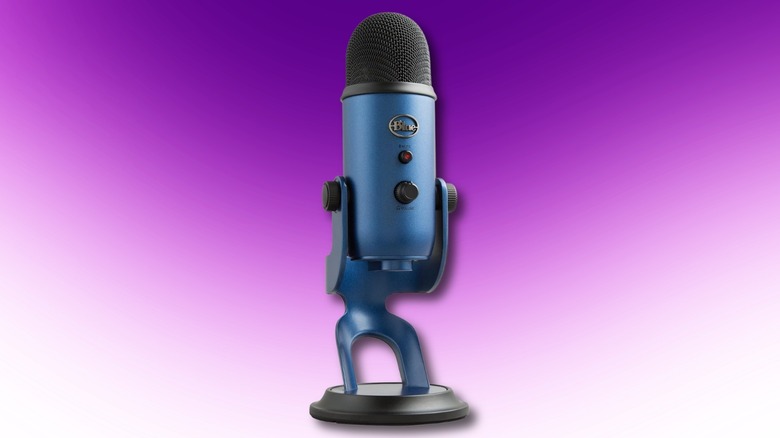
This article wouldn't be complete without mentioning one of the most popular beginner podcaster microphones, the Logitech Creators Blue Yeti at $104 (MSRP $139.99). This USB condenser microphone has helped launch the platforms of thousands of streamers, podcasters, and creators because it's one of the most versatile and accessible options for beginners looking to upgrade from a built-in laptop microphone.
The Blue Yeti features a unique multi-pattern design, allowing podcasters to switch between four different directional modes. For solo recording, users can switch the cardioid setting to just focus on a user's voice. But if a guest is sitting across the table, users can switch to bidirectional mode to capture both sides of the conversation with just one microphone.
There are a couple of trade-offs with the Blue Yeti, despite it being a solid beginner microphone, specifically its physical interface and background noise pickup. For podcasters who will be using a keyboard or have a loud computer nearby, it will likely capture those sounds. The headphone volume and microphone gain knob isn't very sturdy either, with reports that it doesn't feel secure. However, for sheer plug-and-play convenience and a very attractive price point, it remains a brilliant starting point for anyone looking to kick off their podcasting career.