

Europe Is Coming Up With An Unexpected New Job For Old Wind Turbines
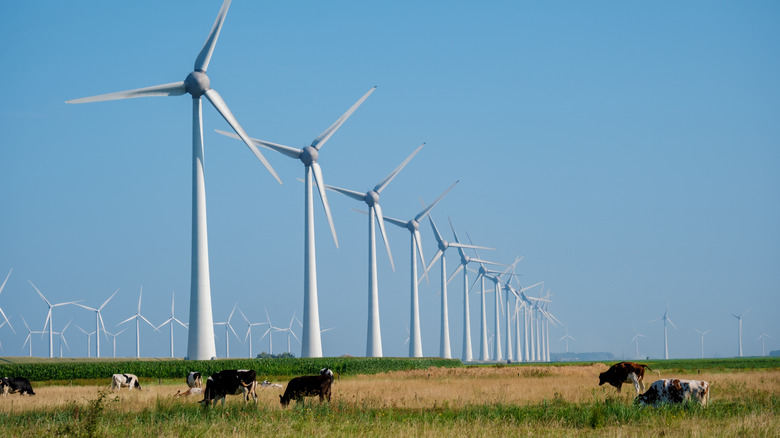
Considering it takes almost a decade for wind turbines to pay off and recoup the initial investment, it can be a little frustrating to realize that these devices are designed with a 20-to-25-year lifespan. What happens to wind turbines after 25 years? Roughly 90% of the parts used in the construction are recyclable, according to the U.S. Dept. of Energy. However, the blades are among the most difficult parts to recycle, as they consist of reinforced fiberglass. To deal with this issue, one idea being deployed in Europe and the United States is using the blades to replace steel girders for pedestrian bridges.
Europe has already been recycling and reusing wind turbine blades as sound barriers and insulation. Still, finding ways to give blades and other wind turbine materials a new life through further recycling or reuse is a key focus of the industry. With the recycling industry making breakthroughs like finding ways to better recycle plastic with a new chemical reaction, it probably shouldn't be surprising to see the process of managing old wind turbine blades also take advantage of new ideas.
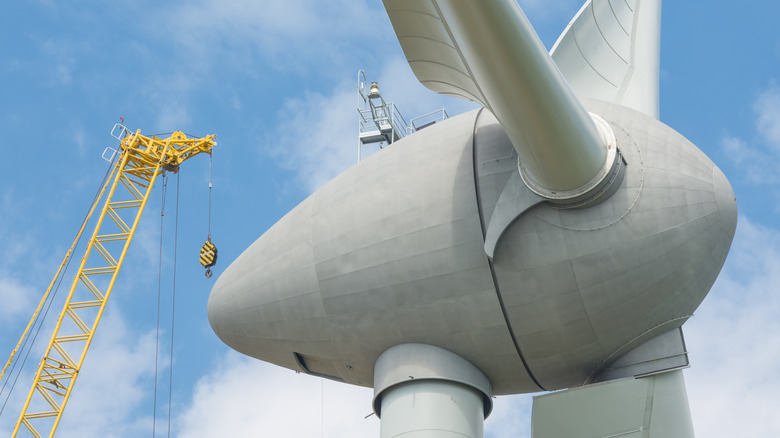
Why do wind turbines only last 20 to 25 years? The parts undergo high-end stress while spinning in the wind, causing significant wear and tear over the decades. The time and cost required to maintain the unit's parts steadily increase as the wind turbine ages, which eventually makes the cost to maintain the parts prohibitive compared to removing the unit.
How turning wind turbine blades into bridge girders works
The idea of turning decommissioned wind turbine blades into pedestrian bridge girders began in 2019 in Ireland, leading to a business venture called BladeBridge. The researchers eventually created the Re-Wind Network, which included participants from the Georgia Institute of Technology, University College Cork, Queen's University Belfast, City University New York, Munster Technological University, University College Dublin, and BladeBridge.
In early 2022, the Re-Wind Network announced it had built a working pedestrian bridge in Cork, Ireland. The group turned two decommissioned blades into the girders for the bridge, burying the tip of the blade underground for support. By 2025, a similar bridge was built in the Atlanta, Georgia, area using a blade that was decommissioned in Colorado. The Atlanta bridge was used to give people access to a previously unusable area of a park by spanning a troublesome creek. Those involved in building the Atlanta project called it a "reuse" of the existing decommissioned blade instead of recycling the materials.
Before building the first bridge in Ireland, researchers ran tests on the blades to determine whether the materials' strength and integrity varied at any spot on the span. They also studied the tension, load-bearing properties, and compression of the blade material. The researchers modeled the design and ran it through additional computational testing to ensure it would be safe to use as a pedestrian bridge.
Why adding wind turbine blades to landfills is controversial
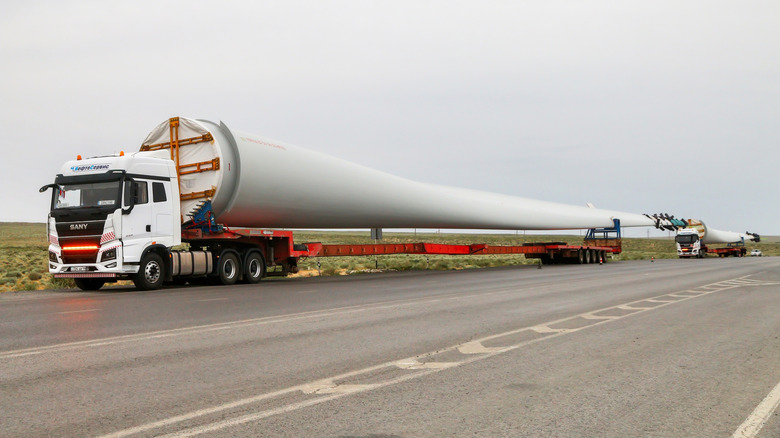
Not having ways to fully and safely dispose of all of the wind turbine parts at the end of their lifespans is one of the biggest perceived problems with wind turbines. The difficulty in recycling the blades has been a common criticism of the wind energy industry since its early days.
Projections show that the United States will have 2 million tons of blades that need recycling or disposal by 2050. This amount would only occupy about 1% of the current remaining landfill capacity in the United States. However, when a green energy solution creates any level of pollution and waste, it creates a difficult conundrum, especially when a recent study showed landfills are destroying the earth by contributing to methane emissions. Europe's problem is more pronounced, as it's estimated to have 7.6 million tons of decommissioned wind turbine blades by 2050.
Turbine installations have steadily grown in numbers over the past couple of decades, meaning many will need decommissioning during the upcoming couple of decades. Europe alone will have more than 40,000 units that need decommissioning by 2030 and more than 80,000 by 2040. Worldwide, more than 200,000 wind turbines will need decommissioning by 2040. This makes finding ways to manage their disposal beyond placing them in a landfill a significant concern. These worries make the idea of using the old blades to construct pedestrian bridges an intriguing one.